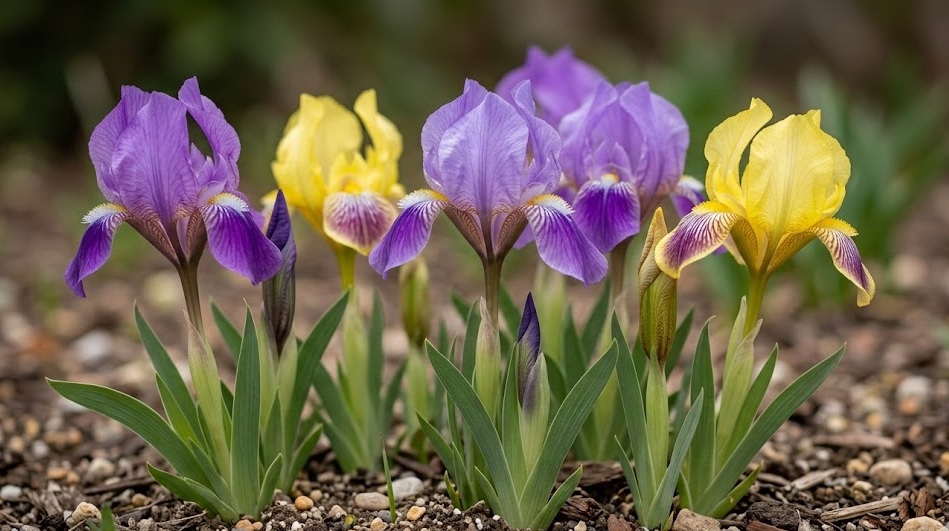

Finding the perfect balance of sunshine and shade is one of the most important decisions you will make for the health of your iris collection. You will find that these small but energetic plants have a very clear preference for bright, open spaces that mimic their natural alpine and steppe habitats. Understanding how light influences their growth and flowering allows you to place them strategically in your garden for the best possible results. A sun-drenched location is not just a preference for these plants, but a fundamental requirement for their long-term survival.
Full sun is generally defined as receiving at least six to eight hours of direct, unobstructed sunlight every day during the main growing season. You should aim to place your dwarf irises in a spot that catches the early morning sun and remains bright through most of the afternoon. This intense light provides the energy needed for photosynthesis and helps keep the soil surface dry, which is essential for preventing rhizome rot. Without enough sun, you will notice that the plants become leggy and produce far fewer of those beautiful, characteristic flowers.
While these plants love the sun, the intense heat of a mid-summer afternoon in a very southern climate can sometimes be a bit much for the foliage. You might find that a location with full morning sun and a little bit of dappled shade in the late afternoon provides the perfect compromise. This slight protection during the hottest part of the day can prevent the leaves from scorching or entering a premature and stressful dormancy. However, you should be careful not to over-shade them, as the priority must always remain on providing maximum light for flower production.
The orientation of your garden beds plays a major role in the quality and duration of light that your plants receive throughout the year. You should consider planting your irises on a south or west-facing slope or against a bright wall to maximize their exposure to the sun. Avoid placing them directly under the canopy of large trees or on the north side of tall buildings where the shadows are deep and persistent. Proper planning based on the path of the sun will ensure that your miniature garden stays bright and productive from early spring through the summer.
Photosynthesis and the flowering cycle
Light is the primary driver of the photosynthesis process that allows the plant to create the sugars and starches it stores in its rhizome. You should think of the sun as the fuel that powers the entire life cycle of the dwarf iris from the moment it emerges in the spring. A plant that receives optimal light will have strong, upright leaves that are a deep and healthy green color. These robust leaves are much more efficient at capturing energy and building the reserves needed for the following year’s spectacular floral display.
More articles on this topic
The development of flower buds is directly linked to the amount of light the plant has been able to absorb during the previous growing season. You will find that even if a plant looks healthy in a shady spot, it may fail to bloom because it simply doesn’t have the energy required for the task. Professional growers often say that the “sun grows the flowers,” and this is especially true for the iris family. Providing a sun-filled environment is the best way to ensure that your garden is filled with color every spring without the need for excessive artificial fertilizers.
Ultraviolet light also plays a role in the intensity of the petal colors and the overall structural strength of the stems. You might notice that irises grown in full, bright light have much more vivid and saturated colors than those grown in partial shade. The stems are also likely to be shorter and sturdier, which is ideal for these miniature varieties that need to stand up to spring winds. High-quality light exposure is a key factor in achieving the professional, show-quality appearance that many gardeners strive for.
Observing how the light changes in your garden as the seasons progress will help you understand the unique micro-climates of your own backyard. You should take note of where the shadows fall in the early spring when the irises are most active and compare that to the conditions in mid-summer. Some spots that are sunny in the spring might become shaded by the leaves of nearby trees later in the season. This dynamic light environment is something you must account for when choosing the permanent home for your collection.
Managing light in different garden settings
In a traditional rock garden, the open and exposed nature of the site usually provides the perfect light environment for these sun-loving plants. You can use the natural contours of the rocks to create pockets that maximize sun exposure while providing a beautiful and naturalistic backdrop. The rocks also absorb heat during the day and radiate it back to the plants, which can help stimulate early spring growth. This combination of bright light and thermal stability is exactly what these irises need to thrive and expand.
More articles on this topic
Container gardening offers a unique opportunity to manage light by moving your plants to follow the sun as the seasons change. You can place your pots in the sunniest spot on your patio during the spring and move them to a slightly more protected area if the summer heat becomes too extreme. This flexibility allows you to provide the optimal light environment for each stage of the plant’s development throughout the entire year. Just remember that containers can dry out quickly in the sun, so you will need to monitor moisture levels more closely.
If you are planting in a mixed border, you should place your dwarf irises at the very front where they won’t be shaded by taller neighboring plants. You want to ensure that they have a clear view of the sky and are not buried under the overhanging foliage of summer-blooming perennials. As the irises enter their summer dormancy, their space can be visually filled by the growth of these later plants without compromising their need for light. This layering technique allows you to create a professional and multi-seasonal garden that makes the most of every square inch.
Finally, you should be aware of how the surrounding landscape, such as fences or hedges, might be limiting the light in your chosen planting area. You might find that a small amount of pruning on nearby shrubs or the removal of a low-hanging branch can significantly improve the sun exposure for your iris bed. This proactive approach to garden maintenance ensures that your sun-loving plants are not slowly shaded out over the years as the rest of your landscape matures. A bright and open garden is a healthy garden, and your irises will reward your efforts with a stunning display of color.