
Understanding the light needs of these perennials is fundamental to achieving a compact growth habit and an abundance of flowers. As an alpine species, they are naturally adapted to bright, open environments where they receive plenty of solar energy. However, the intensity of sunlight varies greatly depending on your geographical location and the specific layout of your garden. Balancing their need for light with protection from excessive heat is a key skill for any professional gardener.
In their native mountain habitats, these plants often grow on rocky slopes where they are exposed to full sun but kept cool by the altitude and constant breezes. Replicating this in a lowland garden means finding a spot that offers ample light without allowing the soil to bake. While they are often classified as “full sun” plants, they are quite adaptable to partial shade, especially in warmer climates. The goal is to provide enough energy for blooming while maintaining the health of the foliage.
Light also influences the physical structure of the plant, with more light generally leading to the desired dense, mounded shape. In conditions that are too shady, the stems may become “leggy” or stretched as they reach toward the light source, which detracts from their aesthetic appeal. Conversely, too much intense, direct sun in a hot climate can cause the delicate flowers to wilt and fade prematurely. Finding the “sweet spot” in your garden is essential for the best visual results.
By observing how your plants respond to their lighting conditions throughout the day, you can make informed decisions about their placement. You may find that a plant performs better on one side of a rock than the other, or that it needs a bit of overhead cover during the hottest part of the afternoon. This chapter will explore how to manage light levels to support the biological needs of your bellflowers. Proper light management is one of the most effective ways to ensure a long and successful blooming season.
Finding the ideal sun exposure
For most gardens in temperate climates, a location that receives six to eight hours of direct sunlight is considered ideal. This amount of light provides the energy needed for the plant to produce its characteristic profusion of bell-shaped flowers. Morning sun is particularly beneficial as it is bright but relatively cool, helping to dry the dew off the leaves and prevent fungal issues. A site with an eastern or southern exposure often works best for these purposes.
More articles on this topic
In regions with very hot summers, providing some dappled shade during the mid-afternoon can prevent heat stress. The intense ultraviolet rays at midday can be taxing for alpine plants that prefer cooler temperatures. You can achieve this “filtered sun” by planting near taller, airy perennials or by using garden structures like lattices. This protection helps the flowers last longer and keeps the foliage from turning a stressed, yellowish-green color.
The duration of light is just as important as its intensity when it comes to triggering the blooming cycle. These plants are generally “long-day” bloomers, meaning they respond to the increasing daylight of late spring and early summer. If they are planted in a spot that is too heavily shaded by trees or buildings, they may fail to flower altogether. Ensuring they have a clear view of the sky for a significant portion of the day is a primary requirement for success.
When planning your garden layout, consider how the light changes throughout the seasons as the sun’s path moves across the sky. A spot that is sunny in the spring might be in deep shade by mid-summer as nearby trees leaf out. This dynamic environment requires a professional level of observation to ensure your plants are always getting what they need. A well-placed bellflower will remain compact and vibrant, serving as a highlight of your garden’s design.
Impact of light on growth and blooming
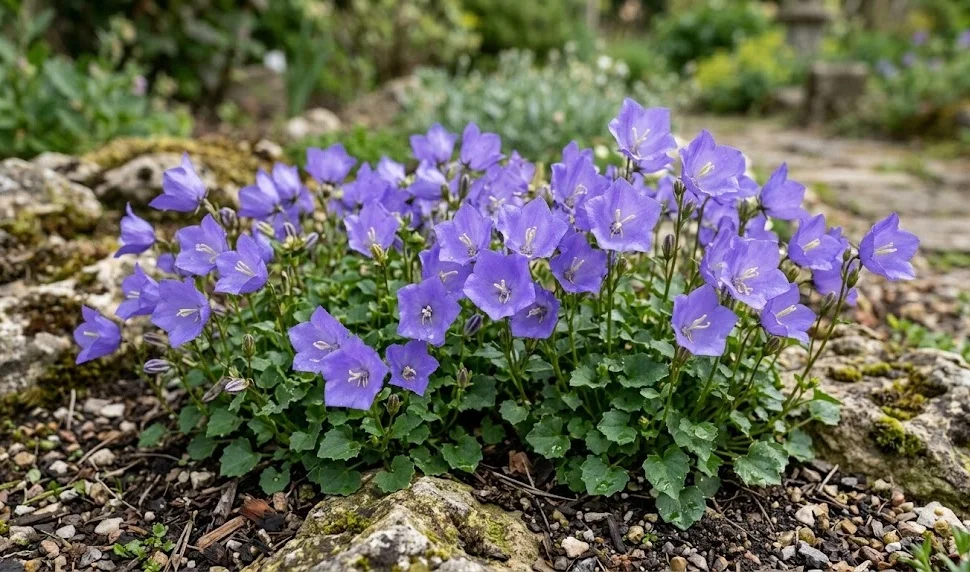
The relationship between light and the plant’s physical form is a clear indicator of whether its needs are being met. When light is sufficient, the plant will grow as a tight, rounded mound with leaves packed closely together along the stems. This structure is not only more attractive but also more resilient against wind and rain. A compact plant is also better at shading its own root zone, helping to keep the soil temperature stable.
More articles on this topic
If you notice your bellflowers becoming thin, sprawling, or having large gaps between the leaves, it is a sign they are “reaching” for more light. This stretched growth is weaker and more prone to breaking or falling over under the weight of the flowers. In such cases, it may be necessary to move the plant to a sunnier location or to trim back overhanging branches from nearby shrubs. Correcting light deficiencies early will help the plant regain its sturdy, natural shape.
Flower production is the most visible way that the plant communicates its satisfaction with the light levels. Plants in the right amount of sun will be covered in buds that open into vibrant, well-colored bells. In too much shade, the flowers may be sparse, smaller, and have less intense pigmentation. Conversely, in extreme sun, you might see the flower edges browning or the entire bloom shriveling before it has fully finished its cycle.
Interestingly, the color of the foliage can also change in response to light intensity as a form of protection. Some varieties may develop a slightly purplish or reddish tint in the leaves when exposed to very bright sun, which is a natural “sunscreen” produced by the plant. While this isn’t necessarily harmful, it is a sign that the plant is at the limit of its sun tolerance. Professional gardeners use these subtle visual cues to fine-tune the environment for each individual specimen.
Balancing light and temperature
Because light and heat are so closely linked in the garden, managing one often involves considering the other. While the carpathian bellflower loves the sun, it is not a fan of the heat that often accompanies it in lowland gardens. This is why soil moisture and drainage are so critical; a well-hydrated plant can handle much more sun than a thirsty one. In a professional setting, we use “cool” materials like stone and gravel around the plants to reflect light while keeping the roots insulated.
Rock gardens are an excellent way to balance these needs because the stones provide a variety of light and temperature micro-climates. A plant can be tucked into the northern side of a large rock where its roots stay cool and shaded, while its foliage and flowers reach up into the sun. This mimics the natural crevices of the Carpathian mountains and provides the perfect habitat for these alpine beauties. The stones also act as a heat sink, absorbing warmth during the day and releasing it slowly at night.
Using companion plants to provide “living shade” is another advanced gardening technique. Low-growing, airy grasses or taller, fine-textured perennials can break up the intensity of the sun without blocking it entirely. This creates a more complex and resilient garden ecosystem that is less dependent on human intervention. The goal is to create a multi-layered environment where every plant contributes to the overall stability of the microclimate.
Finally, remember that light levels can be managed through regular maintenance like pruning and weeding. Keeping the area around your bellflowers clear of aggressive weeds ensures they aren’t competing for the available solar energy. Similarly, trimming back neighboring plants that have grown too large keeps the light levels consistent throughout the season. By taking a proactive approach to light management, you provide your bellflowers with the best possible conditions for a spectacular display.