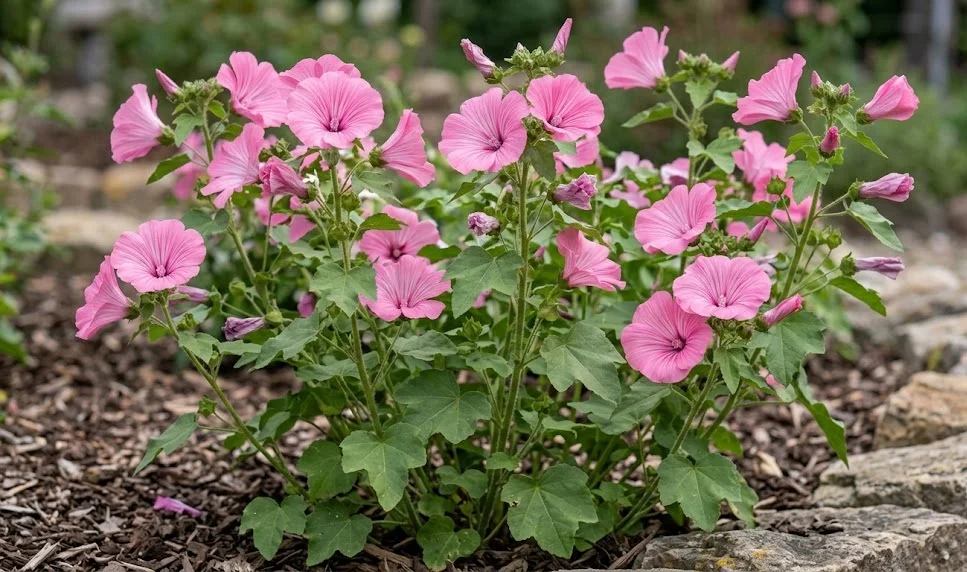

The amount and quality of sunlight that a rose mallow receives are the most significant factors in determining its overall health and floral output. This plant is a true lover of the sun and requires a high-energy environment to fuel its rapid growth and continuous blooming. You must carefully assess your garden’s light patterns to find a spot that meets these demanding requirements throughout the entire day. A professional understanding of light dynamics ensures that your plants reach their maximum potential and produce the spectacular show they are known for.
Optimizing sun exposure for peak blooming
The rose mallow is categorized as a full-sun plant, meaning it needs at least six to eight hours of direct, unobstructed sunlight every day. You should place it in the brightest part of your garden where the sun can reach every part of the canopy from morning until late afternoon. This high level of light intensity is necessary for the plant to produce enough sugars through photosynthesis to support its massive flowers. Plants grown in insufficient light will often become tall, weak, and produce fewer, smaller blooms that lack color intensity.
Morning sun is particularly beneficial because it helps dry the dew off the foliage, reducing the risk of fungal diseases that thrive in damp conditions. You will notice that plants receiving early light start their metabolic processes sooner in the day, leading to more efficient overall growth. If you have to choose between morning and afternoon sun, the early light is generally preferred for its disease-prevention qualities. However, for the best results, a location that offers both will always produce the most vigorous and productive specimens.
The intensity of the light is just as important as the duration, especially in regions with high northern or southern latitudes. You should ensure that there are no overhanging trees or structures that cast shadows on the mallow during the peak hours of the day. Even “dappled” shade can be enough to significantly reduce the flowering potential of this species, leading to a more foliage-heavy appearance. Professionals often use light meters or time-lapse photography to accurately map the light levels in a specific garden bed before planting.
As the season progresses and the angle of the sun changes, you must be aware of how shadows move across your landscape. A spot that is in full sun in June might be partially shaded by a growing neighbor or a building by August. You should choose a site that remains consistently bright for the entire duration of the plant’s lifecycle from spring to autumn. This consistency prevents the plant from having to adapt to changing light levels, which can cause stress and a temporary halt in flower production.
More articles on this topic
Managing the effects of shade and low light
If a rose mallow is forced to grow in a shaded area, it will exhibit several distinct symptoms that indicate its struggle for energy. You will see “etiolation,” where the stems become unnaturally long and thin as the plant tries to reach toward the light source. These leggy plants are much more prone to breaking and often require extensive staking that would be unnecessary in a sunnier spot. The leaves may also appear larger but thinner, a strategy the plant uses to capture as much of the limited light as possible.
The flowering response in shade-grown mallows is markedly different, with much longer intervals between the opening of new blossoms. You may find that the flowers do not open fully or that they fall off prematurely because the plant cannot sustain the energy required for full development. The colors of the petals are often paler and less vibrant than those of their sun-drenched counterparts. Professional gardeners avoid planting this species in even partial shade if they are aiming for a competition-quality or high-impact display.
Low light levels also impact the plant’s ability to recover from physical damage or pest attacks, as it has fewer energy reserves to draw from. You will find that shaded plants are more susceptible to almost every common garden problem, from aphids to fungal leaf spots. The lack of direct sun means that moisture stays on the leaves longer, creating a perfect microclimate for pathogens. In this sense, providing adequate light is not just about beauty; it is a fundamental part of the plant’s immune system.
If you find that a plant is struggling in a shaded spot, it is often better to move it to a brighter location rather than trying to compensate with extra fertilizer. You can transplant young mallows with a large root ball, provided you do it during a cool, cloudy period to minimize shock. Once in the sun, you will see a rapid change in the plant’s growth habit as it begins to produce shorter, sturdier stems and more frequent flower buds. Responding to these light cues is essential for maintaining a professional-standard garden that honors the needs of each species.
More articles on this topic
Light and temperature interactions
The interaction between light and temperature is a complex relationship that influences how the rose mallow manages its water and energy. You should realize that full sun often comes with high temperatures, which increases the rate of transpiration from the large leaf surfaces. This means that your light strategy must be perfectly synchronized with your watering routine to prevent wilting during the hottest parts of the day. A plant in full sun is a high-performance machine that requires a constant supply of “fuel” in the form of water and nutrients.
In extremely hot climates, the intense midday sun can sometimes cause temporary wilting even if the soil is moist. You can mitigate this by providing a small amount of afternoon “relief” in the form of very light, high-altitude shade that doesn’t block all the light. This “filtered” sun allows the plant to catch up on its water balance without sacrificing the energy it needs for blooming. However, this is a specialized technique that should only be used in regions where the sun’s intensity is genuinely extreme.
Light also plays a role in the germination and early development of the seedlings, which often require specific light durations to stay compact. You should ensure that your indoor-grown plants are not only getting enough light but that it is of the right spectral quality. Using modern LED grow lights that mimic the full spectrum of the sun is the best way to produce professional-quality transplants. The transition from indoor lights to the actual sun must be done gradually to avoid burning the sensitive young tissues.
The end of the season is also influenced by light, as the shorter days of autumn signal the plant to begin its final lifecycle stages. You will see a shift in the plant’s hormones that leads to the development of seed pods and the eventual yellowing of the foliage. This natural response to changing light levels is something you cannot change, but you can work with it by enjoying the late-season character of the plant. Understanding the power of light allows you to see your garden as a dynamic system that is constantly responding to the movements of the sun.