
Light is the primary energy source for all plants, and its availability dictates everything from growth rate to flower production. For this particular subspecies, finding the right balance of solar exposure is the most important factor in its overall success. Professional landscapers must evaluate the quality and duration of light throughout the entire growing season. A location that is perfect in May might be too shaded by July as the canopy of nearby trees fills in.
The intensity of the light also plays a role in how the plant manages its internal water levels and temperature. Direct midday sun can be very intense, especially in southern regions or during the height of the summer. While these plants are adapted to open areas, they have physiological limits to how much heat they can tolerate without stress. Understanding the local light patterns allows you to position your plants for maximum health and aesthetic appeal.
Photoperiodism, or the response of the plant to the length of the day and night, is another factor to consider. This subspecies typically begins its flowering cycle as the days reach their maximum length in early summer. If the plant is grown in an area with significant artificial light at night, its natural rhythm can sometimes be disrupted. Providing a natural cycle of light and dark ensures that the plant remains healthy and blooms on its expected schedule.
Finally, the light requirements of the plant may change slightly as it moves through different stages of its life cycle. Young seedlings often need a bit more protection from the intense sun than established, deep-rooted specimens. Conversely, as the plant matures and forms a dense clump, it needs plenty of light to penetrate the center of the foliage. Regular observation of the plant’s response to its lighting environment will help you make any necessary adjustments.
Solar exposure and photosynthesis
Photosynthesis is the process by which the plant converts light energy into the chemical energy it needs to grow. This subspecies is highly efficient at this process and requires a significant amount of light to maintain its vigorous growth habit. In full sun, the leaves will be a deep, healthy green, and the stems will remain short and sturdy. If you notice the plants becoming “leggy” or reaching toward the light, it is a clear sign that they are not receiving enough exposure.
More articles on this topic
The quality of the light is just as important as the quantity when it comes to the plant’s overall health. Direct sunlight contains the full spectrum of colors that the plant needs for different physiological functions. Blue light is essential for vegetative growth and leaf development, while red light triggers the production of flowers. By ensuring the plants are in an open area, you provide them with the highest quality light for their entire lifecycle.
Morning sun is particularly beneficial because it is less intense than the afternoon sun but still provides plenty of energy. It also helps dry the dew from the leaves early in the day, which reduces the risk of fungal diseases. If you have a choice of locations, a site that receives direct morning light and some dappled shade in the late afternoon is often ideal. This configuration maximizes growth while minimizing the risk of heat stress during the hottest part of the day.
Monitoring the light levels in your garden can be done with a simple light meter or by observing the movement of shadows. Remember that the angle of the sun changes throughout the year, which will affect how much light reaches different parts of the garden. A spot that is in full sun in the spring might be in partial shade by late summer as the earth tilts on its axis. Professional garden planning takes these seasonal shifts into account to ensure consistent performance.
Adapting to partial shade conditions
While full sun is preferred, this subspecies is known for its remarkable ability to adapt to less-than-ideal lighting. It can grow successfully in partial shade, which is defined as three to six hours of direct sunlight each day. In these conditions, you might notice that the plant grows slightly taller and the leaves are a bit larger. This is an adaptation to capture as much light as possible in a more limited environment.
More articles on this topic
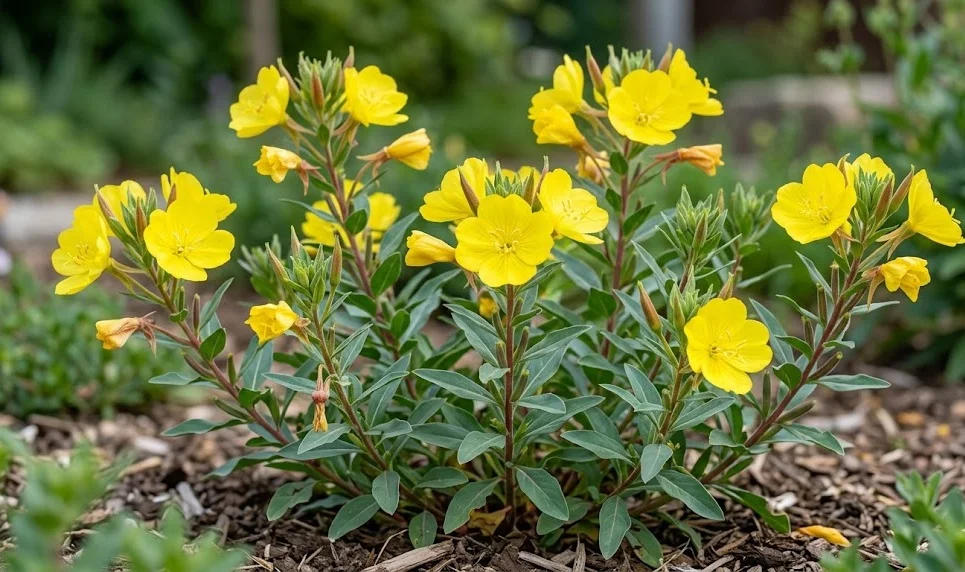
The flowering performance may be slightly reduced in shaded areas compared to plants grown in full sun. You might see fewer blossoms on each stem, and the individual flowers may be slightly smaller in size. However, the golden yellow color remains just as vibrant, providing a beautiful contrast in the softer light of a shaded border. Many gardeners find this slightly more relaxed growth habit to be very attractive in certain landscape designs.
Competition for light from taller neighboring plants is a common challenge in a mixed perennial border. You should ensure that your evening primrose is not being completely overshadowed by more aggressive species. Occasionally thinning out the surrounding plants or pruning back overhanging branches can help maintain the necessary light levels. Managing the light environment is a constant task for any gardener who wants to maintain a balanced and healthy landscape.
Soil moisture management becomes even more critical when growing this species in partial shade. Because the sun is not hitting the ground as directly, the soil will take longer to dry out after a rain or irrigation. You must be careful not to over-water shaded plants, as they are more susceptible to root rot and fungal issues in damp conditions. Adjusting your care routine based on the specific light conditions of each area is the hallmark of a professional approach.
Impacts of light on blooming
The transition from vegetative growth to flowering is a complex process that is heavily influenced by light levels. Sufficient light energy allows the plant to produce and store the carbohydrates needed to support the development of flower buds. If the light is too low, the plant may prioritize its own survival and skip the flowering stage entirely for a season. Consistent, high-quality light is the best guarantee of a spectacular and reliable summer bloom.
The duration of the flowering period is also linked to the amount of light the plant receives each day. In full sun, the plant will often produce a continuous succession of blooms over several weeks or even months. In more shaded locations, the flowering window may be shorter and more concentrated into a single burst of color. Understanding these patterns helps you plan your garden design to ensure there is always something of interest to see.
The orientation of the flowers themselves is often a response to the direction of the strongest light source. You might notice the flower heads turning slightly to follow the sun as it moves across the sky during the day. This phenomenon, known as heliotropism, maximizes the amount of energy the plant can capture for its reproductive efforts. It is a fascinating example of how plants have evolved to interact with their environment in very specific ways.
Reflected light from nearby surfaces, like a white wall or a light-colored patio, can also contribute to the plant’s energy balance. While this is not a substitute for direct sun, it can help boost the light levels in a slightly shaded corner of the garden. Conversely, dark surfaces like asphalt can absorb heat and reflect it back toward the plant, potentially causing stress. Being aware of these secondary light and heat sources allows for even more precise placement of your plants.