
The visual appeal and physical health of lamb’s ear are deeply connected to the amount and quality of light it receives. As a plant that originated in the sun-drenched regions of the Middle East, it has developed specific adaptations to thrive under intense solar radiation. The iconic silver color and velvety texture of its leaves are not just for show; they are functional traits designed for life in full sun. Understanding how to manage light exposure is the first step in successfully integrating this plant into your landscape.
Full sun versus partial shade
For the best results, lamb’s ear should be planted in a location that receives full sun, typically defined as at least six to eight hours of direct sunlight per day. In these conditions, the plant will grow densely, maintaining a tight, carpet-like habit that is ideal for groundcover. The intense light also triggers the production of the fine white hairs that give the leaves their silver sheen. Without enough sun, the plant often becomes leggy and loses its characteristic compact form.
In regions with extremely hot summers, the plant can tolerate a small amount of afternoon shade to prevent the foliage from scorching. However, if the shade is too deep, the lamb’s ear will struggle to stay healthy and may become more susceptible to rot. The lack of sunlight prevents the foliage from drying out quickly after rain or dew, creating a humid microclimate that encourages fungal growth. When choosing a spot, prioritize sunlight over almost any other environmental factor to ensure long-term vitality.
If you must plant in a partially shaded area, choose varieties that are known for being slightly more shade-tolerant. Even then, you should monitor the plant closely for signs of stress, such as elongated stems or a shift from silver to a dull green color. You may need to compensate for the lower light by being even more careful with your watering routine to prevent moisture buildup. Professional garden design often uses lamb’s ear to define the sunny edges of beds, where it can act as a transition to more shade-loving species.
The angle and intensity of the sun change throughout the year, so it is important to observe your chosen site during different seasons. A spot that is sunny in the summer might be shaded by a nearby building or deciduous tree in the spring or autumn. Ensuring that the plant gets enough light during its active growth phases is critical for maintaining its vigor. By understanding the solar patterns of your garden, you can place your lamb’s ear where it will truly shine.
More articles on this topic
Effects of light on foliage color and texture
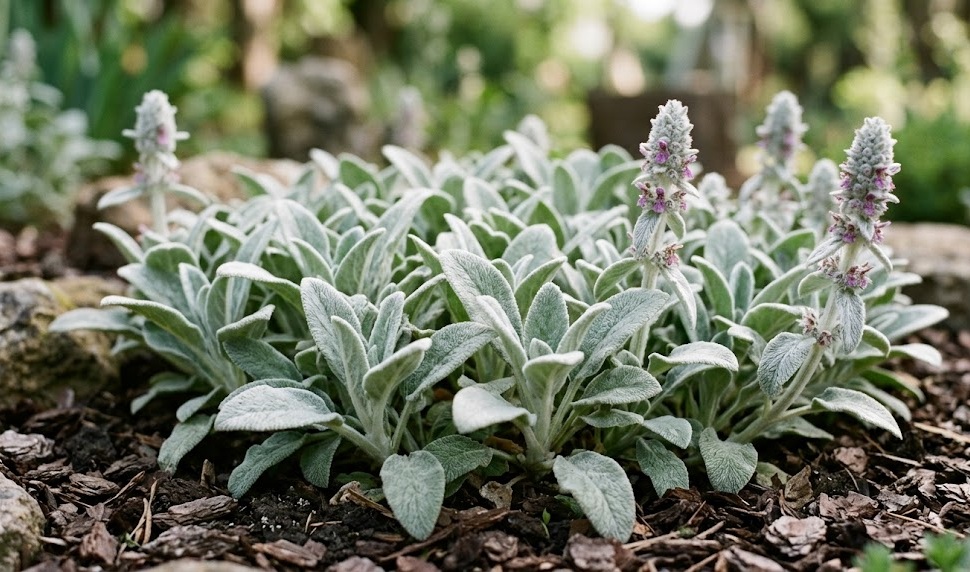
The interaction between sunlight and the leaf surface is what creates the unique aesthetic of the lamb’s ear. The silver color is actually an optical effect caused by the way the dense hairs reflect and scatter incoming light. When the plant receives plenty of sun, it produces more of these hairs as a protective barrier against ultraviolet radiation and heat. This means that the sunnier the location, the more brilliantly silver and “fuzzy” your plants will appear to be.
In lower light conditions, the plant prioritizes photosynthesis over protection, leading to the production of more chlorophyll and fewer hairs. This results in leaves that are noticeably greener and smoother, losing the velvet-like quality that most gardeners find so appealing. While the plant may survive in these conditions, it will never achieve the striking visual impact that makes it a favorite for color contrast. If you want that classic silver look, you must provide the high-intensity light the plant craves.
Light also plays a significant role in the physical structure of the leaves themselves. Plants grown in full sun have thicker, more robust leaves that can stand up to wind and physical contact. In contrast, shaded plants often have thinner, softer leaves that are easily damaged and more prone to drooping. This structural difference affects not only the look of the plant but also its overall resilience to environmental stressors. A sun-grown lamb’s ear is a much tougher and more durable inhabitant of the garden.
By observing the color and texture of your plants, you can get a good idea of whether they are happy with their current light levels. If the leaves start to look “washed out” or excessively green, it might be time to move the plant to a brighter location. Alternatively, you could prune back nearby shrubs or trees that might be casting more shade than they used to. Responding to these visual cues is part of the professional expertise required to maintain a top-tier garden display.
More articles on this topic
Adapting to seasonal light changes
As the seasons progress, the amount of available light in the garden shifts, and the lamb’s ear must adapt its growth accordingly. In the spring, the return of stronger sunlight triggers the emergence of new growth from the dormant crown. This is the period of most rapid leaf production, and the plant needs as much light as possible to build up its energy reserves. Clearing away any obstructions that might shade the young shoots will help the patch establish itself quickly for the year.
During the height of summer, the intensity of the light is at its peak, which can be both a blessing and a challenge. While the plant loves the sun, extreme heat combined with high-intensity light can sometimes lead to localized leaf burn. This is usually only an issue in very dry, inland climates where the air humidity is low. Maintaining a healthy root system through proper soil management will help the plant stay hydrated and resilient under the mid-summer sun.
In the autumn, as the sun sits lower in the sky, the light takes on a warmer, softer quality that can beautifully highlight the silver foliage. The growth rate of the lamb’s ear begins to slow down, and it starts to prepare for the winter months. During this time, the plant still needs light to harden its tissues, so ensure that fallen autumn leaves do not stay on top of the patch for too long. A few hours of direct light even in the shorter days of autumn is beneficial for the plant’s overall health.
Winter light is often limited, especially in northern regions where the sun may be blocked by clouds for weeks at a time. While the plant is mostly dormant, the evergreen nature of the lamb’s ear means it can still utilize whatever light is available. If you have moved containers of lamb’s ear to a more protected area for the winter, make sure they still receive some ambient light. Understanding these seasonal rhythms allows you to support your plants throughout the entire year, ensuring they are always at their best.