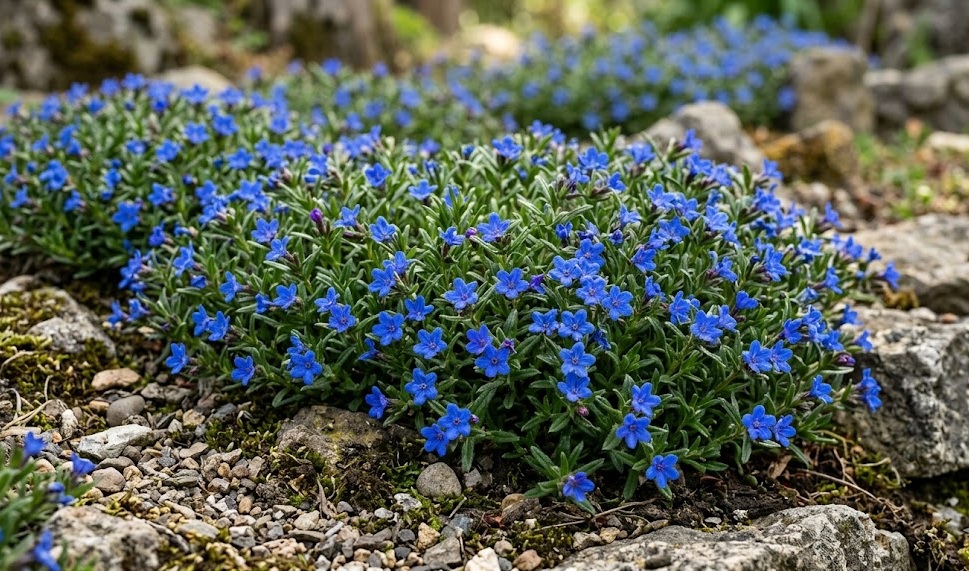

Managing the purple gromwell requires a deep understanding of its specific environmental preferences and growth habits. This evergreen subshrub is highly valued for its intense blue flowers that cover the foliage during the spring and summer months. To ensure the plant thrives, you must prioritize its need for well-drained, acidic soil conditions. Proper care involves a combination of monitoring soil moisture, providing adequate light, and performing routine maintenance to prevent the plant from becoming too woody or sparse.
Success with this species depends largely on creating a habitat that mimics its natural coastal and rocky origins. You should observe the plant’s development closely throughout the growing season to identify any signs of stress. Early intervention is key when dealing with changes in leaf color or a reduction in blooming density. By establishing a consistent care routine, you can enjoy a vibrant carpet of blue in your garden for many years.
Professional gardeners often emphasize the importance of site selection as the foundation of long-term health. The plant does not tolerate being moved frequently, so your initial choice of location is critical for its survival. You must ensure that the surrounding plants do not overshadow it or compete too aggressively for ground space. A stable environment allows the root system to establish itself firmly without the disruption of constant soil agitation.
The overall aesthetic appeal of the purple gromwell is linked to its dense, mat-forming nature. Maintaining this density requires a proactive approach to soil health and environmental management. You should avoid heavy-handed interventions and instead focus on subtle adjustments to the garden microclimate. Consistency in these basic care principles will result in a robust plant that resists many common garden problems.
Soil acidity and composition
The most critical factor in the care of this plant is the chemical composition of the soil in which it grows. It strictly requires an acidic environment to absorb essential nutrients like iron and magnesium effectively. If the soil becomes too alkaline, you will notice a yellowing of the leaves, a condition known as chlorosis. You can maintain acidity by incorporating peat moss or specialized ericaceous compost into the planting area.
More articles on this topic
Drainage is equally important because the root system is highly susceptible to rot in stagnant water. You should aim for a gritty or sandy soil structure that allows excess moisture to move away from the crown quickly. Incorporating fine gravel or perlite can significantly improve the internal drainage of heavier garden soils. A well-structured soil provides the necessary oxygen levels for the roots to breathe and expand naturally.
You must also consider the organic matter content within the soil profile to support steady growth. While the plant prefers lean soil, a small amount of well-rotted leaf mold can provide a slow release of nutrients. Avoid using fresh manure or high-nitrogen fertilizers that could alter the soil pH too drastically. Balancing the mineral content with stable organic components creates the ideal medium for this groundcover.
Regular soil testing is a professional habit that can prevent many nutritional issues before they manifest physically. By checking the pH level annually, you can apply sulfur-based soil acidifiers if the levels begin to rise. This proactive management ensures that the plant never experiences the stress of nutrient lockout. Maintaining a stable soil environment is the most effective way to promote vigorous health and abundant flowering.
Managing growth habits
This species is known for its spreading, prostrate growth habit which makes it an excellent choice for rock gardens and slopes. You should encourage this natural tendency by providing enough clear ground for the stems to creep and root at the nodes. As the plant expands, it creates a living mulch that suppresses weeds and retains soil moisture. Monitoring the direction of growth helps you guide the plant toward desired areas of the garden.
More articles on this topic
Over time, the center of the plant may become woody and produce fewer flowers if it is not managed correctly. You can prevent this by ensuring that light reaches the inner portions of the shrub. Thinning out older stems occasionally allows younger, more productive growth to take over the space. This cycle of renewal keeps the entire mat looking fresh and prevents a leggy appearance.
Understanding the seasonal growth surges allows you to time your maintenance tasks perfectly. The plant typically experiences a flush of new growth immediately following the primary flowering period in late spring. During this time, the soft stems are more flexible and can be easily directed or pinned down. Taking advantage of these natural cycles makes the management of the plant much more efficient and effective.
The interaction between the plant and its physical boundaries should be managed with care to maintain garden harmony. While it is not considered invasive, its creeping nature means it can eventually overlap smaller or less vigorous neighbors. You should maintain a small buffer zone around the plant to ensure adequate airflow and light penetration. This spatial management prevents the buildup of humidity and reduces the risk of fungal infections.
Seasonal maintenance routines
Spring marks the beginning of the most active phase for the purple gromwell as it prepares for blooming. You should start the season by clearing away any debris or fallen leaves that may have accumulated over the winter. This task prevents pests from nesting near the crown and ensures that new shoots have an unobstructed path to the light. A light application of acidic mulch at this stage can also help stabilize soil temperatures.
As the summer heat intensifies, your focus should shift toward maintaining a cool root zone. While the foliage is relatively drought-tolerant, extreme heat can stress the plant and shorten the flowering duration. You can provide relief by applying a thin layer of grit or stone mulch which reflects heat away from the soil. Observing the foliage for signs of wilting during the afternoon will help you determine if temporary shade is necessary.
The autumn months are the ideal time to evaluate the overall health and structure of the plant after the growing season. You should remove any dead or damaged stems that may have occurred during the summer months. This cleanup reduces the amount of decaying organic matter present during the damp autumn and winter periods. It also prepares the plant for its dormancy phase by focusing its energy on the root system.
Winter maintenance is minimal but involves protecting the evergreen leaves from harsh, drying winds. In regions with significant snowfall, the snow itself acts as a natural insulator for the plant. If your area experiences cold, dry winters without snow, you might need to provide a light covering of evergreen boughs. This protection prevents the foliage from desiccation, ensuring it remains green and healthy for the following spring.
Moisture control strategies
Achieving the perfect balance of moisture is a sophisticated task that requires attention to local weather patterns. The purple gromwell prefers a soil that remains consistently damp but never saturated or waterlogged. You should water the plant deeply during dry spells to encourage deep root development. Shallow watering can lead to a weak root system that is more vulnerable to temperature fluctuations.
The method of delivery is just as important as the amount of water provided to the plant. You should always aim the water at the base of the plant rather than over the top of the foliage. Wet leaves can increase the risk of fungal diseases, especially in the evening when evaporation rates are low. Utilizing a drip irrigation system or a soaker hose is an excellent way to maintain professional-grade moisture control.
Atmospheric humidity also plays a role in the health of this Mediterranean-origin species. In very humid climates, you must ensure that there is excellent air circulation around the entire plant. Spacing the plants correctly and keeping the surrounding area free of tall weeds will help dissipate excess moisture. This environmental management is crucial for preventing the development of powdery mildew and other moisture-related issues.
Monitoring the soil’s moisture level manually is a reliable technique for any serious gardener. You can check the top two inches of soil to see if it feels dry to the touch before adding more water. During the winter months, you should significantly reduce the frequency of watering as the plant’s metabolic rate slows down. Overwatering during the dormant period is one of the most common reasons for plant failure.
Environmental protection and site selection
Selecting the right microclimate within your garden can make the difference between a struggling plant and a thriving one. The purple gromwell performs best in a spot that offers protection from the most intense midday sun in hot climates. However, it still requires several hours of direct sunlight to produce its signature blue flowers. A north or east-facing slope often provides the perfect balance of light and temperature.
Wind protection is another factor that is often overlooked in the care of low-growing shrubs. Cold, drying winds can strip moisture from the evergreen leaves faster than the roots can replace it. Planting near a large rock or a low wall can provide a windbreak that shields the plant from the elements. This physical protection helps maintain the integrity of the foliage throughout the year.
You should also consider the impact of urban environments, such as reflected heat from concrete or asphalt. Planting this species too close to a dark-colored driveway can cause the soil to dry out rapidly. If you must plant near hardscaping, ensure you compensate with extra mulch and more frequent moisture checks. Understanding these external variables allows you to adjust your care routine to fit the specific site.
The proximity of other plants can either benefit or hinder the development of the purple gromwell. It thrives when planted near other acid-loving species that share its cultural requirements. Avoid placing it near plants that require frequent soil cultivation or those that need highly alkaline conditions. Creating a dedicated “acid-loving” zone in your garden simplifies the maintenance process for all the plants involved.
Enhancing flowering potential
The primary draw of this plant is undoubtedly its spectacular floral display, which can be maximized through careful management. Ensuring the soil pH remains strictly acidic is the most effective way to guarantee a high volume of blooms. When the plant can access all the necessary micronutrients, it has the energy required to produce flowers over an extended period. You will see a direct correlation between soil health and the intensity of the flower color.
Timing your nutrient applications can also give the plant a boost just before the blooming season begins. A low-nitrogen, high-potassium fertilizer can encourage flower bud formation without stimulating excessive leafy growth. You should apply such treatments in early spring as the first signs of new growth appear. Avoid fertilizing late in the summer, as this can stimulate soft growth that will be damaged by the first frost.
Deadheading, or removing spent flowers, is a practice that can sometimes extend the blooming season of many perennials. For the purple gromwell, this is more of a light shearing process due to the sheer number of small flowers. By removing the faded blooms, you prevent the plant from putting energy into seed production. This energy is then redirected into maintaining the health of the foliage and developing future flower buds.
Light levels remain the final piece of the puzzle when it comes to flowering success. If your plant is producing plenty of green leaves but very few blue flowers, it likely needs more direct sunlight. You might need to prune back overhanging branches from nearby trees to increase the light intensity reaching the ground. Maximizing light exposure, while respecting the plant’s heat limits, is the professional approach to achieving a blue carpet.