
Caring for this robust evergreen climber involves understanding its unique growth habits and environmental preferences to ensure it thrives in your garden. While it is known for being relatively low-maintenance, providing the right foundation will reward you with lush, leathery leaves that create a stunning backdrop. You should observe the plant’s development closely during the first few growing seasons to establish a healthy root system and strong stems. Consistency in your management approach will prevent common issues and help the plant reach its full ornamental potential over several years.
Proper site assessment is the first step toward long-term success when you are dealing with such a vigorous species. You need to consider that the weight of mature vines can be significant, so the chosen location must offer adequate structural integrity. Examining the drainage patterns in your soil will help you avoid the pitfalls of stagnant water which often leads to root problems. If you notice the leaves losing their characteristic deep green luster, it might be time to re-evaluate the local microclimate.
Environmental factors like humidity and wind exposure play a crucial role in the overall health of the foliage throughout the year. Cold, drying winds can cause winter desiccation, so planting in a sheltered spot is often beneficial for preserving the leaf quality. You will find that regular monitoring of the leaf undersides can alert you to potential issues before they become widespread. Maintaining a clean area around the base of the plant reduces competition for resources and limits the hiding spots for unwanted visitors.
Adapting your care routine to the specific seasons ensures that the plant remains resilient against fluctuating weather conditions. During periods of active growth, focus on directed care that encourages lateral branching and a denser appearance of the canopy. When the plant enters its dormant phase, your primary goal shifts toward protection and minimizing any unnecessary stress to the woody framework. Success with this ivy depends on your ability to balance intervention with the plant’s natural tendency to explore its surroundings.
Selecting the ideal soil and location
The quality of the substrate you provide will directly influence the speed and density of the vine’s expansion across your garden walls. You should aim for a soil profile that is rich in organic matter and maintains a slightly acidic to neutral pH level for optimal results. If your garden soil consists mostly of heavy clay, incorporating coarse sand or compost will significantly improve the aeration around the roots. Well-draining earth is essential because it allows oxygen to reach the root zone, preventing the onset of fungal infections.
More articles on this topic
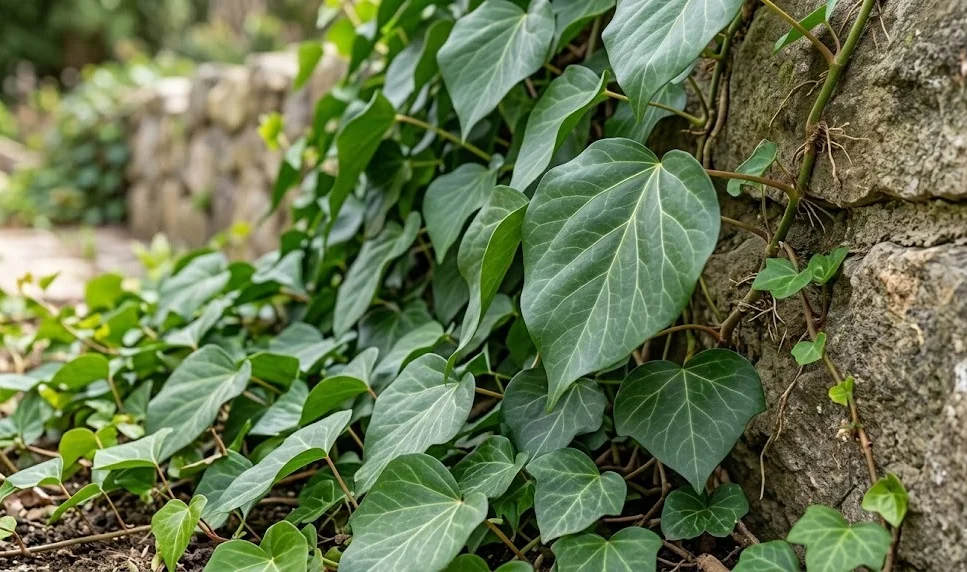
Positioning your plant near a sturdy fence or a brick wall provides the necessary vertical surface for its adventitious roots to grip effectively. You must ensure that the surface is durable enough to withstand the moisture that can accumulate behind a thick curtain of evergreen leaves. It is also important to remember that once established, the plant is difficult to move without causing significant damage to the root network. Choosing a spot with enough room for horizontal and vertical expansion will save you a lot of maintenance work in the future.
The local light conditions at the planting site should match the specific needs of this variety to prevent leaf scorch or stunted growth. While it can tolerate a variety of light levels, a location that offers dappled sunlight or partial shade is generally considered the most favorable. You should avoid areas where the midday sun hits the foliage directly for extended periods, especially during the peak of summer. Observing how the light moves across your garden throughout the day will help you find the perfect balance for your new ivy.
Air circulation is an often overlooked aspect of plant placement that can have a major impact on the health of the leaves. If you plant the ivy in a very stagnant corner, you might find that moisture lingers on the foliage for too long after rainfall. This increased humidity can encourage the development of mildews and other pathogens that thrive in damp, still environments. Providing a bit of space for air to move through the canopy will keep the plant dry and vigorous even during the rainy season.
Managing the growth habits
Understanding the natural rhythm of the plant’s expansion will help you guide its development in a way that suits your landscape design. You will notice that the growth rate is somewhat slow during the first year as the plant focuses its energy on subterranean development. Once the root system is firmly established, the vine will begin to produce longer runners that quickly cover available surfaces. You can encourage a bushier habit by occasionally pinching back the tips of the youngest shoots during the spring.
More articles on this topic
The climbing mechanism of this ivy involves small root-like structures that emerge from the stems to latch onto textures and crevices. You should be aware that these structures can leave marks on wooden surfaces or certain types of siding if the plant is removed later. If you prefer to keep the plant as a groundcover, it will naturally trail across the soil and create a thick, weed-suppressing mat. Managing the direction of growth is easiest when the stems are still flexible and have not yet become heavily lignified.
As the plant matures, the leaves will often change shape and size, which is a natural progression of the species’ life cycle. The juvenile foliage is typically the most familiar, while the adult phase produces different leaf structures and eventually flowers. You can maintain the juvenile look for a longer period by keeping the plant in a climbing state and avoiding the top of its support. If the plant reaches the maximum height of its support, it will likely transition into its reproductive stage more quickly.
It is helpful to provide some initial guidance for the vines by using soft ties or small clips to attach them to the desired support. You do not need to do this indefinitely, as the plant will soon begin to climb on its own accord without further assistance. Checking these ties periodically ensures they are not constricting the stems as they thicken and become more woody over time. A little bit of early intervention goes a long way in creating a uniform and attractive display on your garden structures.
Nutrient and mineral requirements
Feeding your ivy with the right balance of nutrients will promote a deep green color and increase the plant’s resistance to environmental stress. You should focus on fertilizers that have a higher nitrogen content to support the vigorous leafy growth that characterizes this species. Applying a slow-release granular fertilizer in early spring provides a steady supply of nourishment as the weather begins to warm up. You will see the best results if you distribute the fertilizer evenly around the base, avoiding direct contact with the main stems.
In addition to nitrogen, essential micronutrients such as iron and magnesium are vital for preventing yellowing of the leaves, a condition known as chlorosis. If you notice that new growth is looking pale or sickly, it may be a sign that the soil is lacking these specific elements. You can supplement the soil with chelated iron or a balanced liquid feed if a quick boost is needed during the growing season. Always water the plant thoroughly after applying any form of fertilizer to help the nutrients reach the roots efficiently.
Organic options like well-rotted manure or garden compost can also be used to improve the soil structure while providing a natural source of food. You might prefer this method if you want to build a long-term reservoir of fertility in your garden beds without using synthetic products. Mulching around the base of the plant with organic material helps to retain moisture and slowly releases nutrients as it breaks down. This approach also mimics the natural forest floor environment where these plants originally evolved and thrived.
You should avoid over-fertilizing your ivy, especially during the late summer and autumn months when growth should naturally slow down. Excess nitrogen late in the season can stimulate tender new growth that will be easily damaged by the first frosts of winter. It is much better to provide a single, substantial feeding in the spring rather than multiple applications throughout the entire year. By following a disciplined feeding schedule, you will maintain a healthy plant that doesn’t become overly aggressive or unmanageable.
Structural support and maintenance
Providing a solid framework for the plant to climb on is essential for its safety and the integrity of your garden structures. You should inspect the condition of your fences or walls before the ivy becomes too large and difficult to manage. If the support is made of wood, ensure it is treated to resist rot, as the ivy will trap moisture against the surface for long periods. A strong masonry wall is often the best choice for this heavy climber because it can handle the weight and the root attachment.
As the vines grow, they can sometimes find their way into small cracks in mortar or under shingles, which might cause structural issues over time. You should regularly check the points of contact between the plant and your home to ensure no damage is occurring. Gently pulling back stems that are heading toward window frames or gutters will prevent future maintenance headaches and potential repairs. Keeping the plant confined to its intended area is a simple task if you perform these checks at least twice a year.
The maintenance of the support structure itself is just as important as the care of the plant that grows upon it. If you notice that a fence post is beginning to lean under the weight of the ivy, you should reinforce it before the next windy season. You can also use wire mesh or trellises to create a gap between the plant and a wall, which improves air circulation and protects the surface. This proactive approach ensures that both the plant and your property remain in excellent condition for many years to come.
Large, established plants can become quite heavy, especially after a heavy rain or a snowfall when the broad leaves trap a lot of water. You should be prepared to prune back any sections that seem to be putting too much strain on the underlying framework. Thinning out the internal branches can reduce the overall weight and wind resistance of the canopy without ruining the visual effect. A well-supported ivy is not only safer but also looks more professional and intentional within the context of your garden design.
Seasonal care and adjustments
The changing seasons bring different challenges and opportunities for someone looking to maintain a beautiful and healthy evergreen screen. You should pay close attention to the transition from winter to spring, as this is the best time to assess any damage from the cold. Removing any brown or brittle leaves early in the year will make room for the fresh, vibrant growth that emerges in April. You will find that the plant responds quickly to the increasing daylight and warmer temperatures by producing a flush of new stems.
During the height of summer, your main focus should be on managing the hydration levels and protecting the plant from extreme heat. You might need to increase the frequency of your checks if you notice the foliage looking slightly wilted or dull during a heatwave. Providing a bit of extra shade or using a fine mist can help lower the temperature around the leaves and prevent sunscorch. Remember that established plants are much more resilient than young ones, but they still benefit from a little extra attention during the hottest months.
As autumn arrives, you should gradually reduce any supplemental feeding and allow the plant to prepare for the coming colder weather. This is a good time to perform a light cleanup of any fallen debris that may have accumulated within the thicket of vines. You should also ensure that the mulch layer is thick enough to protect the roots from the fluctuations of soil temperature during the winter. Preparing the plant properly in the fall ensures that it will survive the winter months with minimal foliage loss or stem damage.
Winter care is mostly about observation and ensuring that the plant is not being physically damaged by heavy snow or ice. You should gently brush off any large accumulations of snow from the vines if you suspect they are becoming too heavy for their support. It is also important to avoid using salt-based de-icers near the base of the plant, as these chemicals can harm the roots. Even though the ivy is dormant, it still provides a valuable green element in the winter landscape that is worth protecting from environmental hazards.
Long term health and aesthetics
Maintaining the long-term health of your ivy requires a commitment to regular observation and occasional intervention when necessary. You should take a step back every few months to evaluate the overall shape and density of the plant from a distance. If you notice that some areas are becoming too thin or others are becoming overly congested, you can adjust your pruning strategy. A balanced and well-proportioned plant is much more attractive and less prone to the stress that comes with uneven growth.
The aesthetic value of this species lies in its ability to create a seamless wall of green that changes subtly with the light and the seasons. You can enhance this effect by keeping the leaves clean and free of dust, which allows their natural gloss to shine through. In urban environments, a gentle hosing down of the foliage once a month can remove pollutants that might otherwise clog the leaf pores. This simple act not only improves the look of the plant but also supports its respiratory and photosynthetic processes.
Over the years, you may find that the older stems at the base of the plant become quite thick and bark-like in appearance. You can choose to leave these visible for a more rustic look or encourage new growth to cover them for a more uniform green appearance. If the plant becomes too leggy, a more significant rejuvenation pruning might be needed to stimulate new shoots from the lower sections. Understanding that the plant is a living, evolving entity will help you appreciate the different stages of its long life in your garden.
Final thoughts on care involve recognizing the role that this ivy plays in the local ecosystem by providing shelter for small birds and insects. You are not just maintaining a plant, but also supporting a small piece of biodiversity within your own backyard or garden plot. By avoiding harsh chemicals and practicing sustainable gardening techniques, you ensure that your ivy remains a healthy part of the environment. A well-cared-for Persian ivy is a testament to your skill as a gardener and a permanent asset to your landscape.