
Caring for this nutritious root crop requires a blend of patience and specific technical knowledge to ensure a bountiful harvest. Many gardeners overlook the importance of soil structure, yet it remains the primary factor in determining the shape and quality of the final product. You must focus on creating an environment where the roots can penetrate deeply without encountering physical resistance or stagnant water. Establishing a routine of observation will help you identify subtle changes in the foliage that often signal the plant’s underlying health status.
Soil management and structure optimization
The foundation of successful cultivation begins with a deep, loose soil profile that allows the long taproots to extend without obstruction. You should aim for a sandy loam texture that has been thoroughly worked to a depth of at least thirty centimeters. Any stones or hard clay clumps must be removed to prevent the roots from bifurcating or becoming deformed during their growth phase. Consistent soil aeration through gentle tilling before planting ensures that oxygen reaches the developing root system effectively.
Organic matter plays a crucial role in maintaining the structural integrity of the soil while providing a slow release of essential nutrients. You should incorporate well-rotted compost several months before sowing to avoid the risk of fresh manure causing root rot. The soil pH should ideally remain within the neutral to slightly alkaline range for optimal nutrient uptake and microbial activity. Monitoring the soil density throughout the season prevents the compaction that often limits the diameter of the developing roots.
Drainage is another critical factor that you must address to prevent physiological disorders in the plant. Salsify is particularly sensitive to waterlogging, which can lead to anaerobic conditions and subsequent root decay. By creating raised beds or improving the natural drainage of your garden plot, you facilitate a healthier environment for the plant’s long-term development. This proactive approach minimizes the risk of soil-borne pathogens taking hold in excessively damp conditions.
Maintaining a clean seedbed is the final step in the initial soil preparation process for this demanding crop. You should clear all previous crop residues and emerging weeds that might compete for the limited resources available in the early stages. A level surface ensures even sowing and helps in the uniform distribution of moisture across the entire planting area. Taking the time to prepare the ground correctly saves significant effort during the maintenance phase of the growing season.
More articles on this topic
Strategies for effective weed suppression
Weed competition is one of the most significant challenges you will face when growing this slow-maturing vegetable. Because the early growth of the seedlings is relatively delicate, aggressive weeds can easily overshadow them and steal vital nutrients. You must implement a regular weeding schedule to ensure that the surrounding soil remains clear of any competing vegetation. Manual removal is often the safest method to avoid damaging the shallow lateral roots that support the main taproot.
Mulching provides an excellent secondary defense against the encroachment of unwanted plants while also helping to regulate soil temperature. You can use straw, dried grass clippings, or specialized garden fabrics to cover the exposed soil between the rows. This layer acts as a physical barrier that prevents weed seeds from germinating and reaching the sunlight they need to thrive. Additionally, the mulch slowly decomposes, contributing to the overall organic content of the soil over time.
Strategic hoeing is a technique you should master to manage larger areas without causing undue stress to the salsify plants. It is important to work only the surface layer of the soil to disrupt the roots of germinating weeds without going deep enough to hit the main crop. Performing this task on a dry, sunny day ensures that any uprooted weeds quickly dehydrate and die before they can re-establish themselves. Consistent maintenance prevents the weed population from reaching a critical mass that would require more drastic interventions.
You may also consider the use of cover crops or intercropping as a natural way to suppress weed growth in your garden. Fast-growing leafy greens can be planted between the rows of salsify to occupy the space and shade out potential weeds. Once the salsify foliage becomes more robust and starts to shade the ground itself, the need for intensive weeding will naturally decrease. This holistic approach to garden management fosters a more balanced ecosystem while protecting your primary crop.
More articles on this topic
Thinning and spacing for maximum root development
Proper spacing is essential to prevent the plants from competing with one another for light, water, and soil minerals. When the seedlings reach a height of approximately five to eight centimeters, you must thin them to ensure each plant has enough room to expand. Leaving about ten to fifteen centimeters between individual plants allows the roots to grow thick and straight without crowding. This step is often difficult for gardeners who hate to pull out healthy seedlings, but it is vital for a quality harvest.
The process of thinning should be done carefully to avoid disturbing the root systems of the plants you intend to keep. It is often best to use a small pair of scissors to snip the unwanted seedlings at the soil line rather than pulling them out by the root. This technique minimizes soil movement and prevents accidental damage to the delicate taproots of the neighboring plants. Watering the area lightly after thinning helps to settle the soil around the remaining individuals and reduces transplant shock.
Uniform spacing also improves the airflow within the crop canopy, which is a major factor in preventing fungal diseases. When plants are too close together, humidity levels rise around the leaves, creating an ideal environment for pathogens to flourish. By maintaining clear corridors between the rows, you allow the wind to dry the foliage quickly after rain or irrigation. This simple mechanical adjustment serves as a powerful preventive measure against many common agricultural problems.
Monitoring the growth rate after thinning allows you to judge whether the current spacing is sufficient for the specific variety you are growing. If the foliage appears overly dense or the roots seem stunted, you may need to perform a second round of thinning later in the season. Professional growers often emphasize that a lower density of high-quality roots is always preferable to a high density of small, fibrous ones. Adjusting your strategy based on real-time observations ensures that the plants reach their full genetic potential.
Seasonal mulch applications and soil protection
Mulching is not just a tool for weed control; it is a fundamental part of protecting the soil environment throughout the year. During the height of summer, a thick layer of mulch keeps the soil cool and prevents the roots from becoming woody due to heat stress. You will find that the moisture levels remain much more consistent under a protective covering, reducing the frequency of necessary irrigation. This stability is key to producing the tender, succulent texture that characterizes high-quality black salsify.
As the weather transitions into autumn, the role of mulch shifts toward protecting the roots from the first signs of frost. While this crop is remarkably hardy, extreme temperature fluctuations can sometimes cause the soil to heave, potentially damaging the long roots. Adding a fresh layer of organic material in late September provides an insulating blanket that keeps the ground temperature more stable. This practice also extends the period during which you can easily harvest the roots before the ground freezes solid.
The choice of mulching material should reflect the specific needs of your garden and the local climate conditions. Shredded leaves are an excellent, cost-effective option that mimics the natural forest floor and provides a rich source of carbon. Wood chips or bark can be used for more permanent paths between beds, though they should be kept away from the direct root zone to avoid nitrogen tie-up. Experimenting with different materials allows you to find the most effective combination for your specific soil type and regional weather patterns.
In addition to thermal regulation, mulch prevents soil erosion and crusting that can occur after heavy rainfall. When raindrops hit bare soil, they can compact the surface, making it difficult for water to penetrate and for the soil to breathe. The mulch layer absorbs the impact of the rain, allowing the water to seep gently into the ground and reach the roots where it is needed most. Protecting the soil surface in this way maintains the long-term health and fertility of your entire gardening area.
Growth monitoring and foliage health
Observing the development of the leaves provides critical insights into what is happening beneath the soil surface. Healthy salsify foliage should be vibrant, deep green, and free from any significant spotting or discoloration. If you notice yellowing of the lower leaves, it may indicate a nutrient deficiency or an issue with water uptake that needs immediate attention. Regularly checking the underside of the leaves for pests or fungal spores allows you to intervene before a small problem becomes a widespread infestation.
The rate of foliage growth is a reliable indicator of the plant’s overall vigor and its ability to store energy in the root. During the peak of the growing season, you should see steady expansion of the leaf canopy as the plant maximizes its photosynthetic capacity. If growth seems to stall despite adequate watering and fertilization, it may be time to investigate soil compaction or root-knot nematodes. Keeping a garden journal of these observations helps you track patterns over multiple seasons and refine your care techniques.
Maintaining the integrity of the foliage is important because the leaves are the factory that produces the sugars stored in the taproot. You should avoid walking through the crop when the leaves are wet, as this can easily spread disease and cause physical damage to the brittle stems. If any leaves become severely damaged by wind or mechanical means, they should be removed to prevent them from becoming an entry point for pathogens. Gentle handling of the plants during all maintenance tasks preserves their energy for root production.
In the second year of growth, the plant will naturally attempt to produce a flowering stalk as part of its biennial life cycle. Unless you are planning to save seeds, you should monitor for the appearance of these stalks and remove them promptly. Allowing the plant to flower diverts significant energy away from the root, leading to a loss of flavor and a tougher texture. By focusing the plant’s resources on vegetative growth, you ensure that the harvest remains of the highest culinary quality.
Harvesting techniques for root quality
Determining the right time to harvest requires a balance between allowing the roots to reach a significant size and maintaining their tenderness. Most varieties are ready for the first harvest in late autumn, often after the first few light frosts have touched the foliage. The cold weather actually improves the flavor of the roots by converting some of the stored starches into sugars, resulting in a sweeter taste. You can continue to harvest throughout the winter months as long as the ground remains workable and not frozen solid.
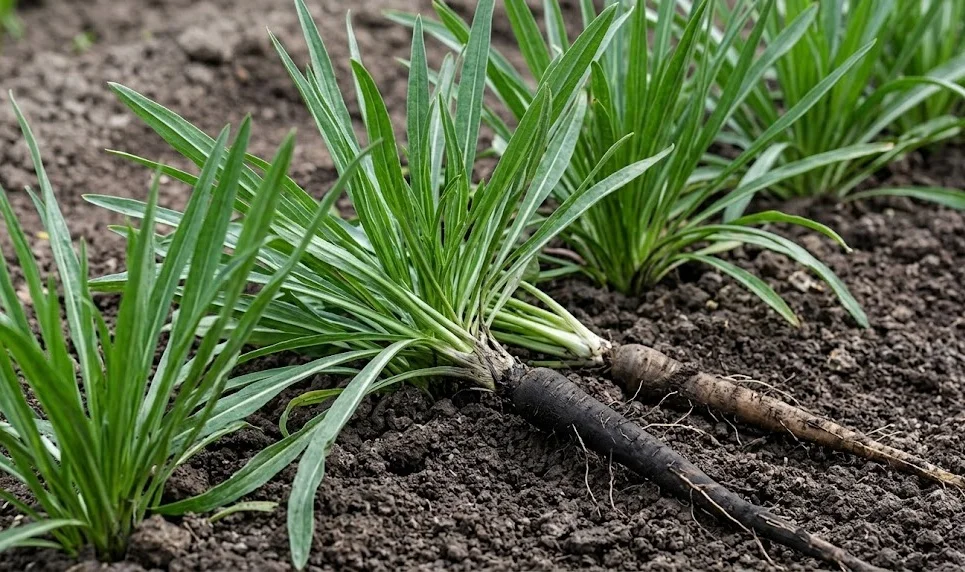
Because the roots are exceptionally long and brittle, you must exercise extreme care during the extraction process to avoid breaking them. It is generally not advisable to pull the plants by the leaves, as the tops will likely snap off, leaving the root buried in the ground. Instead, use a garden fork to loosen the soil deeply on both sides of the row before gently lifting the entire plant. Taking your time with each individual root ensures that you retrieve the full length of the vegetable without causing any structural damage.
Once the roots are out of the ground, you should shake off the excess soil and trim the foliage back to about two centimeters above the crown. Avoid washing the roots immediately if you plan to store them, as the adhering soil can actually help protect the delicate skin during handling. Any roots that are accidentally broken or damaged during harvest should be set aside for immediate consumption rather than long-term storage. This selection process ensures that only the healthiest specimens are kept for the winter months.
If the soil is particularly heavy or clay-like, harvesting can be a physically demanding task that requires specialized tools. A long-bladed spade or a dedicated root harvester can make it easier to reach the bottom of the taproots without excessive digging. You might find it helpful to water the bed a day or two before harvesting to soften the ground and make the lifting process smoother. Proper technique not only preserves the crop but also protects your own physical health during the demanding harvest season.
Post-harvest handling and long term storage
After the harvest is complete, the way you handle the roots will determine how long they remain fresh and flavorful for your kitchen. Salsify has a tendency to dry out quickly once it is removed from the earth, so maintaining a high-humidity environment is essential. You can store the roots in boxes filled with damp sand or sawdust, placed in a cool cellar or a dedicated root storage area. This method mimics the natural soil environment and keeps the roots firm and succulent for several months.
The ideal storage temperature for these roots is just above freezing, typically between one and four degrees Celsius. If the temperature is too high, the roots may begin to sprout new leaves, which will quickly deplete their stored energy and ruin their flavor. Conversely, if they are allowed to freeze and thaw repeatedly in storage, the cellular structure will break down, resulting in a mushy texture. Monitoring the temperature of your storage facility is a vital task for any serious home gardener or professional grower.
Before placing the roots into long-term storage, you should perform a final inspection to remove any specimens showing signs of rot or disease. One bad root can quickly spread contamination to the rest of the batch, leading to significant losses over the winter. It is also a good practice to check the moisture level of the storage medium periodically and add a small amount of water if it feels dry to the touch. This active management ensures that your hard work in the garden translates into a high-quality food source during the lean months.
For those without a cellar, the refrigerator can serve as a temporary storage solution for smaller quantities of black salsify. Wrapping the roots in damp paper towels and placing them in a perforated plastic bag helps to maintain the necessary humidity levels. However, for the best culinary experience, it is always preferable to use traditional root cellaring techniques whenever possible. Understanding the science of post-harvest physiology allows you to enjoy the unique taste of this vegetable long after the growing season has ended.