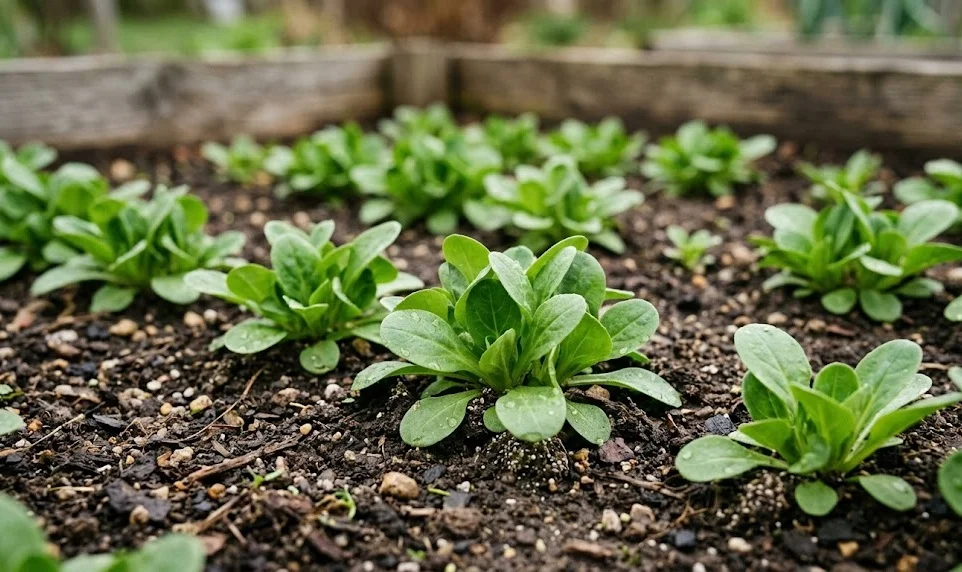

Pruning and cutting back of corn salad are techniques used to prolong the harvest period and maintain the overall health of the plant. Unlike woody shrubs, pruning this leafy green involves the strategic removal of individual leaves or sections to encourage continued productivity. This process helps to manage the density of the rosette and prevents the older leaves from becoming a burden on the plant’s resources. When done correctly, these minor interventions can significantly increase the total yield and improve the visual appeal of the crop.
Leaf thinning is a form of pruning that involves removing the largest, outermost leaves while leaving the smaller, inner leaves to continue growing. This “cut-and-come-again” method is highly efficient for home gardens and professional setups alike, as it provides a steady harvest over several weeks. It is important to use sharp scissors to make clean cuts at the base of the petiole to avoid tearing the delicate crown of the plant. This approach ensures that the plant remains vigorous and continues to produce new foliage from the center.
Removing damaged foliage is an essential maintenance task that should be performed regularly throughout the growing season. Leaves that have been damaged by frost, pests, or mechanical injury can become entry points for disease if left on the plant. By cleanly cutting away these compromised parts, you reduce the risk of infection spreading to the healthy tissue. This also improves the airflow around the base of the plant, which is critical for preventing the damp conditions that favor fungal growth.
Encouraging new growth through strategic cutting back is often done when the plant appears to be reaching its peak maturity. By harvesting the entire rosette just above the soil line, some varieties can be encouraged to regrow a second, smaller crop of leaves. This technique requires the plant to have a strong, healthy root system and access to adequate moisture and nutrients. While the second harvest may not be as large as the first, it provides an additional window of productivity before the area needs to be cleared for the next crop.