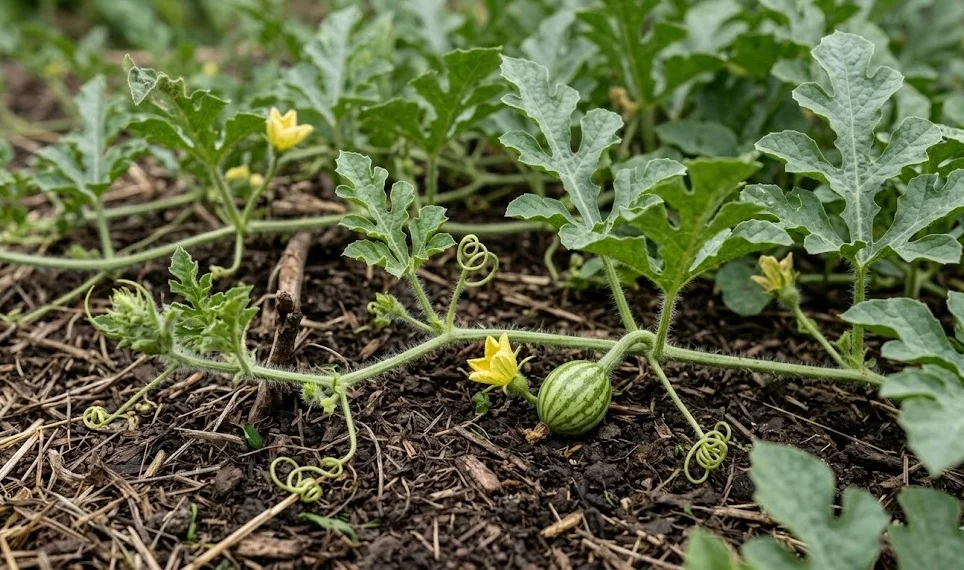

Watermelons are true children of the sun, requiring intense and prolonged light exposure to produce their characteristic sweetness. You must choose a planting site that receives at least eight to ten hours of direct sunlight every single day without exception. Without adequate light, the plants will produce weak, spindly vines and the fruit will never develop the necessary sugar concentrations. Understanding the relationship between solar energy and fruit quality is the key to a professional-grade harvest.
The process of photosynthesis is the engine that drives the growth of these large, heavy fruits. You should ensure that the leaves have enough space to spread out so that they do not shade each other out during the day. Maximizing the surface area exposed to the sun allows the plant to create the carbohydrates needed for rapid expansion. If the light levels are too low, the plant will prioritize survival over reproduction, resulting in few or no melons at the end of the season.
In regions where the sun is exceptionally intense, you might need to monitor the fruit for signs of sunscald or heat damage. While the leaves love the light, the skin of the ripening melon can sometimes be sensitive to direct, overhead radiation for hours on end. You can use the plant’s own foliage to provide natural shade for the fruit, or lightly cover the melons with straw during the hottest part of the day. This careful balance ensures that the plant gets the energy it needs while the harvest remains protected.
Reflective mulches can be used by professionals to increase the amount of light reaching the underside of the leaves. These specialized materials bounce sunlight back up into the canopy, further boosting the photosynthetic efficiency of the entire vine. This technique is particularly useful in areas with shorter growing seasons or more frequent cloud cover during the summer. By managing the light environment with such precision, you can significantly enhance both the yield and the flavor of your watermelons.