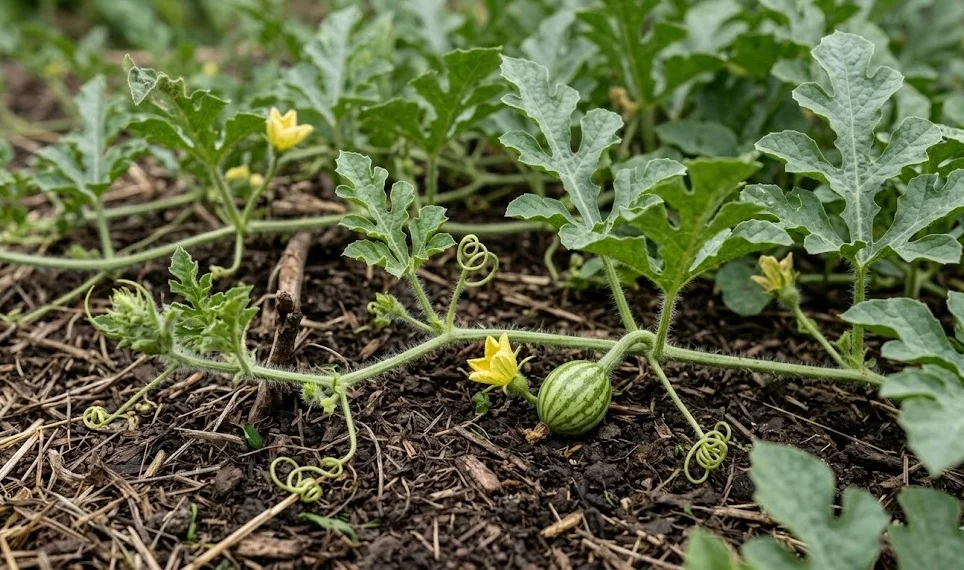

Watermelons are composed mostly of water, which makes the management of soil moisture the most important factor in achieving high yields. You must develop a watering schedule that provides deep hydration while avoiding the pitfalls of over-saturation. The goal is to keep the soil consistently moist but never soggy, as waterlogged roots will quickly lead to plant decline. By understanding the specific hydration needs of the vines, you can ensure that the fruits develop a crisp texture and high sugar levels.
During the initial growth phase, the plants require steady moisture to build a strong root system and expansive foliage. You should focus your watering efforts at the base of the plant to keep the leaves as dry as possible. Using a drip irrigation system is the most professional way to deliver water directly to the soil without wasting resources. This method also reduces the risk of foliage diseases that thrive in damp, humid conditions created by overhead sprinkling.
As the flowers begin to appear and the fruit starts to set, the plant’s demand for water reaches its absolute peak. You should monitor the soil moisture daily during this period to prevent the developing melons from becoming stressed. Sudden fluctuations in moisture can cause the fruit to crack or develop an uneven shape, which ruins the quality of the harvest. Providing a consistent volume of water ensures that the internal pressure of the fruit remains stable as it expands rapidly.
Fertilization strategies should be tailored to the specific growth cycles of the watermelon plant for the best results. You should apply a nitrogen-rich fertilizer during the first few weeks to encourage the rapid development of the green vines. Once the first blossoms appear, it is time to switch to a formula that is higher in phosphorus and potassium to support flower and fruit production. This shift in nutrients tells the plant to stop focusing on leaf growth and start investing its energy into the sweet harvest.
Organic amendments such as well-rotted compost or manure can provide a slow-release source of nutrients throughout the season. You can work these materials into the soil before planting to improve the overall structure and water-holding capacity of the garden bed. Supplementing with liquid seaweed or fish emulsion during the peak growing months can provide a quick boost of trace minerals. Always remember to water the plants thoroughly after applying any dry fertilizer to help the nutrients reach the root zone.
More articles on this topic
In the final weeks leading up to the harvest, you should gradually reduce the amount of water the plants receive. This technique, often referred to as tapering, encourages the fruit to concentrate its sugars rather than diluting them with excess water. If you continue to water heavily right up until the harvest, the resulting melons may be bland and have a mealy texture. Finding the right balance during this final stage is the hallmark of an experienced and professional watermelon grower.