
Mastering the art of pruning is perhaps the most important skill you can develop for the long-term management of these vigorous and beautiful climbing vines. Without regular and systematic cutting back, the plant will quickly become an unmanageable tangle of wood that produces fewer flowers and can even damage your home’s structure. Professional pruning not only controls the size and shape of the vine but also stimulates the production of the specialized flowering spurs that hold the heavy spring blooms. By following a clear, twice-yearly pruning schedule, you can keep your plant healthy, productive, and aesthetically pleasing for many decades.
The first major pruning session of the year should take place in late winter, usually in January or February, while the plant is still fully dormant and its structure is visible. During this time, you should focus on cutting back the long, whippy side shoots that grew during the previous summer to just two or three buds from the main framework. This concentrated pruning directs all the plant’s stored energy into the remaining buds, which will then develop into large, vibrant flower clusters in the spring. It is also the perfect time to remove any dead, diseased, or crossing branches that could cause future problems.
Summer pruning is the second essential part of the cycle and should be performed in July or August, once the initial flush of spring growth has finished. This involves cutting back the long, green “runners” that the vine sends out in all directions to about five or six leaves in length. This task helps to keep the plant within its allocated space and prevents it from growing into gutters, under roof tiles, or over neighboring plants. By shortening these long shoots in the summer, you also encourage the plant to start forming the flower buds that will bloom the following year.
Using the right tools is critical for both your safety and the health of the plant when you are performing these intensive pruning tasks. You will need a pair of sharp, high-quality bypass pruners for the smaller shoots and a sturdy set of loppers or a pruning saw for the thicker, older wood. Always make sure your tools are clean and well-maintained to ensure clean cuts that heal quickly and do not invite disease into the plant’s vascular system. For very high branches, a telescoping pole pruner can help you reach the top of the vine safely without having to use a tall ladder.
Consistency is the key to success, as skipping even a single year of pruning can result in a significant loss of control over the plant’s growth and flowering. If you inherit an overgrown vine that hasn’t been touched in years, you may need to perform a more drastic “rejuvenation pruning” over several seasons to bring it back into shape. This involves identifying the strongest main trunks and slowly removing the excess wood to re-establish a clear and manageable framework. Patience and a steady hand are required to transform a wild mess back into a stunning garden feature.
More articles on this topic
Techniques for structural training
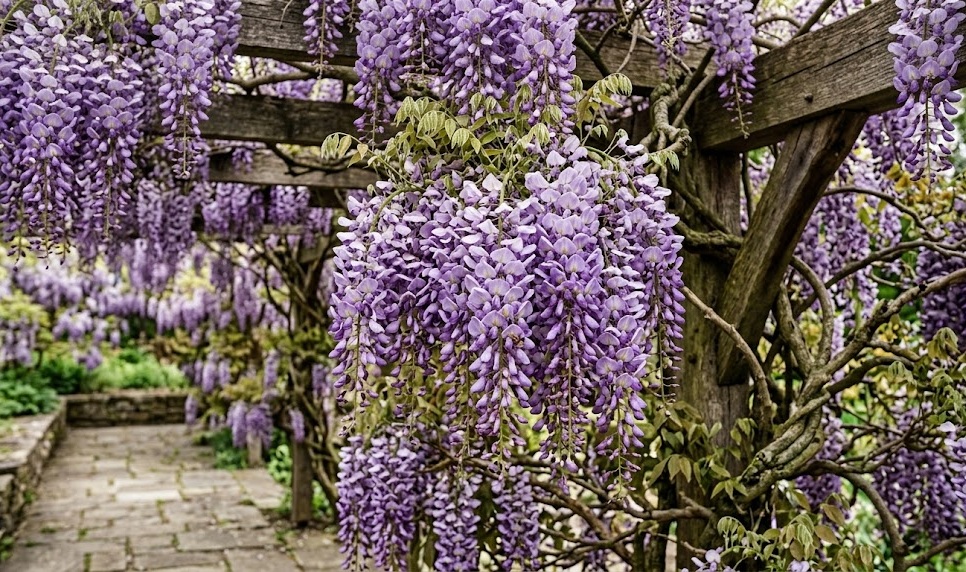
Training the main framework of your vine is a process that begins the moment you plant it and continues for the first several years of its life. You should select one or two strong, healthy stems to serve as the permanent “trunks” and remove all other growth that emerges from the base of the plant. These main stems should be tied securely to your support structure using soft ties that will not cut into the bark as the wood expands over time. As the vine grows upward, you can begin to train horizontal “lateral” branches to fill the space of your pergola or trellis.
Developing a strong and balanced structure is essential for supporting the immense weight of the mature foliage and the hanging flower clusters each spring. You should aim to space your lateral branches about twelve to eighteen inches apart to allow for good air circulation and light penetration throughout the canopy. This open structure not only looks more professional but also makes it much easier to perform your regular pruning tasks twice a year. If a branch starts to grow in an undesirable direction, it is better to remove it early than to try and force it into a new position later.
Removing “suckers” is a continuous task that you should perform whenever you see them emerging from the base of the plant or the main trunk below the graft union. These fast-growing shoots are often from the inferior rootstock and will not produce the same high-quality flowers as the main vine. If left unchecked, they can quickly sap the energy of the plant and ruin the clean lines of your carefully trained framework. Simply pulling them off when they are small and green is the most effective way to keep your vine looking its best.
As the vine reaches the top of its support, you can allow it to spread out and create a lush ceiling of foliage that provides natural shade during the summer months. You must be careful to keep the growth away from any permanent structures like house eaves, as the strong vines can easily pull down wood or damage shingles. Regular “tip pruning” during the growing season can help maintain the desired height and spread without having to perform major cuts. Thinking ahead about the eventual size and weight of the plant will save you many headaches in the future.
More articles on this topic
Pruning for flowers and aesthetics
The ultimate goal of most gardeners is to maximize the number of flowers, and your pruning technique is the most important factor in achieving this. By consistently cutting back the side shoots, you are creating a “spur system” similar to what you would find on an apple or pear tree. These short, woody spurs become the permanent flowering sites that get better and more productive with each passing year. A well-pruned vine will be covered in flowers from top to bottom, rather than just having a few clusters at the very ends of the branches.
When you are pruning in the winter, take the time to look closely at the buds on the branches so you can distinguish between leaf buds and flower buds. Flower buds are typically larger, rounder, and more “fuzzy” than the smaller, pointed leaf buds, making them easy to spot once you know what to look for. Try to make your cuts just above a healthy flower bud to ensure that you are not accidentally removing the very thing you want to see in the spring. This attention to detail is what separates a professional horticulturist from a casual gardener.
The aesthetic shape of the vine should also be a consideration whenever you take your pruners to the garden for a maintenance session. You can prune your vine into a formal, structured shape that follows the lines of your architecture, or you can go for a more natural, weeping look. Both styles require regular maintenance to look their best, but they offer very different visual impacts on your landscape design. Whichever style you choose, the health of the plant should always come first, followed by its decorative appearance and function.
Finally, do not be afraid to be bold with your pruning, as these are incredibly resilient plants that can handle even heavy-handed cutting back. If a branch is in the way or looks unsightly, it is perfectly fine to remove it and wait for new growth to fill the gap. These vines grow so quickly that mistakes are usually covered up within a single growing season, giving you the freedom to experiment and learn. With practice and observation, you will develop a “feel” for the plant and be able to prune it with confidence and professional skill.
Advanced rejuvenation and maintenance
Rejuvenating an old, neglected vine is a long-term project that requires a strategic approach to avoid shocking the plant too much in a single year. You should start by removing all the dead wood and any thin, spindly growth that is clearly not contributing to the plant’s health or beauty. Then, identify the main structural branches and decide which ones should stay and which ones need to be replaced by younger, more vigorous shoots. This “staged” approach to renewal ensures that the plant remains healthy and continues to provide some flowers while it is being rebuilt.
Managing the height of a very large vine may require the use of professional equipment or the help of a tree care specialist if the growth has reached the upper stories of your home. Safety should always be your top priority, and you should never attempt to prune high branches from a ladder that is not properly secured. If you find that the maintenance has become too difficult, you might consider cutting the vine back significantly and training it into a more manageable “standard” or tree form. This allows you to keep the plant in your garden while making the twice-yearly pruning much easier to perform.
After a major pruning session, it is a good idea to provide the plant with some extra care to help it recover and stimulate healthy new growth. A light application of balanced fertilizer and a fresh layer of mulch will give the roots the nutrients and moisture they need to support the plant’s response to the pruning. You should also monitor the new shoots that emerge and start training them onto your framework immediately to prevent them from becoming tangled. Proper post-pruning care ensures that your hard work translates into a more beautiful and productive vine in the coming seasons.
Keeping a record of when you prune and how the plant responds can be a valuable learning tool for any serious gardener who wants to improve their skills. You might notice that certain branches bloom better when pruned at a specific time or that the plant responds differently to weather patterns from year to year. This level of observation and engagement with your garden is what turns a simple hobby into a professional-level passion for horticulture. Your dedication to the art of pruning will be rewarded every spring with a breathtaking display of flowers that is the envy of the neighborhood.