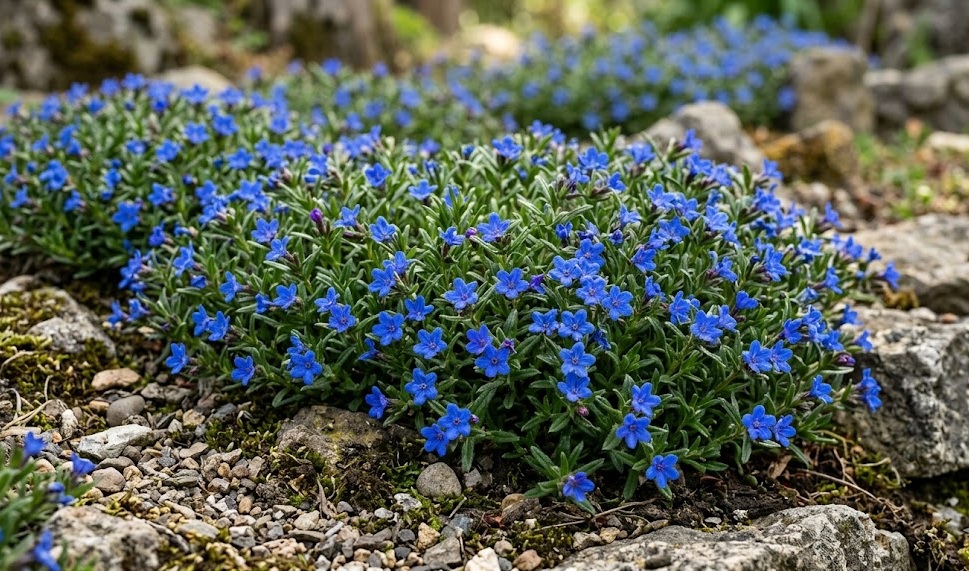

Pruning and cutting back the purple gromwell is an essential maintenance task that ensures the plant remains healthy, compact, and productive. Without regular intervention, this creeping subshrub can become overly woody, sparse in the center, and less inclined to produce its beautiful blue flowers. You must approach pruning with a clear understanding of the plant’s growth cycle and the specific goals you want to achieve. Professional pruning techniques focus on rejuvenating the plant while maintaining its natural, mat-forming habit.
The primary reason to prune is to encourage the growth of new, vigorous stems that will carry the next season’s flower buds. As the stems age, they become increasingly woody and less efficient at transporting nutrients and water to the leaves. By selectively removing these older sections, you stimulate the plant to produce fresh growth from the base and the nodes. This continuous cycle of renewal is the key to maintaining a vibrant and attractive groundcover for many years.
Timing is one of the most important factors in successful pruning for this particular species. You should generally perform your major pruning immediately after the main flowering period has finished in the early summer. This gives the plant plenty of time to develop new growth and set flower buds before the arrival of winter. Pruning too late in the season can remove these developing buds and significantly reduce the following year’s floral display.
Using the right tools is also a professional requirement for any pruning task in the garden. You should always use sharp, clean bypass pruners or garden shears to ensure clean cuts that heal quickly. Crushing the stems with dull tools can create entry points for pests and diseases, which can weaken the entire plant. By following these basic principles, you can manage your purple gromwell with confidence and achieve professional-grade results.
Post-bloom pruning and shaping
The most effective pruning session for the purple gromwell occurs just as the final blue flowers of the spring flush begin to fade. This is known as “shearing,” and it involves cutting back the entire mat of foliage by about one-third of its height. This process removes the spent flower heads and prevents the plant from wasting energy on seed production. It also triggers a flush of new, green growth that will keep the plant looking fresh throughout the summer.
More articles on this topic
When shearing the plant, you should aim for a uniform, rounded shape that follows the contours of the ground or the rocks it is growing over. You can use large garden shears for a quick and even result on larger mats, or hand pruners for more precise work around other plants. Avoid cutting back into the very old, brown wood that has no leaves, as these sections may not be able to produce new shoots. Focus on the soft, green stems that have recently finished flowering to get the best results.
After you have finished pruning, it is a good idea to provide the plant with a little extra care to help it recover. A light watering and a small application of acidic fertilizer can give the new growth the boost it needs to develop quickly. You should also clear away all the clippings from the area to maintain good airflow and hygiene. This post-pruning care is a professional touch that ensures the plant bounces back even stronger than before.
If your purple gromwell has become slightly overgrown or has started to spill into paths or other garden areas, this is the time to correct its size. You can cut back the edges of the mat more severely to bring the plant back within its desired boundaries. The plant is quite resilient and will quickly fill in any gaps created by this more aggressive shaping. Regular maintenance in this manner prevents the need for more drastic measures in the future.
Rejuvenation and structural pruning
Over several years, even a well-maintained purple gromwell can begin to show its age by becoming thin or bald in the center. This is a natural part of its growth habit, but it can be corrected through more strategic rejuvenation pruning. Instead of just shearing the top, you should identify the oldest, most woody stems and cut them back much closer to the center of the plant. This allows light and air to reach the interior, stimulating new growth from the base of the shrub.
More articles on this topic
You don’t have to rejuvenate the entire plant in a single season if you are concerned about its appearance. You can use a “one-third rule,” where you remove only the oldest third of the stems each year over a three-year period. This professional strategy ensures that the plant always has plenty of healthy foliage while slowly being replaced by younger, more vigorous growth. It is a much less stressful approach for the plant and results in a more consistent look for your garden.
Structural pruning also involves removing any stems that are crossing or growing in unwanted directions. This helps maintain the overall health of the mat by preventing the stems from rubbing together and creating wounds. It also ensures that the plant’s energy is directed toward the most productive and healthy parts of its structure. Taking the time to look closely at the plant’s internal structure is a hallmark of a professional gardener.
If a plant has been completely neglected and has become a tangled, woody mess, you may need to perform a more drastic “hard prune.” This involves cutting the entire plant back to within a few inches of the ground in early spring. While this can be risky and may result in the loss of flowers for one season, it is often the only way to save a truly old and tired specimen. If the root system is healthy, the plant will usually respond with a surge of vigorous new growth.
Tools and pruning hygiene
The quality of your pruning tools has a direct impact on the health of your purple gromwell and the ease of the task. Bypass pruners are the best choice for most tasks because they act like scissors, making a clean cut through the soft stems. Anvil pruners, which crush the stem against a flat surface, should be avoided as they can damage the plant’s delicate vascular system. For large-scale shearing of groundcover mats, a pair of sharp hedge shears can be very effective and save a lot of time.
Maintaining the cleanliness of your tools is a critical professional practice that prevents the spread of diseases between plants. You should wipe the blades of your pruners with rubbing alcohol or a mild bleach solution before moving from one plant to another. This is especially important if you have noticed any signs of fungal infection or other issues in your garden. Keeping your tools clean and sharp is a simple way to protect the long-term health of all your plants.
When making a cut, always try to position the blades just above a healthy leaf node or an emerging bud. This ensures that the plant can quickly seal the wound and begin new growth from that point. Avoid leaving long “stubs” of bare stem, as these can die back and provide a site for rot or pests to enter the plant. Making clean, precise cuts is a skill that comes with practice and is essential for professional-grade results.
Finally, always remember to dispose of your pruning clippings responsibly, especially if the plant was showing signs of disease. It is often best to bag and remove this material rather than adding it to your home compost pile where pathogens might survive. Keeping your work area tidy and your tools in good condition is the final step in a professional pruning routine. With these techniques, your purple gromwell will remain a healthy and beautiful feature of your garden for many years to come.
Pruning Lithodora is a bit of a balancing act because you want to keep it compact without cutting into the old wood too much. I usually recommend a light “shearing” immediately after the main flowering period in early summer. This encourages a second, smaller flush of flowers and prevents the center of the plant from becoming bare and woody. If you wait until the autumn, you might accidentally remove the buds for next year’s early spring show. I use a pair of sharp topiary shears for this job to get a nice, even finish. Have you ever tried a more drastic rejuvenation prune on an older, leggy specimen? I’ve had mixed results with that and would love to hear your thoughts.
David, I’ve tried a hard rejuvenation prune on a very old purple gromwell and I have to say, it’s a bit of a gamble. I cut it back by about two-thirds in early spring, and while it did produce some new growth from the base, it took nearly two years to look “full” again. In many cases, it’s actually better to just start with a fresh plant if it’s become extremely woody and sparse. However, if the plant is valuable or sentimental, the hard prune can work if you follow it up with a dose of seaweed fertilizer to help it recover. The key is to make sure you leave at least some green foliage on each stem; if you cut back to bare brown wood, it likely won’t resprout.
As someone who grows these for sale, I can’t emphasize enough how much a regular trim helps the overall health of the plant. In the nursery, we give them a light pinch every few weeks during the growing season to encourage branching. This results in a much denser, more attractive plant for the customer. For home gardeners, even just removing the spent flower heads with your fingers can make a difference. It prevents the plant from putting energy into seed production and keeps it looking tidy. A little bit of maintenance goes a long way with these creeping subshrubs!