
Proper hydration and balanced nutrition are the two pillars of health for the garden clematis, especially during its intensive flowering phase. These vines are heavy feeders and drinkers that require a consistent approach from the gardener to maintain their lush foliage and large blooms. Understanding the specific timing and methods for delivering these resources can make the difference between a struggling plant and a garden centerpiece. This article explores the professional strategies for managing the water and nutrient needs of your climbing clematis specimens.
Establishing a watering schedule
The golden rule for watering these climbing plants is to provide a deep, thorough soaking rather than frequent but shallow light sprinklings. Deep watering encourages the roots to grow further down into the soil, where they are better protected from the heat of the summer sun. You should aim to deliver enough water so that the moisture reaches at least twelve inches below the surface of the ground. During the hottest weeks of July and August, a mature plant may require this level of hydration two or even three times a week.
Morning is the optimal time for irrigation because it allows the plant to fully hydrate before the intense heat of the afternoon sun begins. Watering in the evening can sometimes lead to moisture sitting on the leaves overnight, which creates an environment where fungi can thrive. If you must water later in the day, try to apply the water directly to the base of the plant to keep the foliage dry. Using a soaker hose or a drip irrigation system is an excellent professional way to deliver moisture precisely where it is needed.
Environmental factors like wind, temperature, and humidity will naturally dictate how often you need to pull out the garden hose or watering can. Plants grown against a wall or under a roof overhang may not receive any natural rainfall and will therefore require more frequent manual watering. Always check the soil moisture with your finger or a moisture meter before adding more water to ensure you aren’t overdoing it. The goal is to keep the soil consistently moist, like a wrung-out sponge, rather than allowing it to become a muddy swamp.
Young, newly planted vines require much more frequent attention to their water needs than older, well-established specimens in the garden. For the first two years, the root system is still expanding and is much more susceptible to drying out during even short periods of drought. You should monitor these young plants daily during their first summer to ensure they never experience the stress of severe wilting. Once the plant has a deep and extensive root network, it becomes significantly more resilient to varying weather conditions and minor neglect.
More articles on this topic
Avoiding the dangers of overwatering
While these plants love moisture, they are highly susceptible to root rot if they are forced to sit in waterlogged or poorly drained soil. Root rot is a silent killer that often shows up as sudden wilting of the stems, which gardeners sometimes mistake for a need for even more water. If the soil remains saturated for long periods, the roots cannot breathe and will eventually begin to decay and die. Ensuring proper drainage at the time of planting is the best way to prevent this common and often fatal horticultural problem.
The physical structure of your soil plays a massive role in how water moves through the root zone and how long it stays there. Heavy clay soils hold onto water for a long time and can easily become anaerobic if you are not careful with your watering frequency. If you have this type of soil, you may need to water less often but for longer periods to ensure the water penetrates the heavy material. Adding coarse sand or extra organic matter can help improve the internal drainage and protect the health of the sensitive root system.
Container-grown clematis have their own set of watering challenges because the limited amount of soil can dry out extremely quickly in the sun. You must ensure that any pot you use has large drainage holes at the bottom to allow excess water to escape freely. During the peak of summer, a container plant might need watering twice a day if it is in a particularly exposed or windy location. Using a high-quality potting mix that includes water-retaining crystals can provide a small safety margin for those particularly hot and dry days.
Symptoms of overwatering can sometimes mimic other problems, such as nutrient deficiencies or the dreaded clematis wilt disease. If you see yellowing leaves starting from the bottom of the plant, it might be a sign that the roots are struggling with too much moisture. Take a break from watering for a few days and allow the top inch of soil to dry out completely before you provide any more hydration. Observing the plant’s reaction to your changes will help you fine-tune your approach to its specific environmental needs and conditions.
More articles on this topic
Essential nutrients for growth
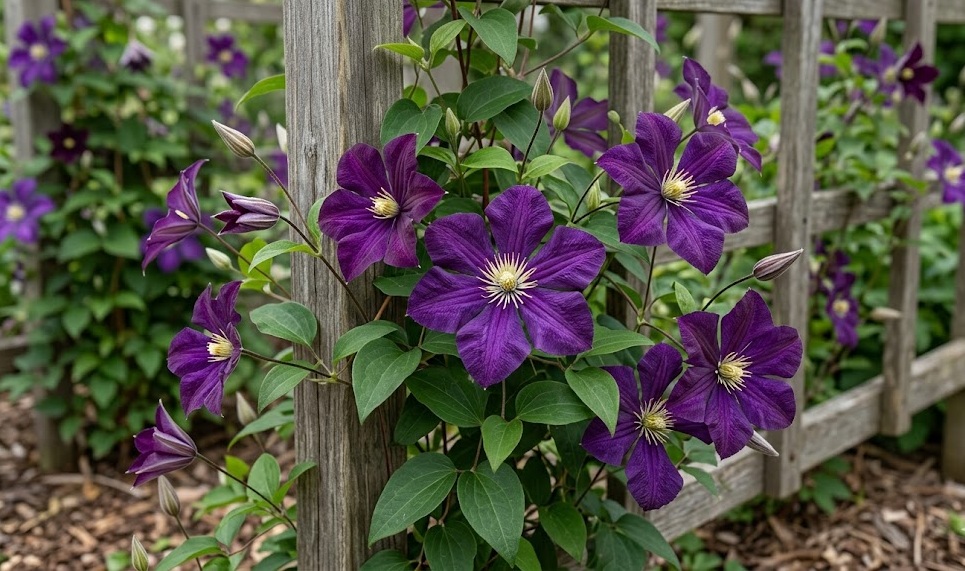
To produce those massive and iconic purple flowers, the garden clematis requires a steady supply of high-quality macronutrients throughout the growing season. Nitrogen is essential for the development of strong stems and deep green leaves that can efficiently capture energy from the sun. Phosphorus is the key ingredient for root development and, most importantly, the formation of the flower buds that provide the summer show. Potassium helps with the overall hardiness of the plant and its ability to resist diseases and extreme temperature fluctuations.
A balanced N-P-K fertilizer, such as a 10-10-10 or a 20-20-20 formula, is often the best choice for general maintenance during the early spring months. As the plant approaches its flowering period, some experts switch to a formula with a higher middle number to boost bloom production. Be careful not to use a fertilizer that is too high in nitrogen late in the summer, as this can stimulate soft new growth. This tender growth is often more susceptible to frost damage when the temperatures begin to drop in the late autumn months.
Micronutrients like magnesium and iron are just as important as the main nutrients, even though the plant requires them in much smaller quantities. A lack of magnesium often results in a condition called chlorosis, where the leaves turn pale while the veins remain a dark and vivid green. You can address this specific issue by applying a small amount of Epsom salts dissolved in water around the base of the plant. Ensuring your soil has a healthy level of organic matter is the best long-term strategy for providing these essential trace elements naturally.
The pH level of your soil significantly impacts the plant’s ability to actually absorb the nutrients that you are providing through fertilization. If the soil is too acidic, many minerals become chemically locked and are unavailable to the roots, regardless of how much you add. Most clematis varieties prefer a soil that is neutral to slightly alkaline, roughly in the range of 6.5 to 7.0 on the pH scale. You can add garden lime to raise the pH or sulfur to lower it, depending on the results of a professional soil test.
Professional fertilizing schedules
The first application of fertilizer should happen in the early spring as soon as you see the first green buds beginning to swell on the stems. This provides the plant with the immediate energy it needs to send out its long climbing vines and start the season with vigor. You can use a slow-release granular product that will gradually break down over several weeks with every watering or rainfall. This “set it and forget it” approach is perfect for busy gardeners who want consistent results without daily effort and monitoring.
Once the plant is in full growth mode during the late spring, a supplemental liquid feed every two weeks can provide an extra boost for flower development. Liquid fertilizers are absorbed more quickly by the roots and can provide an almost immediate response in the plant’s appearance and health. Always follow the manufacturer’s instructions regarding the dilution ratio to avoid accidentally burning the sensitive roots with too much concentrated chemical. It is better to provide a slightly weaker solution more frequently than one very strong dose that might cause permanent damage.
As the main flowering period comes to an end in late summer, it is time to stop all heavy fertilization to allow the plant to prepare for winter. You want the stems to “harden off” and become more woody and resilient before the first hard frosts of the season arrive. Continuing to feed the plant late into the year will encourage lush, watery growth that will easily freeze and could lead to stem rot. Transitioning the plant into a natural state of decline is a vital part of its annual biological cycle and long-term health.
In the autumn, a light application of organic compost or well-rotted manure can be used as a top-dressing to replenish the soil for the next year. This organic material will slowly break down over the winter months, improving the soil structure and providing a gentle source of nutrients for the spring. Unlike synthetic fertilizers, this method builds the long-term health of the soil ecosystem rather than just feeding the plant directly. This holistic approach ensures that your garden remains fertile and productive for many years of spectacular climbing displays.
Organic vs synthetic options
Many professional gardeners prefer to use organic fertilizers because they promote a healthier soil microbiome and are less likely to leach into the groundwater. Products like fish emulsion, seaweed extract, and bone meal provide a wide range of nutrients in a form that is released slowly over time. These organic options also contain beneficial microbes that help the plant resist diseases and improve its overall stress tolerance in the garden. While they may work more slowly than chemicals, the long-term benefits to the garden’s health are often significantly greater.
Synthetic fertilizers offer the advantage of precise nutrient ratios and very rapid results, which can be useful if a plant is showing signs of severe deficiency. They are easy to apply and are generally more cost-effective for large gardens or for those on a strict budget. However, over-reliance on synthetics can lead to a buildup of salts in the soil, which can eventually harm the roots and the surrounding soil life. If you choose to use synthetic products, it is wise to alternate them with organic inputs to maintain a healthy and balanced soil environment.
Compost tea is a popular organic supplement that can be used as both a soil drench and a foliar spray for your climbing vines. It is made by steeping high-quality compost in water to create a nutrient-rich liquid that is packed with beneficial bacteria and fungi. Applying this to the leaves can help prevent some common fungal diseases by occupying the leaf surface with “good” microbes that compete with pathogens. This double-action benefit makes compost tea a favorite tool for those who want to minimize their use of synthetic pesticides.
Regardless of the type of fertilizer you choose, the most important factor is consistent observation of the plant’s health and reaction to your care. A plant with dark green, glossy leaves and plenty of flower buds is telling you that its current nutritional needs are being met perfectly. If the plant looks stunted or the leaves are pale, it is a clear signal that you need to adjust your feeding or watering routine. Learning to read these visual cues is what separates a beginning gardener from a true expert in the field of horticulture.