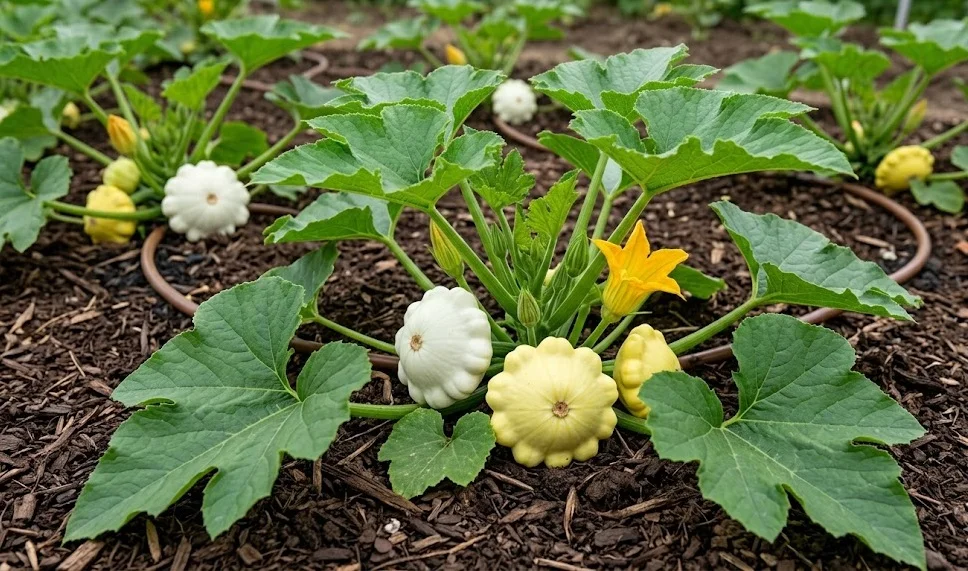

The irrigation of pattypan squash requires a disciplined approach to ensure that the moisture levels remain steady throughout the various growth stages. You should prioritize deep watering sessions that penetrate the soil to a depth of at least fifteen to twenty centimeters. This encourages the plant to develop a deep and robust root system that can withstand temporary periods of drought. Providing water at the base of the plant is essential to keep the large leaves dry and minimize the risk of fungal infections.
During the peak of the summer, the high transpiration rate of the large squash leaves means the plant consumes a significant amount of water every day. You might need to water your crop daily if you are growing in sandy soil or during periods of extreme heat and wind. The best time to irrigate is in the early morning before the sun is high enough to cause excessive evaporation. This timing allows the plant to hydrate fully before facing the heat of the afternoon.
Using a drip irrigation system or a soaker hose is a professional method that provides water directly to the soil where it is needed most. This technique is much more efficient than overhead watering and helps to conserve this precious resource in your agricultural operation. It also keeps the humidity levels around the foliage lower, which is a key factor in preventing diseases like powdery mildew. If you must use a sprinkler, try to do so early in the day so the leaves have plenty of time to dry before nightfall.
The water requirements of the pattypan squash will change as the plant shifts from vegetative growth to fruit production. You should increase the frequency of watering once the flowers appear and the small fruits begin to swell on the vines. Consistent moisture is the most important factor in preventing the fruit from becoming bitter or developing uneven shapes. Monitoring the soil moisture by hand or with a sensor will give you the most accurate information for your irrigation schedule.
Essential nutrients for high quality yields
Fertilizing your pattypan squash is not just about adding volume; it is about providing the right balance of nutrients at the right time. You should start with a soil test to understand the baseline levels of nitrogen, phosphorus, and potassium in your garden bed. Nitrogen is primarily responsible for the lush green growth of the leaves and stems during the early part of the season. Phosphorus and potassium become more important later on as the plant focuses its energy on flowering and fruiting.
More articles on this topic
A balanced organic fertilizer, such as a 5-10-10 or a similar ratio, is often a good choice for general-purpose garden use. You should apply the first round of fertilizer when the plants are about fifteen centimeters tall and starting to grow vigorously. Side-dressing involves placing the fertilizer in a shallow trench a few centimeters away from the base of the plant. This allows the nutrients to wash down toward the roots with each watering or rain event.
You should avoid over-applying nitrogen, as this can lead to massive leaf growth at the expense of fruit production. If your plant is all green leaves and no flowers, it might be a sign that the nitrogen levels in the soil are too high. Switching to a fertilizer with a higher phosphorus content can help signal to the plant that it is time to start producing blossoms. Professional growers always follow the application rates recommended on the product packaging to avoid nutrient toxicity.
Micronutrients like calcium and magnesium also play a vital role in the structural integrity of the plant and the quality of the squash. A deficiency in calcium can sometimes lead to blossom-end rot, a condition where the bottom of the fruit turns black and leathery. You can add lime or gypsum to the soil if your test results show that your calcium levels are low. Maintaining a healthy balance of all elements is the secret to producing a professional-grade harvest of pattypan squash.
Organic amendments and soil health
Incorporating organic matter into your fertilizing routine is a sustainable way to improve the soil structure and nutrient availability. You should consider using well-aged compost, which acts as a slow-release fertilizer and provides a home for beneficial soil microbes. This living soil ecosystem helps break down mineral components into forms that the plant can easily absorb through its roots. Composted manure is another excellent source of nutrients, but it must be fully decomposed to avoid burning the sensitive plants.
More articles on this topic
Liquid organic fertilizers, like compost tea or seaweed extract, can be used to give your squash a quick boost during the growing season. You can apply these liquids to the soil or as a foliar spray to provide immediate relief for nutrient-stressed plants. Foliar feeding should be done in the cool of the morning or evening to prevent the sun from scorching the treated leaves. These organic options are often preferred by professional gardeners who want to maintain a natural and chemical-free environment.
Green manures and cover crops are long-term fertilizing strategies that improve the soil over several seasons. You can plant nitrogen-fixing crops like clover or vetch in the area where you plan to grow squash the following year. When these plants are tilled back into the earth, they release a significant amount of organic nitrogen and improve the overall tilth. This proactive approach to soil fertility reduces the need for synthetic inputs and creates a more resilient garden.
Mulching with organic materials also contributes to the fertility of your garden as the layers slowly break down over time. You should use clean straw, shredded leaves, or wood chips to cover the soil around your pattypan squash plants. This not only keeps the weeds down and the moisture in but also feeds the earthworms and other beneficial organisms. A healthy population of soil life is the best indicator of a truly productive and professionally managed agricultural site.
Irrigation timing and environmental factors
The environmental conditions in your garden will dictate exactly how and when you should water your pattypan squash. You should take into account the humidity levels, the wind speed, and the amount of natural rainfall your area receives each week. Windy conditions can dry out the large leaves of the squash much faster than you might expect, leading to sudden wilting. On the other hand, high humidity means that evaporation is slower, and you might not need to water as frequently.
A common mistake is to water only the surface of the soil, which leads to shallow root growth and a less stable plant. You should always aim for deep saturation that reaches the lower levels of the root zone where the plant stores its reserves. Checking the soil moisture by inserting a finger or a probe will help you decide if it is time to turn on the hose. If the top two or three centimeters are dry, it is usually a good indicator that a deep watering session is required.
During the hottest weeks of July and August, the demand for water will be at its absolute peak for the entire season. You should monitor your plants for signs of heat stress, such as leaves that remain wilted even after the sun has gone down. If this occurs, it is a clear sign that the plant’s water intake cannot keep up with its needs and more intensive irrigation is necessary. Providing a consistent supply of moisture will prevent the physiological stress that can lead to reduced yields.
It is also important to adjust your watering schedule as the season begins to cool down in the early autumn. You should gradually reduce the amount of water you provide as the plant’s growth slows and the evaporation rate decreases. Over-watering during the late season can lead to root rot or split fruit as the plant struggles to process the excess moisture. Professional growers stay flexible and adapt their techniques to the changing needs of the crop throughout its entire life.
Professional tools and soil analysis
Using the right tools can make the process of watering and fertilizing your pattypan squash much more accurate and efficient. You might want to invest in a high-quality soil moisture meter to take the guesswork out of your irrigation routine. These devices provide an instant reading of the water content at different depths, allowing you to fine-tune your delivery. Digital pH meters are also useful for monitoring the chemical balance of your garden beds on a regular basis.
For fertilizing, a broadcast spreader or a side-dressing tool can help you distribute the nutrients evenly across the entire planting area. This prevents the formation of “hot spots” where too much fertilizer might damage the roots or the foliage of your squash. If you are using liquid fertilizers, a venturi injector can be added to your irrigation system to automate the feeding process. This professional technique ensures that every plant receives a consistent and measured dose of nutrients with each watering.
A comprehensive laboratory soil test is something that every serious gardener should perform at least once every few years. You will receive a detailed report showing the exact levels of all the major and minor elements in your soil. This data allows you to create a custom fertilization plan that addresses the specific deficiencies of your land. Working with hard data rather than assumptions is the hallmark of a professional approach to agriculture and horticulture.
Keeping a record of all your inputs, including the volume of water and the amount of fertilizer used, is a vital part of professional garden management. You should note how the plants respond to different treatments and adjust your future plans based on these real-world results. Over time, you will develop a deep understanding of your soil’s unique personality and the specific needs of your pattypan squash. This knowledge is the most powerful tool you have for achieving consistent and high-quality results year after year.