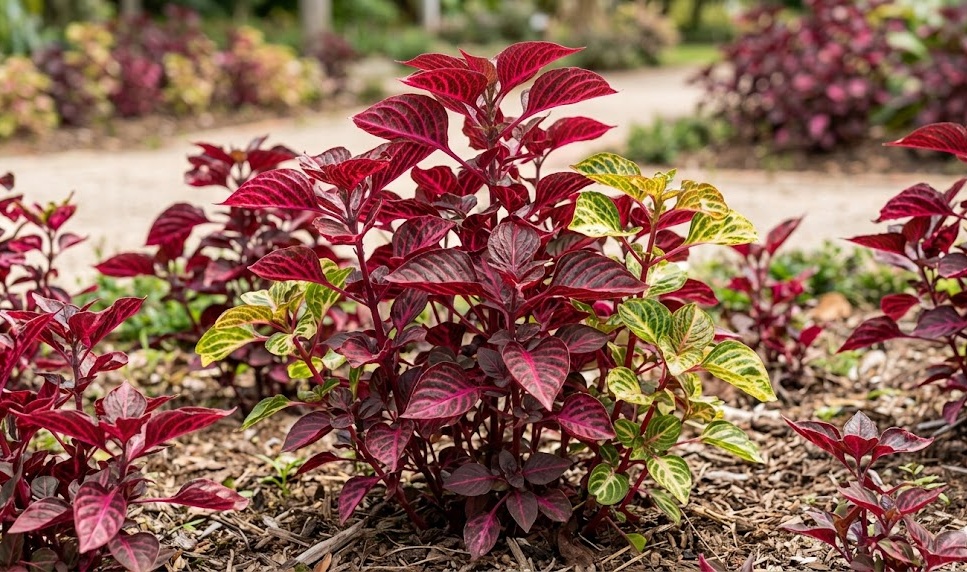

Managing the hydration and nutrition of this plant is a balancing act that requires a keen eye. Because it is a tropical species, it does not handle drought well, yet it is equally sensitive to overwatering. You must learn to read the signals the plant sends through its vibrant, fleshy leaves. Providing the right amount of resources at the right time is the secret to maintaining that signature red glow.
Consistency in your watering routine prevents the physiological stress that leads to leaf drop. You should aim to keep the soil moist to the touch but never truly saturated or muddy. If the soil dries out completely, the stems will quickly lose their turgor pressure and collapse. While they often bounce back after a drink, frequent wilting will eventually weaken the entire plant.
The quality of the water you use can have a long-term impact on the health of the soil. Many tropical plants are sensitive to the chlorine and minerals found in standard tap water. If you notice white crusty deposits on the soil or pot, it might be time to switch to filtered water. Allowing tap water to sit out overnight can also help some of the chemicals evaporate before use.
Fertilizing is the second pillar of this care routine and provides the building blocks for those colorful leaves. You should think of fertilizer as a supplement rather than a primary food source, which is actually light. Over-fertilizing is a common mistake that can lead to salt buildup and burnt root tips. A “less is more” approach often yields the healthiest and most naturally beautiful growth.
Establishing a watering schedule
The frequency of watering will change significantly depending on the light, temperature, and season. You should get into the habit of checking the soil moisture with your finger every two or three days. If the top inch of soil feels dry, it is generally time to provide a thorough watering. Relying on a strict calendar schedule can lead to problems if the weather unexpectedly shifts.
More articles on this topic
Indoor environments with central heating can dry out the soil much faster than you might expect. You may find that you need to water more often in the winter if the air in your home is very dry. Conversely, in a humid summer, the plant might stay moist for a week or more without intervention. Always trust your physical observation of the soil over any pre-set plan.
When you do water, ensure that you apply enough so that it begins to flow out of the drainage holes. This practice ensures that the entire root ball is hydrated and helps flush out any accumulated salts. You should never let the pot sit in a saucer full of standing water for more than thirty minutes. Discard any excess water immediately to prevent the bottom roots from suffocating.
Morning is the best time to water because it gives the plant the entire day to process the moisture. It also ensures that any accidental splashes on the foliage have time to dry before nightfall. Watering late in the evening can create a damp environment that encourages the growth of mold or mildew. A morning routine also allows you to start your day by connecting with your garden.
Water quality and temperature
Using water that is too cold can shock the tropical root system and cause the plant to stall. You should always use room-temperature water that feels neutral to the touch. If you are drawing water from a cold tap, let it sit in a watering can for an hour before applying it. This small step makes the process much more comfortable for the sensitive underground structures.
More articles on this topic
Rainwater is often considered the gold standard for watering delicate tropical foliage like the bloodleaf. It is naturally soft and free of the additives found in municipal water supplies. If you have the means to collect it, your plants will likely show their appreciation with more vibrant colors. It also helps maintain the slightly acidic soil pH that this species prefers.
Distilled water is another option if your local tap water is exceptionally hard or chemically treated. While it lacks minerals, it is a safe way to ensure no harmful substances are entering the soil. You can compensate for the lack of minerals by using a high-quality liquid fertilizer during the growing season. This control over the input allows for very precise management of the plant’s health.
Observing the leaves for brown tips can give you a clue about water quality issues. This symptom is often a sign of “tip burn” caused by the accumulation of salts or fluoride. If you see this, try flushing the soil with a large amount of purified water to clear the buildup. Switching your water source for a few weeks can confirm if the water was indeed the problem.
Understanding drainage needs
Proper drainage is the only way to prevent the dreaded issue of root rot in tropical plants. You must ensure that the soil is porous enough to allow water to move through it freely. If water sits on top of the soil for more than a few seconds, the mix is likely too heavy. Adding extra perlite or coarse sand to the potting medium can solve this problem quickly.
The type of pot you use directly affects how quickly the soil drains and dries out. Unglazed terracotta is porous and allows moisture to evaporate through the walls, which is very forgiving. Plastic and glazed pots hold onto moisture, which means you need to be much more careful with your watering frequency. Choose a container that matches your personal gardening style and habits.
Never place a layer of “drainage rocks” at the bottom of a pot without holes, as this is a myth. This practice actually raises the water table within the pot and keeps the roots in a “perched” zone of saturation. The only real solution for good drainage is a pot with functional holes and a well-structured soil mix. If you love a decorative pot without holes, use it as a “cachepot” with a plastic liner inside.
Checking the drainage holes for blockages should be part of your seasonal maintenance. Roots can sometimes grow through the holes and plug them up, leading to unexpected flooding. You can gently trim these external roots or reposition the plant to ensure the water path remains clear. A healthy flow of water through the pot is a sign of a healthy internal environment.
Choosing the right fertilizer
A balanced, water-soluble fertilizer is usually the best choice for this leafy tropical variety. Look for a product with an equal N-P-K ratio, such as 10-10-10, to support overall health. Since this plant is grown for its foliage, a slightly higher nitrogen content can also be beneficial. Nitrogen is the primary nutrient responsible for green and red pigment production in leaves.
Organic options like fish emulsion or liquid seaweed are excellent for those who prefer a natural approach. These fertilizers provide a wide range of micronutrients that synthetic versions sometimes lack. They are also less likely to cause chemical burns to the roots if you accidentally apply a bit too much. Be aware that some organic fertilizers have a strong scent that may linger indoors.
Slow-release granules are a convenient option for gardeners who have many plants to manage. You can mix them into the soil at the beginning of the spring to provide a steady supply of nutrients. This method reduces the risk of forgetting a feeding session during the busy summer months. However, it offers less control than liquid feeding if the plant shows signs of a specific deficiency.
Always read the instructions on the fertilizer packaging and then consider cutting the dosage in half. Most manufacturers suggest a maximum strength that might be too aggressive for a slow-growing indoor plant. A weaker solution applied more frequently is often safer and more effective than a strong dose once a month. This “weakly, weekly” method is a favorite among professional horticulturists.
Feeding schedules
You should only fertilize when the plant is actively growing, which typically occurs from spring through early autumn. During this time, the plant has the energy and light required to process the extra nutrients. Feeding every two to four weeks is usually sufficient to maintain steady growth and bright colors. If you notice the plant producing very small leaves, it might be time for a feeding.
Stop all fertilization as soon as the days begin to shorten and the weather turns cool. Forcing a plant to grow during its natural rest period can lead to weak, spindly stems. The plant needs this time to consolidate its resources and prepare for the lower light levels of winter. Resuming fertilization too early in the late winter can also lead to salt accumulation in the soil.
If you have recently repotted your bloodleaf, wait at least six weeks before you start fertilizing again. Most high-quality potting soils come with a built-in supply of nutrients that will last for a while. Adding more chemicals to a plant that is already adjusting to new soil can cause unnecessary stress. Give the roots time to settle and start exploring their new environment first.
Always apply fertilizer to moist soil rather than bone-dry soil to protect the roots. If the plant is thirsty, give it a plain drink of water first and wait an hour before applying the nutrient solution. This ensures that the roots are fully hydrated and less likely to absorb the salts too quickly. Taking these small precautions will keep your bloodleaf healthy and vibrant for the long haul.