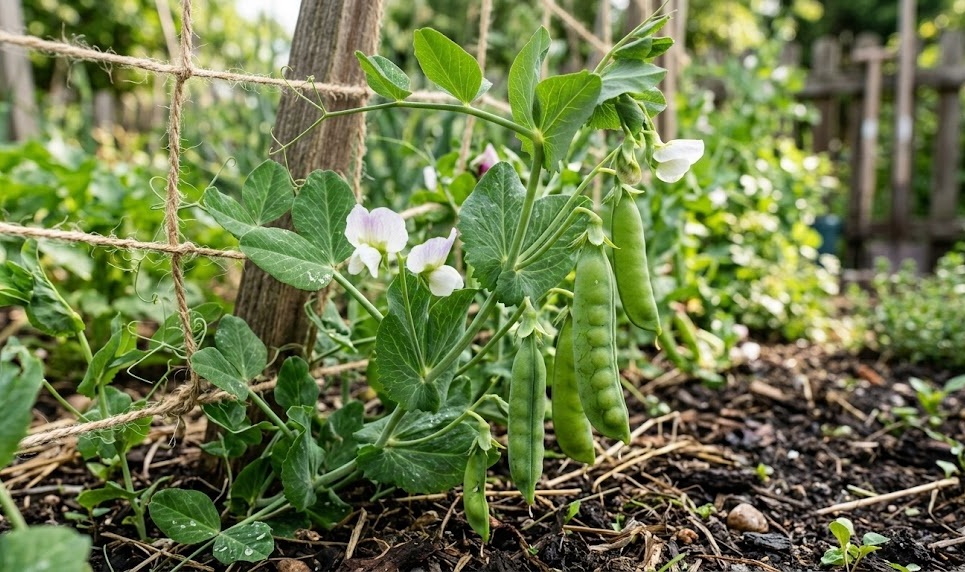

Providing the correct amount of water and nutrients is the cornerstone of a successful green pea harvest in any professional garden. You should recognize that while these plants are hardy, they have specific requirements during different stages of their development. Maintaining a consistent environment prevents the stress that often leads to reduced yields or susceptibility to common garden diseases. A well-hydrated and properly fed pea plant will reward you with vibrant green foliage and a heavy crop of sweet pods.
The early stages of growth require a steady but moderate supply of moisture to help the seeds germinate and establish roots. You must be careful not to overwater during this time, as cold, saturated soil is a primary cause of seed rot in early spring. Checking the soil moisture by inserting your finger a few centimeters into the ground is a simple yet effective way to monitor the conditions. If the soil feels damp and sticks to your skin, the plants likely have enough water for the moment.
As the weather warms and the vines begin to climb, their demand for water will increase significantly to support the expanding leaf area. You will notice that the plants may begin to wilt slightly during the hottest part of the afternoon if they are thirsty. This is a clear signal that you should adjust your irrigation schedule to ensure the root zone stays consistently moist. Deep watering once or twice a week is generally more effective than frequent light sprinkling, as it encourages roots to grow deeper.
Nutrient management for green peas is unique because these plants belong to the legume family, which can produce their own nitrogen. You should focus your fertilization efforts on providing phosphorus and potassium rather than heavy doses of nitrogen. Excessive nitrogen can lead to lush, beautiful green vines that unfortunately produce very few flowers and even fewer pea pods. Understanding this biological balance is what separates the amateur gardener from the seasoned agricultural professional.
Efficient irrigation techniques for legumes
Drip irrigation is widely considered the most efficient way to deliver water to your green pea crop while minimizing waste. You should install a system that delivers water directly to the base of the plants, keeping the foliage as dry as possible. This method reduces the risk of fungal diseases, such as powdery mildew, which thrive on wet leaves in humid conditions. Using a timer with your drip system allows you to automate the process and ensure your garden is watered during the early morning hours.
More articles on this topic
Soaker hoses are an excellent alternative if you are looking for a more cost-effective way to achieve similar results in your garden beds. You should lay the hoses along the rows of peas and cover them with a layer of mulch to prevent evaporation from the sun. This setup allows water to seep slowly into the ground, reaching the roots without causing soil erosion or surface runoff. It is a gentle way to hydrate the soil that mimics a long, slow rain shower perfectly.
If you prefer hand-watering, you should always aim the stream at the soil level rather than spraying the entire plant from above. Using a long-handled watering wand with a soft spray attachment can help you reach the base of the vines without bending over. You should take your time to ensure that the water is actually soaking in and not just running off the surface of the dry mulch. Consistency is the most important part of hand-watering, especially during the critical flowering and pod-filling stages.
Mulching plays a vital role in your irrigation strategy by acting as a protective barrier that locks moisture into the soil. You should apply a layer of clean straw or shredded bark around the base of your peas once they are about ten centimeters tall. This layer significantly reduces the amount of water lost to evaporation, meaning you will need to irrigate less frequently. Additionally, mulch helps keep the root zone cool, which is essential for pea plants as they are sensitive to high soil temperatures.
Understanding nutrient requirements and timing
Peas are moderate feeders that benefit most from soil that has been enriched with organic matter before the seeds are even planted. You should work a generous amount of well-rotted compost or aged manure into the top fifteen centimeters of your garden bed. This provides a broad spectrum of micronutrients and improves the soil’s ability to hold onto both water and air. A healthy soil structure is the best delivery system for the nutrients your plants will need throughout the season.
More articles on this topic
The role of phosphorus is particularly important for green peas because it supports strong root development and healthy flower production. You might consider adding a small amount of bone meal or a phosphorus-rich organic fertilizer to the planting trench at the time of sowing. This gives the young seedlings immediate access to the energy they need to build a robust framework for the coming months. Ensuring adequate phosphorus levels early on sets the stage for a heavy set of pods later in the season.
Potassium is the third major nutrient that you should monitor to ensure your plants are resilient against temperature fluctuations and disease. This mineral helps regulate the water balance within the plant tissues and strengthens the overall cell structure of the vines. If your soil is naturally sandy, it may be prone to potassium leaching, requiring you to supplement with organic sources like kelp meal. A balanced approach to these minerals ensures that your peas are healthy from the roots to the tips of the tendrils.
Timing your fertilizer applications is just as important as the type of nutrients you choose to use in your garden. You should avoid heavy fertilization once the plants have started to flower, as this can disrupt the delicate reproductive cycle. If you feel your plants need a boost mid-season, a light application of compost tea or a liquid seaweed extract can provide a gentle lift. These liquid fertilizers are quickly absorbed by both the roots and the foliage, providing almost immediate results for the crop.
The importance of nitrogen fixation
One of the most fascinating aspects of growing green peas is their ability to form a partnership with specific soil bacteria. You will find that these bacteria live in small nodules on the roots and convert atmospheric nitrogen into a form the plant can use. This means that healthy pea plants are essentially self-fertilizing when it comes to their primary growth requirement. You can observe these nodules by carefully digging up a spent plant and looking for small, pinkish bumps on the root system.
To maximize this natural process, you should use a legume inoculant when you plant your seeds, especially if peas haven’t been grown there recently. This powder contains the specific Rhizobium bacteria that the plants need to initiate the nodulation process effectively. You simply dampen the seeds and roll them in the powder before placing them into the soil for the best results. This small step can lead to much more vigorous growth and a significantly higher yield of peas at harvest time.
Because peas are so efficient at fixing nitrogen, they are often used as a green manure or a cover crop in professional agriculture. You should recognize that after the peas are harvested, the soil in that bed will be richer in nitrogen than it was before. This makes the pea patch an ideal location for planting nitrogen-heavy feeders like cabbage or kale in the following season. Managing your garden in this way allows you to work with nature rather than relying on external chemical inputs.
It is a common mistake to add high-nitrogen fertilizers to peas, thinking it will help them grow faster and stronger. You will likely see rapid vine growth, but the plant will “forget” to produce the stress signals that trigger flowering and pod development. If your pea plants are dark green and massive but have no flowers, you have likely provided too much nitrogen. Rebalancing the soil with a little extra phosphorus and reducing water slightly can sometimes help trigger the reproductive phase.
Identifying and correcting nutrient imbalances
Observing the color and shape of the leaves is the most direct way for you to diagnose potential nutrient problems in your pea patch. Yellowing of the older, lower leaves can sometimes indicate a nitrogen deficiency, though this is rare if the plants are well-inoculated. If the leaves develop a purplish tint, it is often a sign that the soil is too cold or that phosphorus is not being absorbed. Paying close attention to these visual cues allows you to take corrective action before the entire crop is affected.
Stunted growth and pale green foliage might suggest that the soil pH is out of balance, preventing the plants from accessing available nutrients. You should aim for a soil pH between 6.0 and 7.5 for optimal pea growth and bacterial activity in the root zone. If your soil is too acidic, the nitrogen-fixing bacteria will struggle to survive and perform their essential tasks for the plant. Testing your soil with a simple home kit or sending a sample to a lab provides the data you need for accurate adjustments.
Over-fertilization can be just as damaging as a lack of nutrients, often leading to salt buildup in the soil around the roots. You might notice the edges of the leaves turning brown or curling upward if the concentration of fertilizer is too high. If you suspect this has happened, you should flush the soil with plenty of fresh water to wash away the excess salts. Moving forward, always follow the recommended application rates on any organic or synthetic products you choose to use.
A professional gardener knows that the goal of watering and fertilizing is to create a stable, stress-free environment for the plants. You should strive for consistency in your routine, avoiding the “feast or famine” approach that can lead to split pods or bitter peas. By understanding the unique biological needs of the green pea, you can provide the specific support required for excellence. Your efforts will be visible in the health of your vines and the incredible flavor of your home-grown harvest.