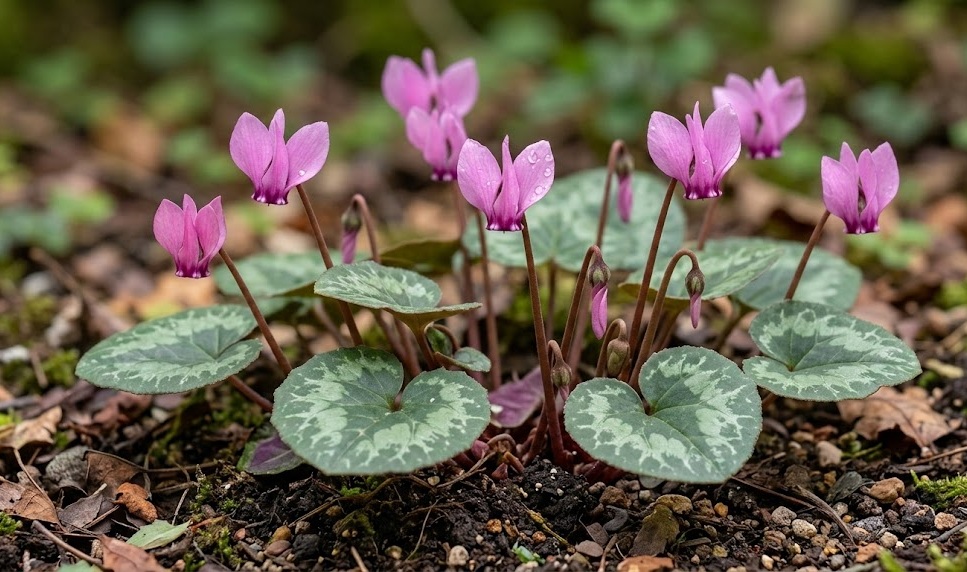

Proper hydration and nutritional support are the two pillars of professional cyclamen maintenance that require a delicate and observant touch. You must move away from a fixed schedule and instead learn to respond to the specific needs of the plant and the changing environmental conditions. The European cyclamen has evolved to survive in moist woodland soils, which means it has a low tolerance for both prolonged drought and saturated conditions. By mastering the art of balanced watering and strategic feeding, you provide the essential fuel that allows this perennial to produce its stunning foliage and fragrant blooms year after year.
Mastering the art of hydration
The most important rule when watering a European cyclamen is to avoid pouring water directly into the center of the plant’s crown. You should always aim the water at the soil surface around the edges of the pot or the base of the plant in the garden. This technique prevents water from becoming trapped in the tightly packed leaf and flower stems, which is the primary cause of crown rot. If you are growing them in pots, watering from the bottom by placing the pot in a shallow dish of water for twenty minutes is an even safer professional method.
You should use water that is at room temperature to avoid shocking the delicate root system of the plant. Rainwater is always the best choice if you have access to it, as it is naturally soft and free from the chemicals often found in tap water. If you must use tap water, letting it sit out for twenty-four hours allows the chlorine to dissipate and the temperature to stabilize. This small step can prevent the mineral buildup that sometimes occurs in the soil over a long period of time.
The frequency of watering depends entirely on the season and the amount of growth the plant is currently producing. During the active flowering and leaf-growing stages in autumn and spring, you should keep the soil consistently damp to the touch. You can test this by sticking your finger about two centimeters into the soil; if it feels dry at that depth, it is time to water. Always ensure that any excess water can drain away freely, as the tubers will quickly rot if they are forced to sit in stagnant moisture.
In the summer, when the plant enters its semi-dormant phase, you must significantly reduce the amount of water you provide. The goal during this time is not to keep the plant growing, but simply to prevent the tuber from completely shriveling up. You will find that watering once every two or three weeks is usually sufficient during the warmest months, depending on the humidity. This period of reduced moisture is a vital part of the plant’s natural rhythm and should be respected to ensure long-term health.
More articles on this topic
Recognizing the signs of water stress
You must become an expert at identifying the subtle signs that your European cyclamen is either thirsty or over-saturated. When a plant is lacking water, the leaves will often lose their characteristic shine and may begin to droop slightly. If the drought continues, the leaf edges will start to turn brown and crispy, and the flowers will wilt prematurely. Fortunately, if caught early, a thirsty cyclamen will usually recover quickly once it is given a gentle but thorough watering.
Overwatering is a much more serious problem and is often harder to correct once the damage has reached the tuber. A plant that has been kept too wet will often have yellowing leaves that feel soft or mushy to the touch rather than dry. You might also notice a distinct unpleasant odor coming from the soil, which is a sign that anaerobic bacteria are breaking down the organic matter and roots. If you see these signs, you must stop watering immediately and allow the soil to dry out completely before attempting to intervene further.
The condition of the flower stems can also provide valuable clues about the hydration status of your plant. Healthy stems should be firm and upright, holding the flowers high above the foliage with ease. If the stems are buckling or twisting in an unusual way, it is often a sign of inconsistent watering practices. Providing a steady, reliable supply of moisture is the best way to keep the plant’s vascular system functioning at its peak and avoid these structural issues.
Seasonal changes in the environment will alter the plant’s water requirements, and you must adjust your care accordingly. A plant in a heated room during winter will dry out much faster than one in a cool garden, even if they are at the same stage of growth. You should always observe the plant and the soil daily, rather than relying on a calendar to tell you when to water. This professional level of observation is what separates successful cyclamen enthusiasts from those who struggle to keep them alive.
More articles on this topic
Nutritional needs and fertilizer selection
The European cyclamen is naturally adapted to the nutrient-poor but organic-rich soils of the forest floor. You will find that it does not require heavy doses of concentrated fertilizers to produce a beautiful display. In fact, over-fertilizing can lead to excessive leaf growth that is soft and prone to disease, often at the expense of the flowers. A professional approach involves providing a gentle, balanced supply of nutrients that supports the plant’s natural development without forcing unnatural growth.
When choosing a fertilizer, look for a balanced liquid formula that contains equal parts nitrogen, phosphorus, and potassium, often labeled as 10-10-10 or 20-20-20. You should always dilute the fertilizer to half or even a quarter of the strength recommended on the packaging. This “low and slow” feeding strategy is much safer for the sensitive roots of the cyclamen and prevents the risk of fertilizer burn. You can apply this diluted solution once every four to six weeks during the main growing seasons of autumn and spring.
You should avoid fertilizers that are extremely high in nitrogen, as this specific element encourages the production of foliage over flowers. While the marbled leaves of the cyclamen are beautiful, the goal is to achieve a balanced plant with a strong tuber and plenty of blooms. A fertilizer with a slightly higher phosphorus content can be used in the early autumn to help trigger the formation of flower buds. However, for most home gardeners, a simple balanced formula used sparingly is more than enough to achieve excellent results.
Organic alternatives such as seaweed extract or a very thin layer of well-rotted leaf mold can also be highly effective. These natural options provide a wide range of trace minerals that synthetic fertilizers often lack, contributing to the overall resilience of the plant. Applying a fresh layer of leaf mold to the soil surface each year is a professional technique that slowly releases nutrients as it breaks down. This method also improves the soil structure, providing a dual benefit that synthetic products cannot match.
Strategic feeding schedules
The timing of your fertilization is just as important as the type of nutrients you use for your European cyclamen. You should begin your feeding routine in the late summer or early autumn, just as the first signs of new growth appear after the summer rest. This initial boost provides the energy needed for the plant to push out its new leaves and develop the coming season’s flowers. Feeding during this period of active growth ensures that the nutrients are utilized immediately rather than sitting unused in the soil.
Once the plant is in full bloom, you can continue to provide a very weak fertilizer solution to help sustain the long-lived flowers. You should stop all fertilization once the flowering period has ended and the plant begins to show signs of slowing down for its dormant phase. Feeding a dormant plant is not only a waste of resources but can actually be harmful, as the roots are not actively taking up nutrients. This can lead to a toxic buildup of salts in the soil that may damage the tuber when the plant wakes up again.
During the darkest months of winter, even if the plant still has leaves, you should hold off on any supplemental feeding. The lower light levels mean the plant’s metabolism is naturally slower, and it does not require extra fuel during this time. You can resume a light feeding schedule in the early spring if the plant shows a second flush of growth or leaf development. Always remember that with cyclamen, less is almost always more when it comes to added nutrition.
If you have recently re-potted your cyclamen in fresh, organic-rich soil, you should wait at least six months before adding any fertilizer. The new substrate will already contain enough nutrients to support the plant for its first season in the new pot. Using fertilizer too soon after re-potting can stress the roots as they try to establish themselves in the new medium. By following this strategic and patient schedule, you ensure that your fertilization supports rather than hinders the plant’s long-term health.
Preventing and correcting nutrient imbalances
You must be vigilant for signs of nutrient deficiencies or excesses, which can manifest as discoloration or distorted growth in the leaves. A lack of iron or magnesium often appears as yellowing between the leaf veins, while the veins themselves remain green. This condition, known as chlorosis, can usually be corrected by using a fertilizer that includes a full range of micro-nutrients. However, you should also check the pH of your soil, as nutrients can become “locked out” if the soil is too acidic or too alkaline.
Excessive fertilization often results in the buildup of white, crusty mineral salts on the surface of the soil or the edges of the pot. These salts can draw moisture out of the roots, leading to a condition that looks like drought stress even when the soil is wet. If you notice this buildup, you should “flush” the soil by watering the plant thoroughly with plain rainwater and letting it run out the bottom. This process washes away the excess minerals and gives the plant a clean slate to recover from the over-feeding.
The health of the tuber is the ultimate indicator of your watering and fertilization success over the long term. A well-nourished tuber should feel firm, heavy, and solid when you gently press it near the soil surface. If it feels hollow or soft, you may need to re-evaluate your entire care routine, focusing on improving drainage and reducing nutrient concentrations. A strong tuber is the plant’s battery, and its condition reflects the quality of the care you have provided throughout the year.
Ultimately, mastering these aspects of care requires you to develop a relationship with your plants and your specific garden environment. What works in a humid coastal garden may not be appropriate for a dry, inland climate or a centrally heated home. You should keep a simple garden journal to record when you water and feed, and how the plants respond to these actions. Over time, this personal data will become your most valuable tool for maintaining a stunning and healthy collection of European cyclamen.