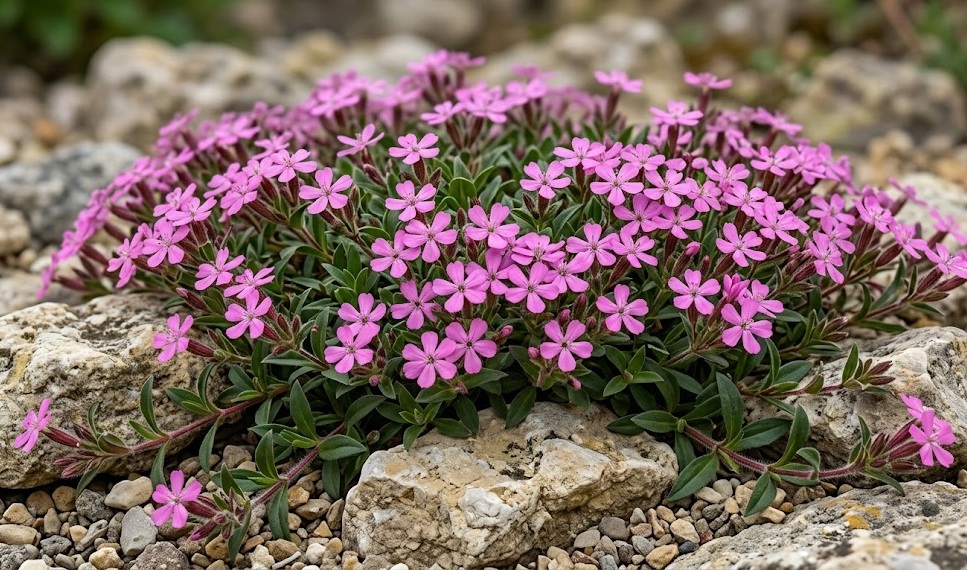

Maintaining the proper balance of moisture and nutrients is essential for the long-term vitality of rock soapwort in any garden setting. While this perennial is known for its ability to withstand lean conditions, a professional approach to irrigation and feeding will yield much better results. You must understand that over-caring for this plant can be just as detrimental as total neglect, especially when it comes to excessive water or heavy fertilizers. By mastering these two fundamental aspects of care, you can ensure your plants remain healthy, compact, and covered in their signature pink blooms.
Hydration needs of young plants
The initial period following planting is the only time when rock soapwort requires a relatively high and consistent level of moisture. You should ensure that the soil around the newly installed plants stays damp to the touch but never truly saturated or muddy. This moisture is crucial for helping the delicate root hairs expand into the surrounding soil and establish a firm anchor. If the young roots dry out completely during this phase, the plant may suffer permanent damage or fail to establish.
During the first few weeks, you might need to water every couple of days depending on the local weather conditions and soil type. You should always check the soil moisture levels manually before adding more water to avoid the risk of overwatering. A simple finger test, checking an inch or two below the surface, is often more accurate than any visual inspection of the ground. Developing this habit early will prevent many common mistakes associated with establishing new groundcovers.
As you see new green growth appearing on the stems, you can begin to gradually increase the time between your watering sessions. This transition encourages the roots to grow deeper into the ground in search of moisture, which builds the plant’s natural drought resistance. You want to avoid shallow watering, as this keeps the roots near the surface where they are more vulnerable to heat and drying out. A slow and steady approach to reducing hydration is the best way to transition the plant to its mature state.
Pay close attention to the weather forecast and adjust your routine if a sudden heatwave or period of drying winds is expected. Young plants have very little internal water storage and can wilt quickly if the environmental demand for moisture exceeds what the roots can supply. Providing a light organic mulch can help stabilize the soil moisture during this critical transition period. By being a vigilant observer during the first season, you set the stage for a much more self-sufficient plant in the future.
More articles on this topic
Established plant drought tolerance
Once rock soapwort has fully established its root system, it becomes remarkably resilient and can handle significant periods of dry weather. You will find that mature plants in the garden rarely need supplemental watering except during the most extreme summer droughts. This inherent drought tolerance is one of the reasons why the plant is so highly valued for rock gardens and xeriscaping projects. Overwatering a mature specimen is one of the quickest ways to encourage root rot and a decline in overall health.
If the foliage begins to look slightly dull or if the stems lose some of their turgidity, this is a clear sign that the plant finally needs a drink. You should provide a deep, thorough soaking that reaches the entire root zone rather than a quick surface sprinkle. This method ensures that the water penetrates the lower layers of the soil where the most important roots are located. Watering in the early morning is always the best practice to allow the foliage to dry before the cooler evening temperatures arrive.
You should be especially careful with watering if you are growing soapwort in a high-humidity environment or in soil that retains more moisture than ideal. In these conditions, the risk of fungal diseases and crown rot is significantly increased if the area is kept too wet. The plant prefers its “feet” to be dry and its surroundings to be well-ventilated to maintain its compact and healthy growth habit. Trusting in the plant’s natural ability to survive dry spells is a key part of professional perennial management.
Seasonal changes in rainfall will naturally dictate much of your watering schedule throughout the year for established colonies. In many climates, the natural precipitation provided by spring and autumn rains is more than enough to satisfy the plant’s requirements. You should only intervene when the natural cycle fails to provide moisture for an extended period during the peak growing season. This hands-off approach not only saves water but also promotes a hardier and more naturally beautiful plant.
More articles on this topic
Soil nutrient requirements
Rock soapwort is naturally adapted to growing in nutrient-poor, rocky soils where many other garden plants would struggle to survive. You should avoid the temptation to treat it like a heavy-feeding bedding plant that requires constant inputs of high-nitrogen fertilizers. In fact, soil that is too rich can cause the plant to grow too quickly, leading to soft, weak stems that are prone to flopping. The goal of nutrient management for this species is to support steady, robust growth rather than rapid expansion.
A soil test can be a valuable tool to determine if there are any major deficiencies in your garden before you decide to add any amendments. Most often, you will find that a neutral to slightly alkaline pH is all the plant needs to access the minerals already present in the earth. If your soil is excessively acidic, a light application of garden lime can help bring the pH into the ideal range for soapwort. Understanding the chemistry of your soil allows you to be much more precise and effective with your interventions.
If the plant shows signs of slow growth or pale foliage despite having adequate light and water, it might benefit from a very light feeding. You should look for a balanced, slow-release fertilizer that provides a steady supply of nutrients over several months. Avoid using liquid fertilizers that provide a sudden burst of energy, as this is contrary to the plant’s natural growth patterns. A single application in the early spring as growth resumes is usually more than enough for the entire year.
In many cases, the natural breakdown of organic mulches or the presence of mineral-rich stones in the soil provides all the nutrition the plant requires. You should focus more on maintaining a healthy soil ecosystem through proper drainage and aeration rather than relying on chemical inputs. A plant that grows slowly and steadily will always be more resilient than one that has been pushed with excessive feeding. Professional gardening often involves knowing when to hold back on resources to achieve the best long-term results.
Organic vs mineral fertilizers
When deciding on a feeding strategy, you have the choice between using organic materials or mineral-based commercial fertilizers in your garden. Organic options, such as well-rotted compost or bone meal, offer the advantage of improving soil structure while providing a slow release of nutrients. These materials support the overall health of the soil microbiome, which in turn helps the soapwort roots stay healthy and strong. Using organic matter is often the most sustainable and “humanized” approach to long-term garden care.
Mineral fertilizers, on the other hand, provide a more precise and immediate supply of specific elements like nitrogen, phosphorus, and potassium. While these can be useful for correcting specific deficiencies, they must be used with extreme caution to avoid over-fertilizing your soapwort. If you choose this route, always use a lower concentration than what is recommended on the package for standard perennials. Mineral fertilizers are best used as a targeted supplement rather than the primary source of nutrition for alpine species.
The choice between these two approaches often depends on your personal gardening philosophy and the specific needs of your planting site. If you are growing soapwort in a traditional rock garden with lots of stone and grit, a light mineral supplement might be easier to apply. In a more traditional garden bed, incorporating a small amount of organic compost into the surrounding soil is often the most effective method. Both systems can produce excellent results if you apply them with a light touch and a focus on long-term stability.
Regardless of which type of fertilizer you choose, you should always avoid getting the product directly on the foliage or the crown of the plant. High concentrations of salts or organic acids can cause “burn” on the leaves, leading to unsightly damage and potential entry points for disease. Always water the area thoroughly after applying any fertilizer to help wash the nutrients down into the soil where the roots can safely reach them. Being careful and deliberate with your applications is the hallmark of a professional approach.
Seasonal feeding schedules
Timing your nutrient applications is just as important as the type of fertilizer you choose to use for your rock soapwort. The most effective time to provide extra nutrition is in the very early spring, just as the first signs of green are appearing at the base of the plant. This provides the necessary resources for the plant to build strong stems and a profusion of flower buds for the coming season. A single, well-timed application in the spring is often the only feeding the plant will ever need.
You should strictly avoid fertilizing in the late summer or autumn, as this can stimulate new growth that won’t have time to harden off before winter. This tender new foliage is highly susceptible to frost damage, which can weaken the entire plant and lead to significant dieback during the cold months. By following the natural growth cycle of the plant, you ensure that its energy is used most efficiently for survival and blooming. Professional schedules are always designed to work in harmony with the changing seasons.
During the peak flowering period, the plant is directing most of its energy into reproduction rather than nutrient uptake. Adding fertilizers at this time is largely a waste of resources and can even shorten the duration of the bloom by shifting the plant’s focus back to leaf production. If you feel the plant needs a boost, it is better to wait until after the flowers have faded and you have performed a light pruning. This allows the soapwort to use the extra nutrients to recover and build strength for the following year.
In years where the weather has been particularly favorable and the plant looks exceptionally healthy, you might choose to skip fertilization altogether. Rock soapwort is a hardy survivor that often performs best when it has to work a little bit for its resources. Maintaining a flexible and observational approach allows you to provide exactly what the plant needs without overdoing it. Consistent, minimal intervention is the secret to a long-lived and beautiful soapwort display in your landscape.