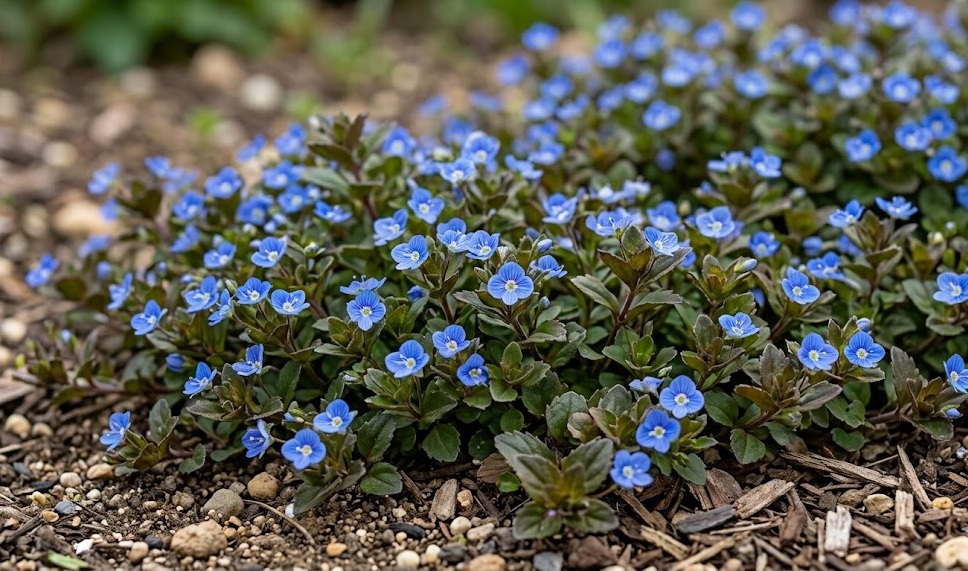

Providing the correct amount of moisture and nutrients is essential for maintaining the lush appearance of any ornamental groundcover. Georgia blue speedwell is relatively adaptable, but it truly excels when its basic physiological needs are met with precision. Understanding the balance between over-watering and drought stress is a key skill for any professional gardener. This guide explores the best practices for keeping your plants hydrated and well-fed throughout the growing season to ensure a spectacular floral display.
Establishing hydration routines
Newly planted Georgia blue speedwell requires more frequent attention to watering than established specimens. During the first few weeks after planting, the goal is to keep the root ball consistently moist to encourage rapid root expansion. Water should be applied gently to avoid washing away the soil or damaging the delicate new stems. It is better to water deeply and less frequently than to provide light daily sprinkles that only reach the surface.
Once the plant has developed a robust root system, it becomes much more resilient to dry spells. Established plants generally need about an inch of water per week, either from rainfall or supplemental irrigation. During periods of extreme heat or wind, this requirement may increase as the rate of transpiration rises. Monitoring the soil moisture by feel is often the most reliable way to determine if it is time to turn on the hose.
Watering in the early morning is widely considered the best practice for both efficiency and plant health. This timing allows the foliage to dry quickly as the sun rises, which reduces the risk of fungal infections. It also ensures that the plant has a full reservoir of moisture to draw from during the hottest part of the day. Evening watering should be avoided if possible, as wet leaves overnight can create an inviting environment for pathogens.
The type of irrigation system used can also impact how effectively the water reaches the root zone. Soaker hoses or drip irrigation systems are ideal for groundcovers because they deliver water directly to the soil without wetting the foliage. These systems also minimize water waste through evaporation and runoff, making them a more sustainable choice for large garden beds. If using a sprinkler, ensure that it provides even coverage across the entire planting area.
More articles on this topic
Seasonal watering adjustments
As the seasons change, so do the hydration requirements of the Georgia blue speedwell. In the spring, natural rainfall is often sufficient to support the initial growth spurt and the development of flower buds. However, if the spring is unusually dry, supplemental watering is necessary to ensure a full and vibrant bloom. This early season moisture sets the stage for the plant’s performance for the rest of the year.
The high temperatures of summer present the greatest challenge for moisture management in the garden. Even though this variety is somewhat drought-tolerant, prolonged dry periods can lead to dormant behavior or foliage browning. Gardeners should pay close attention to the plants during heatwaves, looking for signs of wilting in the afternoon. Deep watering during these times helps to cool the soil and maintain the plant’s metabolic processes.
In the autumn, as temperatures begin to cool and the plant prepares for dormancy, watering can be gradually reduced. However, it is important not to let the ground dry out completely before the first hard freeze. Moist soil holds heat better than dry soil and provides a layer of protection for the root system during the winter. A final deep watering in late fall is a professional technique that helps perennials survive the cold months.
During the winter, the plant is dormant and requires very little moisture, but the roots still need to stay alive. In regions with dry winters or little snow cover, a light watering during a warm spell can be beneficial. This prevents the roots from desiccating in the frozen ground, especially if the soil is sandy. Understanding these subtle seasonal shifts allows for a more nuanced and successful approach to garden care.
More articles on this topic
Nutrient requirements and timing
Fertilizing Georgia blue speedwell is not a task that needs to be performed excessively, but a little boost can go a long way. The primary goal of fertilization is to provide the elements that may be lacking in the local soil profile. Nitrogen supports lush green foliage, while phosphorus is essential for root health and flower production. Potassium helps the plant develop overall hardiness and resistance to environmental stressors.
The best time to apply fertilizer is in the early spring just as the first signs of new growth appear. This provides the plant with the energy it needs to produce its signature blue flowers and expand its footprint. A second, lighter application can be made in early summer if the soil is particularly poor or if the growth seems sluggish. Avoid fertilizing in late summer or fall, as this can encourage soft new growth that may be damaged by early frosts.
Using a slow-release granular fertilizer is often the most convenient and effective method for groundcovers. These products release nutrients gradually over several months, providing a steady supply rather than a sudden surge. This prevents the “boom and bust” cycle that can occur with liquid fertilizers and is much gentler on the soil ecosystem. Always follow the package instructions to avoid over-applying, which can lead to salt buildup in the soil.
Organic options, such as well-rotted compost or fish emulsion, are excellent alternatives to synthetic fertilizers. These materials not only provide nutrients but also improve the soil structure and support beneficial microorganisms. Applying a thin layer of compost over the bed in the spring acts as both a mulch and a slow-release food source. Many professional gardeners prefer organic methods for their long-term benefits to soil health and sustainability.
Application methods and safety
When applying granular fertilizer, it is important to distribute it evenly across the entire planting area. Avoid getting the granules stuck in the foliage, as the concentrated chemicals can cause leaf burn. If any fertilizer does land on the leaves, a gentle shaking or a light watering will wash it down to the soil. Watering the bed immediately after fertilizing helps to dissolve the nutrients and move them into the root zone.
Liquid fertilizers can be used for a quick boost, especially if the plants are showing signs of nutrient deficiency. These are typically mixed with water and applied with a watering can or a hose-end sprayer. While they act faster than granules, their effects are shorter-lived and they may need to be applied more frequently. Liquid feeding is a useful tool for correcting immediate problems but is rarely the primary fertilization strategy for established groundcovers.
Safety is an important consideration when working with any garden chemicals, including fertilizers. Always wear gloves and wash your hands after handling these products to prevent skin irritation. Keep fertilizers stored in their original containers in a cool, dry place away from children and pets. Proper storage ensures that the products remain effective and do not pose a risk to the environment or the household.
Testing your soil before starting a heavy fertilization program is a hallmark of professional gardening. A soil test will tell you exactly which nutrients are missing and what the current pH level is. This prevents the unnecessary application of minerals that are already present in sufficient quantities. Being precise with your inputs saves money and protects the local watershed from nutrient runoff.
Impact of soil quality on nutrition
The ability of a plant to absorb nutrients is heavily dependent on the quality and structure of the surrounding soil. Even if you apply the best fertilizers, a plant in compacted or poorly drained soil will struggle to thrive. Soil that is rich in organic matter has a higher cation exchange capacity, meaning it can hold onto nutrients more effectively. Improving the soil structure is often the most important step in a long-term nutrition plan.
Soil pH also plays a critical role in nutrient availability for the Georgia blue speedwell. If the soil is too acidic or too alkaline, certain elements can become “locked” and unavailable to the plant roots. Most speedwell varieties prefer a pH that is close to neutral, where the widest range of nutrients is easily accessible. Adjusting the pH with lime or sulfur should be done gradually and based on accurate soil test results.
Mycorrhizal fungi are beneficial organisms that form a symbiotic relationship with the roots of many perennials. These fungi extend the reach of the root system and help the plant absorb water and phosphorus more efficiently. Using organic fertilizers and avoiding excessive tilling helps to protect these valuable soil partners. A healthy, living soil creates a self-sustaining system where the plants need less external intervention to stay healthy.
Ultimately, the best approach to watering and fertilization is one of moderation and observation. Paying attention to how the plants respond to your care will tell you more than any generic guide ever could. Georgia blue speedwell is a forgiving plant that rewards consistent, thoughtful care with a beautiful and durable display. A well-nourished garden is a source of pride and a vital part of a healthy local ecosystem.