
The productivity and health of a garlic crop are heavily dependent on a structured regime of hydration and nutrient management. Because garlic has a relatively shallow root system and a long growing season, it is sensitive to both water stress and nutrient deficiencies. A professional approach involves monitoring soil conditions closely and applying inputs at precise moments in the plant’s life cycle. This article provides detailed insights into the best practices for watering and fertilizing garlic to achieve premium quality bulbs.
Fundamental principles of garlic irrigation
Garlic requires a consistent supply of moisture to maintain steady growth, especially during the peak vegetative phase. Unlike some deep-rooted vegetables, garlic cannot easily access water from the deeper layers of the soil profile. Therefore, the top fifteen to twenty centimeters of soil must be kept moderately moist to prevent the plant from entering a stress state. Drought conditions during the early spring can significantly reduce the final size of the bulbs by limiting leaf development.
Over-watering is just as dangerous as under-watering, as it can lead to root rot and other fungal pathogens. Garlic does not tolerate “wet feet,” meaning the soil should never stay saturated for extended periods. Professional growers check the soil moisture by feeling the earth several centimeters below the surface before deciding to irrigate. If the soil sticks together in a firm ball but doesn’t drip water, the moisture level is usually ideal.
The method of delivery plays a role in the overall health of the crop and the efficiency of water use. Drip irrigation is widely considered the gold standard for garlic because it delivers water directly to the roots without wetting the leaves. Keeping the foliage dry is a key strategy for preventing diseases like rust or downy mildew. If overhead sprinklers must be used, they should be operated early in the morning so the sun can dry the leaves quickly.
As the garlic approaches maturity and the bulbs begin to cure in the ground, watering should be gradually reduced and eventually stopped. Excessive moisture late in the season can cause the protective bulb skins to rot or become discolored. Typically, irrigation is halted about two to three weeks before the anticipated harvest date. This allows the soil to dry out, making the lifting process easier and improving the long-term storage potential of the garlic.
More articles on this topic
Early season fertilization for vegetative vigor
The first round of fertilization should occur in the early spring as soon as the green shoots begin to grow actively. During this time, the plant’s primary requirement is nitrogen, which fuels the rapid expansion of the leaves. High-quality compost or a balanced organic fertilizer can be side-dressed along the rows to provide a steady release of nutrients. This initial boost ensures that the plant develops the photosynthetic capacity needed to build a large bulb later on.
Nitrogen is a mobile nutrient in the soil, meaning it can be washed away by heavy spring rains. For this reason, many professionals prefer to apply nitrogen in smaller, frequent doses rather than one large application. This “spoon-feeding” approach ensures that the garlic has a constant supply without the risk of nutrient leaching. Organic options like fish emulsion or blood meal are excellent fast-acting sources of nitrogen for early-season growth.
While nitrogen is the focus, the importance of phosphorus and potassium during the early stages should not be overlooked. Phosphorus supports strong root development, which is essential for the plant to anchor itself and absorb water efficiently. Potassium helps with the overall cellular health and disease resistance of the garlic throughout the growing season. A soil test before the season starts can help determine if these minerals are already present in sufficient quantities.
Applying fertilizer too close to the stem can cause chemical burns to the delicate young tissues of the garlic plant. It is best to apply the nutrients a few centimeters away from the base and lightly rake them into the soil surface. Watering immediately after fertilization helps move the nutrients down into the root zone where they can be absorbed. This careful application technique prevents waste and ensures the health of the individual plants.
More articles on this topic
Mid-season nutrient adjustments and bulb development
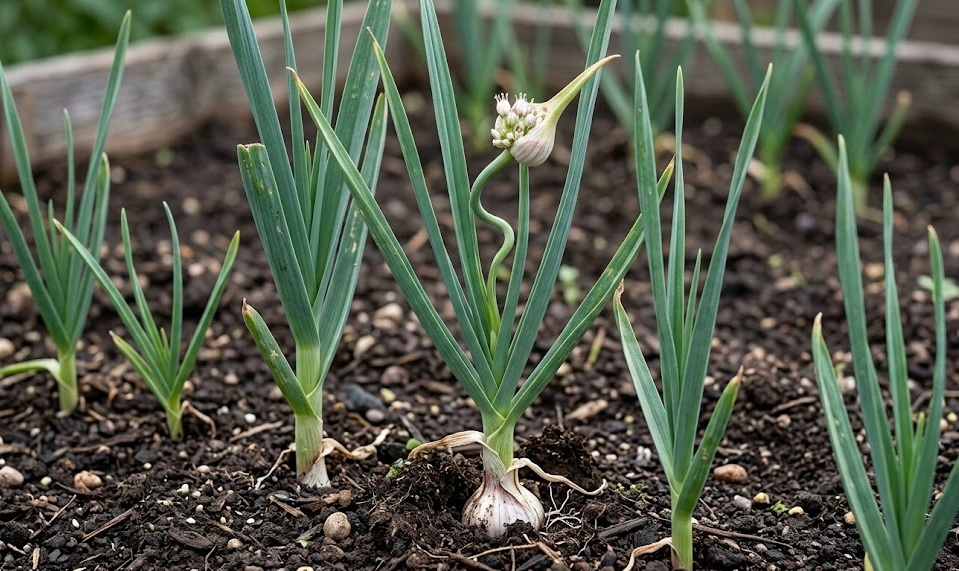
As the garlic transitions from leaf production to bulb formation, its nutritional needs begin to shift. While nitrogen is still important, excessive amounts at this stage can lead to “all-top” growth with very small bulbs. Many growers reduce the nitrogen levels and increase the focus on potassium to support the development of the cloves. This shift typically occurs around the time the scapes begin to emerge on hardneck varieties.
Micronutrients like sulfur are particularly important for garlic because they contribute to the production of allicin, the compound responsible for its flavor and health benefits. If the soil is deficient in sulfur, the garlic may have a weak taste and lower medicinal value. Adding elemental sulfur or using sulfate-based fertilizers can enhance the aromatic profile of the final harvest. Trace elements like boron and zinc also play minor but essential roles in the complex biochemistry of bulb development.
Organic mulches continue to play a dual role during the mid-season by providing a slow release of nutrients as they decompose. As the straw or leaves break down, they return organic matter and minerals to the top layer of the soil. This natural recycling process complements the targeted fertilizer applications and helps maintain a healthy soil microbiome. A thriving community of soil bacteria and fungi further assists the garlic in nutrient uptake through symbiotic relationships.
Foliar feeding is an advanced technique where liquid fertilizers are sprayed directly onto the leaves for rapid absorption. This can be particularly useful if the plant shows signs of a specific deficiency that needs immediate correction. However, this should be done with caution and only during the cooler parts of the day to avoid leaf scorch. Professional gardeners use foliar sprays as a supplement to, rather than a replacement for, a solid soil-based fertility program.
Signs of nutrient deficiencies and water stress
Being able to read the signals sent by the garlic plant is a vital skill for managing its care effectively. Yellowing of the lower leaves can be a sign of nitrogen deficiency, but it can also indicate that the soil is too wet. If the tips of the leaves turn brown and brittle while the rest of the plant looks pale, it may be suffering from potassium shortage. Distinguishing between these symptoms requires careful observation and an understanding of the local soil conditions.
Water stress often manifests as a slight curling or wilting of the leaves during the hottest part of the day. If the plant does not recover its turgidity by the following morning, the soil is likely too dry and requires immediate irrigation. Consistent water stress leads to premature maturation, resulting in small, “ping-pong ball” sized bulbs. Monitoring the weather forecast allows the gardener to anticipate dry spells and adjust the watering schedule accordingly.
Stunted growth and a lack of overall vigor are general indicators that the soil fertility is not meeting the plant’s demands. In some cases, the problem may not be a lack of nutrients, but an improper soil pH that “locks up” those nutrients. Garlic grown in very acidic soil may struggle to absorb calcium and magnesium, leading to poor cell wall structure. Regular testing ensures that the chemical balance of the soil remains within the optimal range for nutrient availability.
The presence of certain weeds can also serve as biological indicators of the soil’s nutrient status. For example, an abundance of clover might suggest low nitrogen levels, as clover fixes its own nitrogen from the air. Observing the entire ecosystem of the garden plot provides a broader context for the health of the garlic crop. A professional gardener uses all these visual cues to fine-tune the irrigation and fertilization strategy for the best possible results.
Environmental considerations for sustainable management
Sustainable watering and fertilization practices are essential for protecting the long-term health of the garden and the surrounding environment. Over-fertilization can lead to nutrient runoff, which contaminates local water sources and encourages the growth of harmful algae. Using slow-release organic fertilizers and precision irrigation reduces this environmental impact significantly. Professional agriculture increasingly focuses on these “regenerative” techniques to build soil health over time.
Rainwater harvesting is an excellent way to provide high-quality, chlorine-free water for the garlic crop. Collecting water from rooftops in barrels or cisterns provides a free and sustainable resource during dry summer months. Rainwater is often slightly acidic, which is perfectly suited for the needs of garlic and other alliums. Integrating these systems into the garden design demonstrates a commitment to resource conservation and self-sufficiency.
The use of green manures in the rotation cycle is another key component of sustainable nutrient management. Growing nitrogen-fixing crops like vetch or peas during the years when garlic is not planted naturally enriches the soil. When these plants are tilled back into the earth, they provide a massive boost of organic nitrogen for the next garlic crop. This reduces the reliance on synthetic inputs and fosters a more resilient and balanced soil structure.
Ultimately, the goal of watering and fertilization is to work in harmony with the natural cycles of the plant and the land. By observing the garlic closely and responding to its needs with precision, the gardener can achieve spectacular results. High-quality bulbs are a reflection of the care and wisdom invested in the soil throughout the growing season. Successful garlic cultivation is as much about nurturing the environment as it is about growing the individual plants.