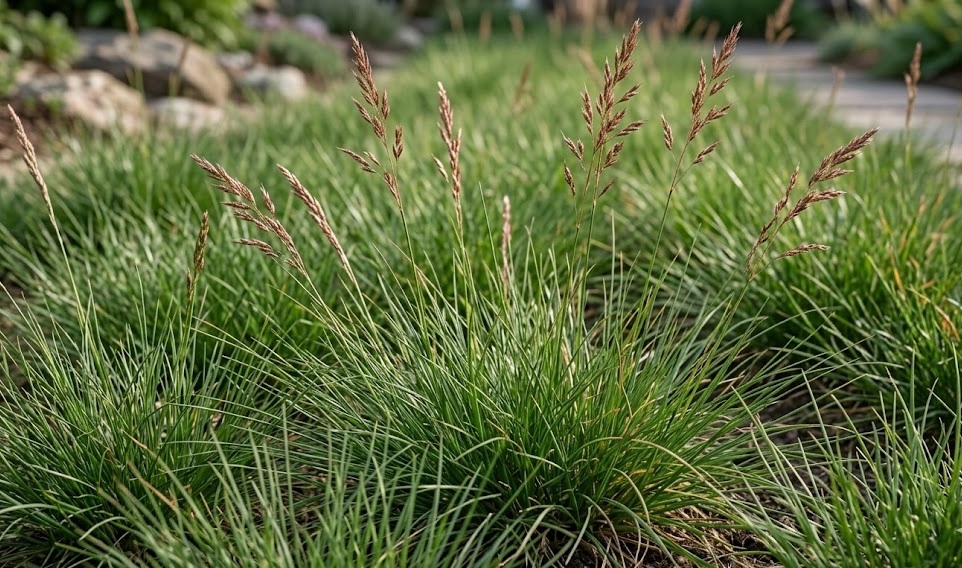

Mowing is the most frequent maintenance task you will perform on your red fescue lawn, and it has a profound impact on its health and appearance. Unlike other grass types, fine fescues require a specific approach to cutting to preserve their delicate texture and resilience. A professional mowing routine is about more than just keeping the grass short; it is a tool for managing growth and preventing disease. By following expert guidelines, you can ensure that every cut contributes to a stronger and more beautiful lawn.
The primary rule of mowing any grass is never to remove more than one-third of the leaf blade at a single time. This “one-third rule” is especially important for red fescue because its slow growth rate means it takes longer to recover from a severe cut. Removing too much foliage at once shocks the plant and forces it to use up precious energy reserves to regrow its leaves. Consistency and moderation are the keys to a professional finish that keeps the grass healthy.
Sharpening your mower blades is a non-negotiable requirement for anyone serious about high-quality turf care. Red fescue has thin, wiry blades that can easily be torn or shredded by dull equipment, leading to a ragged and brownish appearance. A clean cut heals almost immediately, while a tear leaves the plant vulnerable to moisture loss and infection. You should make it a habit to check the condition of your blades before every significant mowing session.
Adjusting your mowing practices to the seasons and the specific conditions of your garden shows a high level of horticultural skill. The ideal height for the grass will change depending on the temperature, the available light, and the overall vigor of the plants. You must be willing to change the settings on your mower to respond to these variables throughout the year. This adaptive approach is what separates a professional gardener from someone who simply follows a rigid schedule.
Determining the correct mowing height
For a standard residential red fescue lawn, the ideal mowing height typically falls between 5 and 8 centimeters. This height allows enough leaf surface for the plant to produce energy while still maintaining a neat and tidy appearance. In the spring and fall, when the grass is growing most actively, you can lean toward the shorter end of this range. However, you should never go so short that you expose the soil to direct sunlight and heat.
More articles on this topic
During the hot summer months, you should always raise your mower blades to the higher end of the recommended range. Taller grass provides natural shade for the soil, which helps keep the root zone cool and reduces the rate of evaporation. This simple adjustment can make the difference between a lawn that stays green and one that turns brown and goes dormant. Raising the height also encourages the roots to grow deeper, increasing the overall drought tolerance of your turf.
In shaded areas, the grass should always be kept at least 1 or 2 centimeters taller than the sections grown in full sun. This extra leaf length is crucial for the plant to capture enough light in a low-energy environment. If you mow shaded fescue too short, it will quickly thin out and lose its ability to compete with moss or weeds. Tailoring the height to the light levels of your garden is a hallmark of professional lawn management.
The final mow before winter should be slightly lower than your summer height to prevent the grass from matting down under snow. Aim for about 4 or 5 centimeters to ensure the turf is clean and upright going into the dormant season. This helps prevent fungal issues like snow mold by allowing better air circulation at the soil surface. Getting the height right in the fall sets the stage for a much easier spring cleanup and a faster green-up.
Tools and techniques for precision cutting
Choosing the right type of mower can significantly influence the quality of the cut on your fine fescue lawn. Rotary mowers are the most common and versatile, but they must be kept in top condition with very sharp blades to avoid tearing. For the absolute best finish on a low-growing fescue lawn, some professionals prefer a reel mower which provides a clean, scissor-like cut. Whichever tool you choose, make sure it is appropriate for the size and topography of your garden.
More articles on this topic
The direction in which you mow should be changed every time you cut the lawn to prevent the grass from leaning in one direction. Alternating your pattern also helps to prevent soil compaction and the formation of ruts from the mower wheels. You might mow horizontally one week, vertically the next, and diagonally the following session. This simple technique results in a more upright growth habit and a much more uniform appearance across the entire area.
Avoiding mowing when the grass is wet is a fundamental rule for anyone seeking a professional result. Wet grass clumps together, which leads to an uneven cut and can leave large piles of clippings that suffocate the plants underneath. It also increases the risk of spreading fungal diseases as the mower moves through the damp foliage. Wait until the morning dew has evaporated and the blades are dry to the touch before you start your engine.
Managing your speed and the overlap of your passes ensures that you don’t miss any patches or create unsightly streaks. You should aim for a steady, walking pace that allows the mower to process the grass blades effectively without clogging. Overlapping each pass by about 10 to 15 centimeters guarantees that every part of the lawn receives a consistent cut. Taking your time and being methodical is the only way to achieve a truly professional-looking result.
Managing clippings and ecological benefits
In most cases, the best practice is to leave the clippings on the lawn rather than bagging and removing them. These small pieces of grass decompose quickly and return valuable nitrogen and other nutrients back to the soil naturally. This process, often called “grasscycling,” can provide up to 25% of the lawn’s total yearly fertilizer needs for free. It is an environmentally friendly and efficient way to maintain the health of your red fescue.
If the grass has grown too long between mowings, the clippings might be too heavy and could smother the plants if left in place. In this specific situation, you should either bag the clippings or rake them up and add them to your compost pile. You must never leave thick clumps of dead grass on the surface, as they create a perfect breeding ground for mold and pests. Understanding when to leave clippings and when to remove them is part of expert garden management.
Mulching mowers are specifically designed to chop clippings into very fine pieces that disappear quickly into the turf canopy. If you use a regular rotary mower, you might need to make an extra pass over any large clumps to break them down further. The goal is to have the clippings reach the soil surface where they can be broken down by beneficial microbes. This recycling of organic matter is a key component of a sustainable and healthy garden ecosystem.
Beyond the nutritional benefits, leaving clippings also helps to maintain soil moisture by providing a very thin layer of natural mulch. It supports a diverse community of soil organisms, such as earthworms, which help to aerate the ground naturally. By viewing your lawn as a closed-loop system, you reduce your reliance on external inputs and chemical fertilizers. A professional approach to mowing is one that works in harmony with the natural biological cycles of the earth.