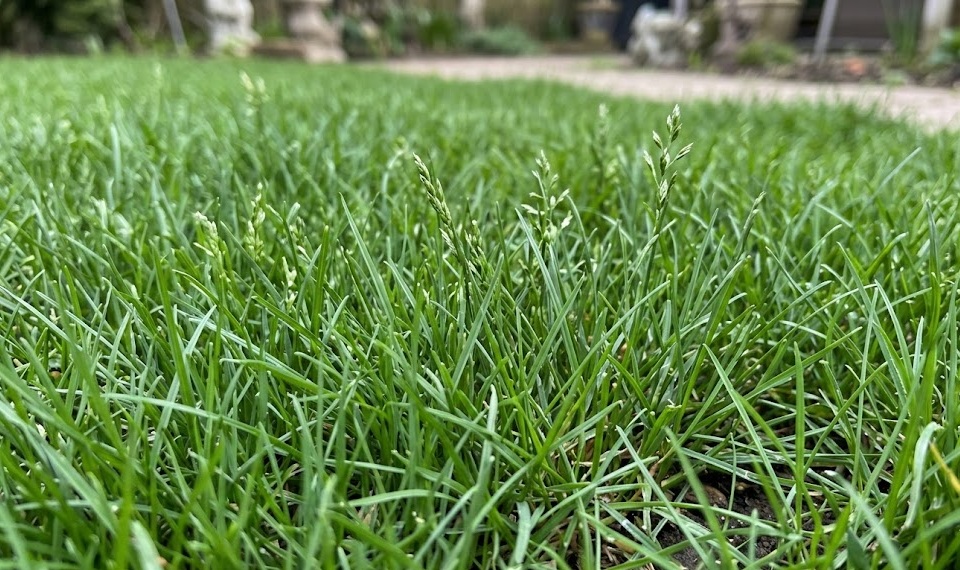

Mastering the art of mowing is perhaps the most important skill you can develop for maintaining a professional-looking and healthy Kentucky bluegrass lawn. You must realize that every time you cut the grass, you are performing a form of pruning that affects the plant’s hormonal balance and growth habits. Regular and correct mowing encourages the grass to spread laterally, creating the thick and soft texture that is the hallmark of this species. When you approach mowing with precision and care, you transform your lawn from a simple patch of grass into a stunning piece of living architecture.
Proper mowing heights and frequencies
The ideal height for a Kentucky bluegrass lawn generally falls between six and eight centimeters, depending on the season and the specific conditions of your yard. You should aim to keep the grass at the higher end of this range during the hot summer months to provide shade for the soil and the roots. In the cooler spring and fall, you can lower the height slightly to encourage more density and a more manicured appearance. Consistency in your cutting height helps the plants adapt and develop a uniform growth habit across the entire surface.
The “one-third rule” is the most important principle to follow whenever you head out to mow your lawn during the growing season. You should never remove more than one-third of the total height of the grass blades in a single mowing session to avoid stressing the plants. Removing too much tissue at once can cause the grass to go into shock, diverting energy away from root growth to repair the damaged foliage. If the lawn has grown too long, it is much better to mow it twice over several days, gradually bringing it down to the desired height.
During the peak growing seasons of spring and early autumn, you may find that you need to mow your lawn twice a week to keep up with the rapid growth. Frequent mowing encourages the plant to produce more side shoots, which leads to a thicker turf that naturally resists weeds and diseases. If you wait too long between sessions, the grass can become stemmy and lose its soft, carpet-like feel that everyone loves. Keeping a regular schedule is the key to maintaining that professional, “golf course” look in your own backyard.
In the summer, when the growth slows down due to heat and potential drought, you should reduce the frequency of your mowing to match the plant’s pace. This prevents unnecessary stress on the grass when it is already struggling to cope with high temperatures and limited moisture. You should always use your best judgment and observe the actual growth of the grass rather than sticking to a rigid calendar. A responsive approach to mowing ensures that you are always supporting the health of the living ecosystem in your garden.
More articles on this topic
The impact of sharp blades on turf health
The condition of your mower blades is a factor that has a massive impact on the health and appearance of your Kentucky bluegrass. You should always ensure that your blades are sharp enough to provide a clean, crisp cut that heals quickly and looks professional. Dull blades tend to tear and shred the grass tissue, leaving behind jagged edges that turn brown and make the lawn look dull and gray. These open, ragged wounds also provide an easy entry point for various fungal pathogens and other opportunistic diseases.
You should make it a habit to inspect your mower blades at least once a month and sharpen them whenever you notice the cut quality is beginning to decline. For most home lawns, this usually means sharpening the blades two or three times throughout the entire growing season. Having a spare set of blades on hand allows you to quickly swap them out so you can continue your lawn care without any long delays. This small investment in equipment maintenance pays off in a much healthier and more beautiful lawn for you and your family.
When you mow with sharp blades, you also reduce the amount of physical stress on the grass, which helps it to retain more moisture during dry periods. A clean cut seals the vascular system of the plant more effectively, preventing the excessive loss of water from the tips of the blades. This is especially important during the heat of the summer when every drop of hydration is precious for the survival of the turf. You will notice that a lawn cut with sharp blades stays green for much longer between your scheduled irrigation sessions.
Properly balanced blades also protect your mower’s engine and ensure that the cutting deck remains level during the entire operation. If the blades are unbalanced, they can cause vibrations that lead to uneven wear on the machine and an inconsistent cut on the lawn. Taking your blades to a professional for sharpening and balancing is a great way to ensure they are in the best possible condition for the job. Your commitment to using the right tools in the right way is what leads to truly expert results in your landscape.
More articles on this topic
Dealing with grass clippings and thatch buildup
Grasscycling, or leaving the clippings on the lawn after you mow, is a highly beneficial practice that returns nutrients and organic matter to the soil. You should use a mulching mower that chops the clippings into tiny pieces that can easily fall between the blades and decompose quickly. These clippings can provide up to twenty-five percent of the total nitrogen your lawn needs throughout the year, reducing your reliance on synthetic fertilizers. It is a simple and effective way to be a more sustainable and environmentally conscious gardener in your local community.
You only need to collect the clippings if the grass has grown exceptionally long and the mulch would be thick enough to smother the lawn. In these cases, you can add the clippings to your compost pile where they will eventually turn into a rich amendment for your garden beds. As long as you are mowing frequently and following the one-third rule, leaving the clippings in place is almost always the better choice for the health of your soil. This practice also saves you a significant amount of time and effort during your weekly lawn care routine.
Thatch is a layer of living and dead organic material that accumulates between the green vegetation and the soil surface over several years. While a small amount of thatch is beneficial for cushioning and insulation, too much of it can prevent water and nutrients from reaching the roots. You should monitor the thatch depth and perform mechanical dethatching or core aeration if the layer exceeds about one and a half centimeters. Keeping the thatch under control ensures that your Kentucky bluegrass stays firmly rooted and healthy in its environment.
Regular aeration is perhaps the most effective way to manage thatch and improve the overall structure of the soil beneath your lawn. By removing small cores of earth, you create space for the soil to expand and for beneficial microbes to break down the organic debris more efficiently. This process also improves the movement of oxygen to the roots, which is vital for the plant’s metabolic processes and long-term vitality. A well-managed lawn is a complex system that requires your careful attention to both the visible blades and the hidden structures below the surface.