
Mastering the art of pruning is the final step in becoming a true expert in the cultivation of the garden clematis. This specific variety belongs to the third pruning group, which means it requires a significant “hard prune” every year to maintain its health and maximize its floral display. Many beginner gardeners are afraid to cut their plants back so severely, but understanding the biological reasons behind this practice will give you the confidence to proceed. This article explains the professional techniques and timing for pruning your climbing vines to ensure a spectacular summer show.
Understanding group 3 pruning principles
The garden clematis is classified as a group 3 variety because it produces its flowers entirely on the new growth that emerges during the current season. This means that any wood from the previous year is essentially just a structural framework and will not contribute directly to the summer’s floral display. If you fail to prune the plant, it will continue to grow from the very tips of the old stems, eventually becoming a tangled mess with flowers only at the top. Hard pruning prevents this “bare leg” syndrome and keeps the foliage and blooms at a level where you can actually enjoy them.
The biological benefit of a hard prune is that it stimulates the plant to send out multiple new shoots from the base, resulting in a much bushier and more vigorous specimen. By removing the old, tired wood, you allow the plant to direct all of its energy into fresh, healthy growth that is better equipped to support large flowers. This annual renewal also helps to keep the plant within its allotted space and prevents it from overwhelming its support structure or neighboring plants. It is a restorative process that actually extends the life and vitality of the vine over many years.
Timing is everything when it comes to this specific type of pruning, and you should generally wait until the late winter or very early spring months. You want to perform the task just as the first buds are beginning to swell but before the plant has wasted energy on significant new growth. In most climates, this falls somewhere between late February and mid-March, depending on the severity of the winter and the arrival of the spring thaw. Observing the plant closely for these visual cues is much more effective than following a rigid date on a calendar.
Using the correct tools is also essential for ensuring that the cuts you make are clean and heal quickly without inviting diseases into the plant’s vascular system. A pair of high-quality, sharp bypass pruners is the best choice for the relatively thin and brittle stems of the clematis. Always ensure your tools are sterilized with alcohol before you start to avoid spreading any pathogens from other plants in your garden. A clean cut at a slight angle will allow water to run off the wound, further reducing the risk of rot or fungal infection.
More articles on this topic
The step-by-step hard pruning technique
Start the process by identifying the lowest set of healthy, strong-looking buds on each of the main stems, usually about 8 to 12 inches above the ground. You should make your cut about a quarter of an inch above these buds, being careful not to damage the delicate new growth that is just starting to emerge. If the plant is very old and woody, you might need to go slightly higher to find viable buds, but the goal is always to stay as low as possible. This “hard prune” may feel drastic, but the plant will respond with incredible speed once the weather warms up.
As you move through the plant, take the opportunity to remove any stems that are obviously dead, diseased, or showing signs of mechanical damage from the winter. These should be cut off right at ground level to encourage the plant to replace them with fresh, healthy shoots from the root system. Clearing out the weak and spindly interior stems will also improve the airflow through the plant, which is your best defense against many common fungal issues. A tidy, well-organized base is the foundation for a spectacular and healthy climbing display later in the summer.
Once you have finished the actual cutting, you will be left with a large amount of old, tangled vine material that needs to be carefully removed from the trellis. This can be the most time-consuming part of the job, as the old leaf petioles often have a very firm grip on the support structure. It is often easier to cut the old vines into smaller sections before trying to pull them away to avoid accidentally damaging the new buds you just saved. Dispose of this old material in the trash or a hot compost pile to ensure that any overwintering pests or diseases are neutralized.
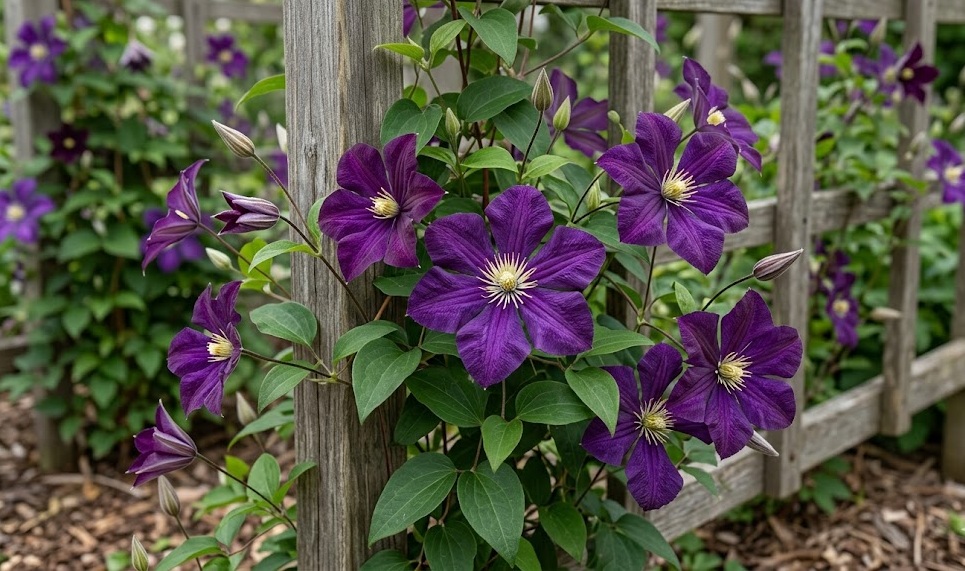
After the pruning is complete, it is the perfect time to provide the plant with its first major feeding and watering of the new gardening season. Apply a balanced, slow-release fertilizer around the base and cover the area with a fresh layer of high-quality organic mulch or compost. This provides the immediate nutrients and moisture retention the plant needs to fuel the rapid growth that follows a hard prune. Your clematis is now perfectly prepared to send up a wall of green foliage and a magnificent display of purple flowers in a few months.
More articles on this topic
Benefits of regular annual maintenance
Consistency in your pruning routine will result in a plant that is much more resilient and easier to manage over the long term in your landscape. A clematis that is pruned correctly every year will develop a strong, multi-stemmed base that can better withstand the stress of pests, diseases, and extreme weather. It also allows you to keep the plant looking balanced and proportionate to its surroundings, whether it’s growing on a small garden arch or a large fence. Regular maintenance is simply the best way to ensure that your garden remains a source of pride and beauty rather than a chore.
One of the secondary benefits of hard pruning is that it allows you to easily inspect and repair the support structure while the plant is out of the way. You can check for loose wires, rotting wood, or rusted metal and make any necessary improvements before the new growth covers everything up again. A sturdy support is essential for a vigorous climber, especially during summer storms when the weight of the wet foliage can be quite significant. Taking care of these structural issues in the spring will save you from a potential disaster during the peak of the growing season.
If you have a very old and neglected plant that has become a messy thicket of dead wood at the base, you can use a more aggressive “rejuvenation prune” to save it. This involves cutting every single stem back to ground level, even if you can’t see any obvious buds, to force the dormant nodes under the soil to wake up. While you might lose some flowers for one season, the plant will usually return with a vigor that will surprise you. This is a great way to “reset” a plant that has been ignored for several years and bring it back to its former glory.
Finally, remember that pruning is not just a technical task but also a way for you to connect with the natural cycles of your garden. There is a great sense of satisfaction in clearing away the old, dead growth of winter and seeing the bright green promise of the coming spring. By following these professional guidelines, you are not just maintaining a plant; you are participating in a tradition of horticultural excellence. The reward for your efforts will be a spectacular display of large, velvety purple flowers that will be the envy of every gardener in your neighborhood.