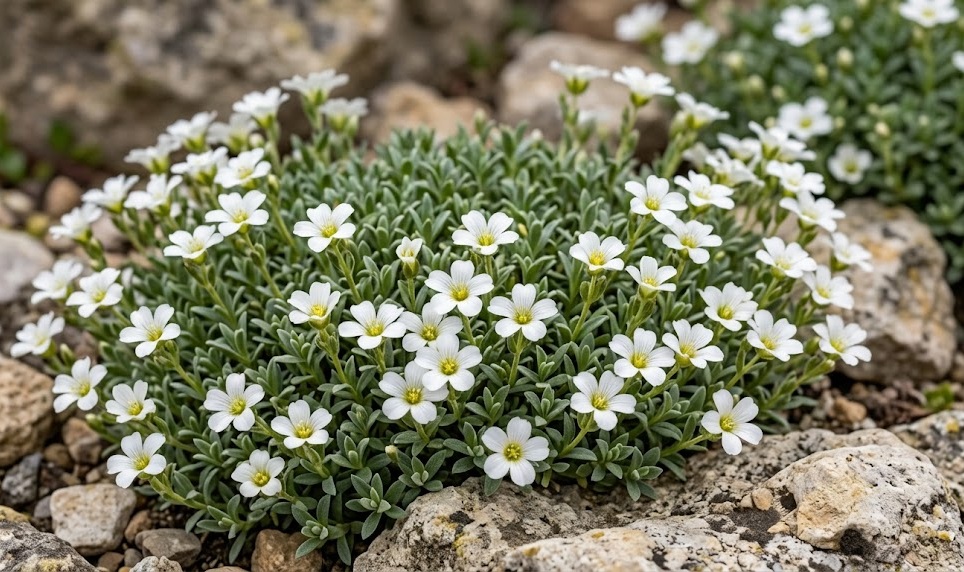

Pruning and cutting back are essential maintenance tasks that keep mountain sandwort looking its best and prevent it from becoming woody or sparse. While this plant is naturally compact, a strategic approach to grooming encourages new growth and ensures a prolific bloom in the following season. Professional pruning is not just about aesthetics; it is also a vital tool for managing the health and longevity of the plant. Knowing when and how to intervene allows you to maintain a lush, green carpet that remains a focal point of your garden for many years.
The art of post-bloom pruning
The most important pruning session for mountain sandwort takes place immediately after the flowers have faded in late spring or early summer. This process, often called “deadheading” on a larger scale, involves removing the spent flower stalks and a small portion of the foliage. By cutting the plant back by about one-third after it blooms, you prevent it from wasting energy on seed production. Instead, the plant redirects its resources into developing a stronger root system and new, healthy foliage.
Using a pair of sharp, clean floral snips or garden shears is the best way to achieve a clean cut without tearing the delicate stems. You should aim to follow the natural contours of the mat, maintaining its rounded or spreading shape. Avoid cutting too deep into the old, woody interior of the plant, as this area may be slow to regenerate new growth. A light, even trim across the entire surface of the mat is usually sufficient to stimulate a fresh flush of green.
This post-bloom prune also serves to “tighten up” the plant, keeping it from becoming too leggy or sprawling. As the stems grow longer during the flowering phase, they can sometimes fall open in the center, creating an unattractive “donut” look. Cutting them back encourages the plant to branch out from the base, filling in any gaps and maintaining a dense, seamless appearance. It is one of the simplest ways to transform a tired-looking plant into a vibrant garden feature.
After pruning, it is a good idea to give the plant a light watering and perhaps a very diluted liquid feed to support the new growth. This helps the sandwort recover quickly from the “stress” of being cut and ensures the new leaves are strong and healthy. Most gardeners are amazed at how quickly the plant bounces back, often looking better within just a couple of weeks. Consistent post-bloom care is the secret to those perfectly manicured garden mats you see in professional landscapes.
More articles on this topic
Rejuvenating older and overgrown mats
Over time, even the best-cared-for mountain sandwort can begin to show its age by becoming overly woody or dying out in the center. If your plant has lost its vibrant green color or is starting to look sparse, a more aggressive rejuvenation prune may be necessary. This is typically done in the early spring, just as the first signs of new growth appear. By cutting back the older stems more significantly, you allow light and air to reach the center of the crown, which stimulates dormant buds to sprout.
When performing a rejuvenation prune, look for the healthiest parts of the plant and prioritize their growth. You can remove entire sections of old, brittle stems that are no longer producing many leaves. While the plant may look a bit bare immediately after this process, it is a necessary step to ensure its long-term survival. Think of it as a “reset” button that allows the plant to start fresh with younger, more energetic growth.
If the center of the mat is completely dead, you may need to lift the entire plant and divide it, as discussed in the propagation section. However, if there is still some life in the middle, a heavy pruning followed by a light top-dressing of fresh soil and grit can often work wonders. This provides the new shoots with a nutrient-rich environment to grow into. Rejuvenation is an ongoing part of managing a long-lived perennial garden.
It is important to be patient during the recovery phase after a major pruning session. The plant may take a full season to return to its original size and flowering capacity, but the result will be a much healthier and more attractive specimen. Professional gardeners often rotate which plants they rejuvenate each year so that there are always plenty of beautiful mats in the landscape. Managing the life cycle of your plants through pruning is a hallmark of expert horticulture.
More articles on this topic
General grooming and seasonal maintenance
In addition to the major pruning sessions, light grooming throughout the year can keep your mountain sandwort looking pristine. This involves removing any yellowing leaves, stray weeds, or debris that might get caught in the dense foliage. These small tasks only take a few minutes but make a big difference in the overall polished look of the garden. A clean plant is also less likely to harbor pests or develop fungal issues, as air can move more freely through the canopy.
During the autumn cleanup, you should be careful not to prune too heavily, as the plant needs its evergreen foliage to survive the winter. Simply removing any dead flower stalks that you might have missed in the summer is usually enough. You want to keep the mat as full as possible to provide insulation for the roots during the coldest months. Any major structural changes should be saved for the following spring or summer.
If you are growing sandwort as a border or along a pathway, you may need to prune the edges to keep it within its intended boundaries. The plant has a natural tendency to spread, and while this is often desirable, you don’t want it to overwhelm its neighbors. Use your shears to trim back any stems that are creeping too far into areas where they are not wanted. This creates a clean, defined edge that looks very professional and intentional.
Finally, always remember to keep your pruning tools sharp and sterilized to prevent the spread of disease. A clean cut heals much faster than a jagged one, reducing the stress on the plant and minimizing the entry points for pathogens. By treating pruning as a precise and thoughtful part of your care routine, you can ensure that your mountain sandwort remains a healthy, beautiful, and vibrant part of your garden for many years to come.