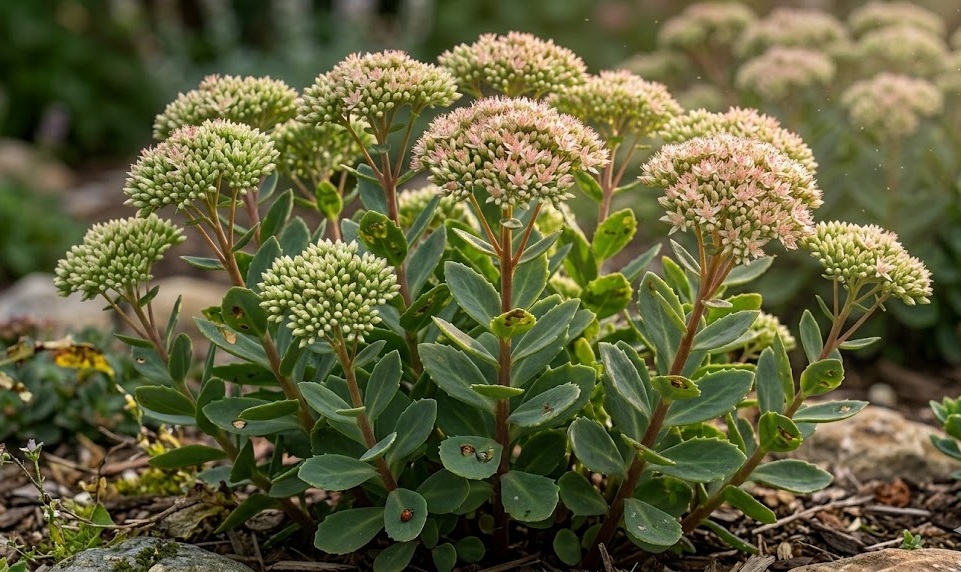

Strategic pruning and cutting back are essential skills for maintaining the aesthetic appeal and structural health of the great stonecrop. While this plant is naturally well-behaved, targeted interventions can prevent common issues like “flopping” and can rejuvenate older, tired-looking clumps. As a professional, you should view pruning not just as a cleaning task, but as a way to direct the plant’s energy toward more robust and productive growth. Understanding the timing and the biological response of the succulent to these cuts will allow you to shape its presence in the garden with confidence.
Routine maintenance during the season
Throughout the active growing months, your pruning efforts should focus on “grooming” the plant to keep it looking its best. This involves the regular removal of any leaves that have become damaged by pests, weather, or simple old age. You can usually do this by hand, as the succulent leaves are designed to snap off cleanly from the stem without leaving a large wound. Removing this spent tissue prevents the buildup of organic matter that can trap moisture and encourage fungal infections at the base of the plant.
Another routine task is to monitor the stems for any signs of physical damage or disease that might require more significant intervention. If a stem is broken by a passing animal or a heavy storm, you should cut it back cleanly to the nearest healthy leaf node or all the way to the ground. A clean cut with sharp pruners will heal much faster and more cleanly than a ragged break, reducing the risk of pathogens entering the plant. This “sanitary pruning” is a fundamental part of keeping any succulent-rich garden healthy and vibrant.
During the early summer, you may also choose to prune away any stems that are growing in an awkward direction or crowding their neighbors. This thinning process improves the airflow through the center of the clump, which is vital for preventing the humid, stagnant conditions that many pests love. Aim for a balanced, open structure that allows sunlight to reach as much of the foliage as possible. This type of light-touch pruning keeps the plant looking managed and professional rather than wild and overgrown.
Finally, keep an eye out for any “reversions” if you are growing a variegated or specialized cultivar of great stonecrop. Occasionally, a stem may grow that lacks the specific color patterns or leaf shapes of the rest of the plant, returning to its wild-type form. You should prune these stems out as soon as you see them, cutting them as close to the rootstock as possible. If left in place, these more vigorous stems can eventually take over the entire plant, causing it to lose its unique ornamental characteristics.
More articles on this topic
Rejuvenation pruning techniques
The most famous rejuvenation technique for the great stonecrop is often referred to as the “Chelsea Chop,” named after the timing of the famous flower show in late May. This involves cutting all the stems back by about one-third or even one-half of their height just as the plant is starting to grow rapidly. While this may seem drastic and will temporarily leave the plant looking a bit bare, the results later in the season are well worth the initial shock. The plant will respond by producing multiple new side shoots from each cut stem, leading to a much denser and more compact habit.
Using this technique is particularly beneficial if you are growing stonecrop in soil that is a bit too rich or in a location with slightly less than full sun. By reducing the overall height of the plant, you lower its center of gravity and make it much less likely to fall over when the heavy flowers develop. The stems that grow after the “chop” are also typically thicker and more structurally sound than those that are left to grow naturally. It is a proactive way to manage the architecture of the plant before it becomes a problem.
Another advantage of rejuvenation pruning is that it slightly delays the onset of flowering, which can be useful for coordinating the bloom time with other late-season perennials. Instead of the plant peaking in late August, it might reach its full glory in mid-September or October when the garden often needs a boost of color. You can even choose to prune only the front half of a large clump, creating a multi-tiered effect with two distinct periods of bloom. This level of control allows you to design more dynamic and long-lasting displays in your garden beds.
If you have a very old clump that has become woody or “bald” in the center, a more aggressive form of rejuvenation may be necessary. In the early spring, you can cut the entire plant back to within an inch of the ground, just as the new buds are starting to show. This encourages the rootstock to push out a completely new set of stems from the dormant buds, effectively “resetting” the plant’s growth. When combined with a light top-dressing of fresh soil or grit, this can give an old specimen a whole new lease on life.
More articles on this topic
Removing spent flowers and foliage
As the flowering season draws to a close, you must decide how to handle the spent flower heads and the dying foliage. Many gardeners choose to leave the dried flower heads in place throughout the winter because they provide excellent architectural interest and can look beautiful when covered in frost. These skeletal remains also serve a biological purpose, providing a small amount of protection for the new growth buds at the base of the plant. If you value the “winter garden” look, your pruning tasks will be minimal until the following spring arrives.
However, if you prefer a tidier look or if your garden is prone to heavy, wet snow that can flatten the dried stems, you may choose to cut them back in late autumn. If you decide to do this, wait until the foliage has turned completely brown and the plant has fully retreated into its winter dormancy. Use sharp bypass pruners to cut each stem back to about two inches above the soil level, being careful not to disturb the small green rosettes at the base. Removing this material in the fall can help prevent pests from overwintering in the debris.
The final major pruning session of the year happens in early spring, just as the garden is waking up and the new growth is becoming visible. If you left the stems standing through the winter, now is the time to clear them away to make room for the new season’s rosettes. This is also the perfect time to inspect the crown of the plant for any signs of winter damage or rot that may need to be addressed. A clean, clear space allows the sunlight to reach the new growth quickly, giving the plant the best possible start.
Always remember to dispose of your prunings responsibly, especially if you have seen any signs of disease or pest infestation during the year. Succulent stems can be quite slow to break down in a standard compost pile because of their high moisture content and waxy cuticle. If the material is healthy, chopping it into smaller pieces can help speed up the decomposition process. By finishing your pruning cycle with a thorough cleanup, you ensure that your great stonecrops are ready for another year of spectacular growth and beauty.