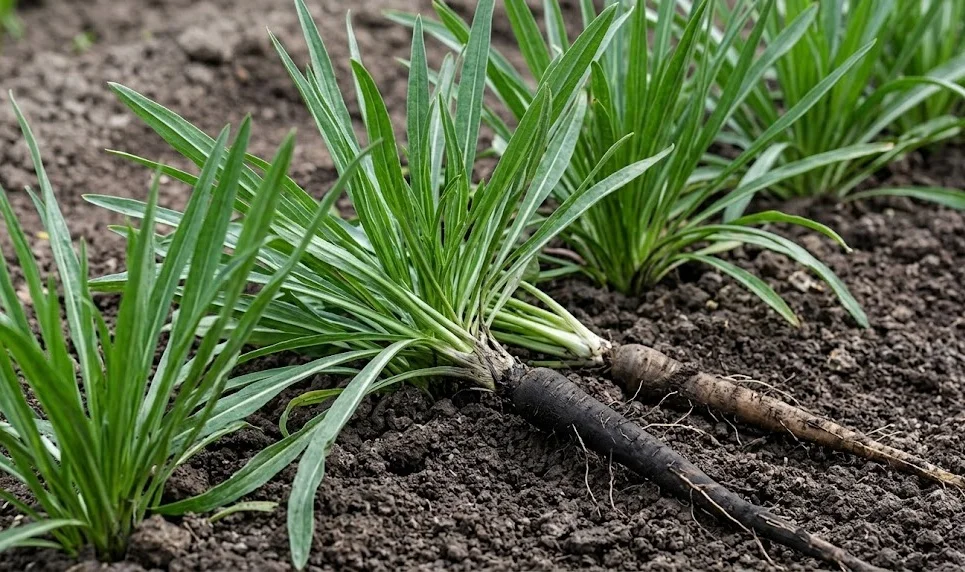

While black salsify is primarily grown for its underground root, managing its above-ground foliage through strategic pruning is an essential part of a professional care routine. Many gardeners are hesitant to cut back their plants, fearing that it might harm the root development, but the opposite is often true. By removing spent leaves, controlling flower production, and managing the end-of-season foliage, you can focus the plant’s energy on what matters most. A well-pruned plant is a healthier and more productive one, leading to a superior harvest in terms of both quality and quantity.
Removing spent foliage and managing leaf health
Throughout the long growing season, some of the older, lower leaves of the black salsify plant will naturally turn yellow or brown as they reach the end of their life cycle. Removing these spent leaves is not just a matter of aesthetics; it is a vital part of maintaining good garden hygiene and preventing disease. Dead or decaying foliage can harbor fungal spores and provide a hiding place for pests like slugs and snails. By regularly cleaning up the base of the plant, you improve airflow and keep the surrounding environment healthy.
When you prune away old leaves, use a sharp, clean pair of garden snips to make a clean cut near the crown of the plant. Avoid pulling the leaves off by hand, as this can tear the delicate tissue of the stem and create an entry point for pathogens. It is best to perform this task on a dry day to ensure that the small wounds heal quickly in the sunlight. This proactive maintenance keeps the plant’s energy focused on its vibrant, healthy leaves that are actively producing food for the root.
You should also keep an eye out for any leaves that show signs of significant disease or insect damage. Removing these problematic leaves as soon as they are discovered can help to slow down or even stop the spread of a problem throughout your entire crop. While it is important not to remove too much foliage at once, as the plant needs its leaves for photosynthesis, a strategic “thinning” of damaged tissue is very beneficial. This balance between leaf protection and removal is a key skill for any serious vegetable grower.
In addition to removing individual leaves, you may find it helpful to clear away any weeds that have grown up within the plant’s leaf canopy. These intruders can compete for light and air, and their removal is a form of “pruning” the entire garden bed. Keeping the area immediately around the crown of the salsify clear allows for better water penetration and makes it easier for you to monitor the health of the plant. A clean and well-maintained bed is the hallmark of a professional gardening approach.
More articles on this topic
Controlling bolting and managing second year flowers
One of the most important reasons to prune black salsify is to control the plant’s natural tendency to produce flower stalks. In its first year, the plant may sometimes attempt to “bolt” or flower prematurely if it experienced stress from temperature fluctuations or drought. If you notice a thick, rounded stalk emerging from the center of the foliage, you should remove it immediately. Allowing the plant to flower in its first year will result in a tough, woody root that is unpleasant to eat.
Removing the flower stalk, or “deadheading,” sends a signal to the plant to redirect its energy back into vegetative growth and root storage. You should cut the stalk as low as possible without damaging the surrounding leaves to ensure that it doesn’t simply regrow. This task may need to be repeated several times during a particularly stressful summer, as the plant’s biological drive to reproduce is very strong. Vigilance during the peak of the season is the only way to protect the culinary quality of your harvest.
In the plant’s second year, if you are not planning to save seeds, you should continue to remove any flower stalks that appear in the spring. This allows the root to remain edible for a few weeks longer, although the quality will still naturally decline as the season progresses. If you are saving seeds, you can let the flowers bloom, but you may still want to prune away any excess or secondary stalks to focus the plant’s energy on the highest-quality seed heads. This level of control ensures that you get exactly what you want from your garden, whether it is food or future plantings.
Pruning the flowers also prevents the plant from self-seeding all over your garden, which can become a nuisance in subsequent years. Salsify seeds are easily dispersed by the wind and can quickly take over an area if they are not managed. By cutting back the stalks before the seeds have a chance to mature and blow away, you maintain control over your garden’s layout. This disciplined approach to plant management is a fundamental part of maintaining a professional and organized agricultural space.
More articles on this topic
Season end pruning and preparing for harvest
As the growing season comes to a close in the autumn, you will need to prepare the plants for the upcoming harvest or for their winter rest. Once the first hard frosts have touched the garden, much of the foliage will naturally begin to die back and lose its vibrant green color. You can then prune the foliage back to about five to ten centimeters above the soil surface. This makes it much easier to see where the roots are located and provides a cleaner workspace for the lifting process.
Leaving a small amount of the stem attached to the crown is important because it acts as a “handle” and protects the top of the root during handling. If you cut the foliage too close to the root, you may accidentally damage the crown, which can lead to rot during storage. The trimmed foliage can be composted, provided it is free from significant disease or pest infestations. This final cleanup of the season is a satisfying task that marks the transition from the growing phase to the reward of the harvest.
If you are planning to leave your roots in the ground for the winter, this late-season pruning is also the perfect time to apply a fresh layer of mulch. By clearing away the old, dead leaves, you create a flat and even surface for the insulating material to rest upon. This ensures that the mulch is in direct contact with the soil around the crowns, providing the best possible thermal protection. Preparing your bed in this way is a professional technique that ensures your roots remain in peak condition regardless of the weather.
Finally, remember that pruning is a tool that should be used with a specific purpose in mind at each stage of the plant’s life. Whether you are clearing away old growth, preventing premature flowering, or preparing for the winter, each cut you make should support the overall health and productivity of the crop. Developing an intuitive sense of when and how to prune your black salsify is a sign of a truly experienced and successful gardener. With proper care, your efforts will be rewarded with a bountiful and high-quality harvest of this unique and delicious vegetable.