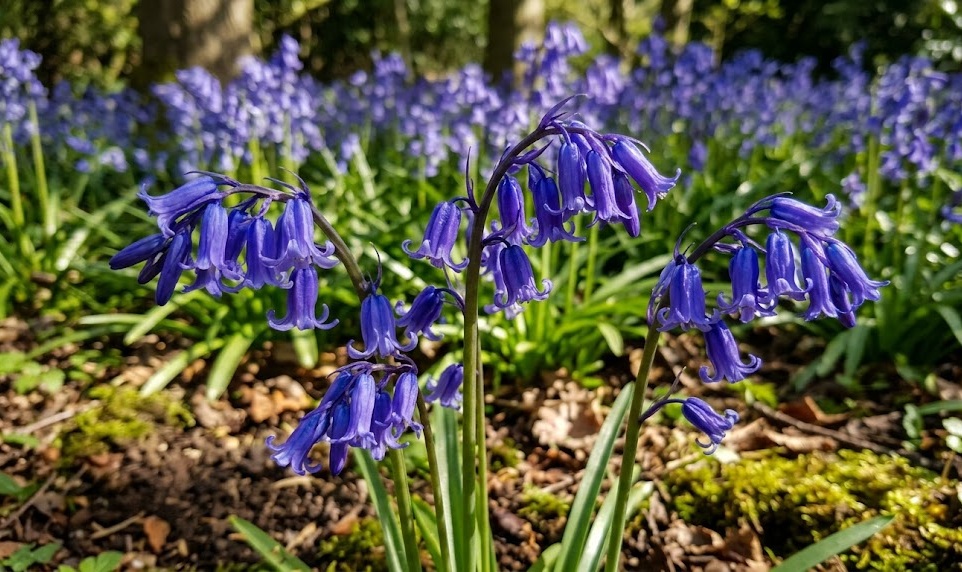

Pruning and cutting back English bluebells is a task that requires patience and a “hands-off” approach compared to many other garden plants. The way you handle the dying foliage and spent flower spikes has a direct impact on the health and longevity of the bulb colony. For a professional result, the timing of these actions is far more important than the actual cutting itself. This guide explains the physiological reasons behind these maintenance practices and how to keep your woodland garden both healthy and aesthetically pleasing.
The importance of natural foliage decay
The most important rule in professional bluebell care is to never cut back the green leaves until they have completely turned yellow and withered. These leaves are the “power plants” of the bulb, capturing sunlight and converting it into the energy needed for next year’s growth. If you remove the foliage too early, you effectively “starve” the bulb, leading to smaller plants and fewer flowers in the future. This process of nutrient translocation takes several weeks after the flowers have faded.
While the yellowing leaves might look untidy in a formal garden setting, they are performing a vital biological function. During this phase, the plant is recycling nitrogen, phosphorus, and potassium from the leaves back into the underground storage tissues. Cutting them early interrupts this cycle and can lead to a gradual decline in the vigor of the entire drift. A professional gardener understands that this “messy” phase is a sign of a healthy, productive lifecycle.
If the sight of dying foliage is a concern, you can use clever planting strategies to hide it rather than cutting it away. Interplanting with late-emerging perennials like ferns or hardy geraniums provides a natural screen as their leaves unfurl. These companion plants grow up through and over the declining bluebells, keeping the garden looking fresh without compromising the bulbs’ health. This ecological approach to garden design is much more effective than premature pruning.
Once the leaves are completely brown and “papery” to the touch, they can be easily cleared away by hand or with a light rake. At this stage, they are no longer providing any benefit to the plant and can be added to the compost heap. Clearing this debris helps to prevent the buildup of fungal spores and makes the area look tidy for the summer. Professional maintenance is about knowing exactly when the plant has finished its work for the season.
More articles on this topic
Managing spent flower spikes
Deciding whether to prune the spent flower spikes (deadheading) depends on your goals for the garden. If you want your bluebell colony to expand naturally through seed dispersal, you should leave the flower stalks intact. The seed pods will develop over the early summer, eventually splitting open to scatter hundreds of tiny black seeds. This is the best way to create that classic, carpeted woodland look over a large area.
However, if you are growing bluebells in a smaller, more controlled space, you might choose to remove the flower spikes once the blooms have faded. This prevents the plant from “wasting” energy on seed production and directs all those resources back into the bulb itself. This can result in slightly larger bulbs and potentially more vigorous flowering the following spring. Professional gardeners often use a mix of both strategies, deadheading some areas while leaving others to go to seed.
When removing the flower spikes, use a sharp pair of clean snips to cut the stalk as close to the base as possible without damaging the leaves. Avoid “tugging” on the stalks, as this can accidentally dislodge the bulb from the soil or damage the basal plate. Clean tools are essential to prevent the spread of any viruses or fungal pathogens between plants. This level of attention to detail is what ensures a professional-grade collection stays healthy.
If you do choose to let the plants go to seed, be prepared for the fact that the stalks will remain standing for several weeks after the flowers are gone. These dried stalks have a certain structural beauty of their own and can be left until the seeds are fully ripe in mid-summer. Once the pods have opened and the seeds are gone, the stalks will become brittle and can be cleared away along with the dead leaves.
More articles on this topic
Seasonal tidying and soil protection
Pruning in a woodland garden is as much about what you leave behind as what you take away. While clearing the dead bluebell foliage is good for aesthetics, you should be careful not to leave the soil completely bare. A bare soil surface is vulnerable to erosion, weed invasion, and extreme temperature shifts. After tidying up the bluebells, professional gardeners often apply a fresh, thin layer of mulch to protect the site during the summer.
This summer mulch should be light and airy, allowing the soil to “breathe” while the bulbs are dormant. Composted bark or a fine leaf mold is ideal for this purpose, as it blends in naturally with the woodland theme. This layer also provides a clean backdrop for the summer-flowering plants that take over the space. Maintaining this protective cover is a key part of long-term soil health management.
If you find that your bluebells are spreading into areas where they are not wanted, “pruning” can also involve the removal of unwanted seedlings. English bluebells are prolific self-seeders, and they can sometimes overwhelm smaller, less vigorous plants. Gently hoeing the area in early spring when the tiny, needle-like seedlings appear is the most efficient way to manage their spread. This selective maintenance keeps the garden in balance and prevents any one species from becoming too dominant.
Finally, remember that the “dormant” phase of the bluebell is only dormant above ground. Underground, the bulbs are constantly reacting to the environment and preparing for the next year. By providing a clean, protected, and undisturbed environment during the summer and autumn, you set the stage for success. Professional gardening is about respect for the natural cycles of the plant, even when it is out of sight.