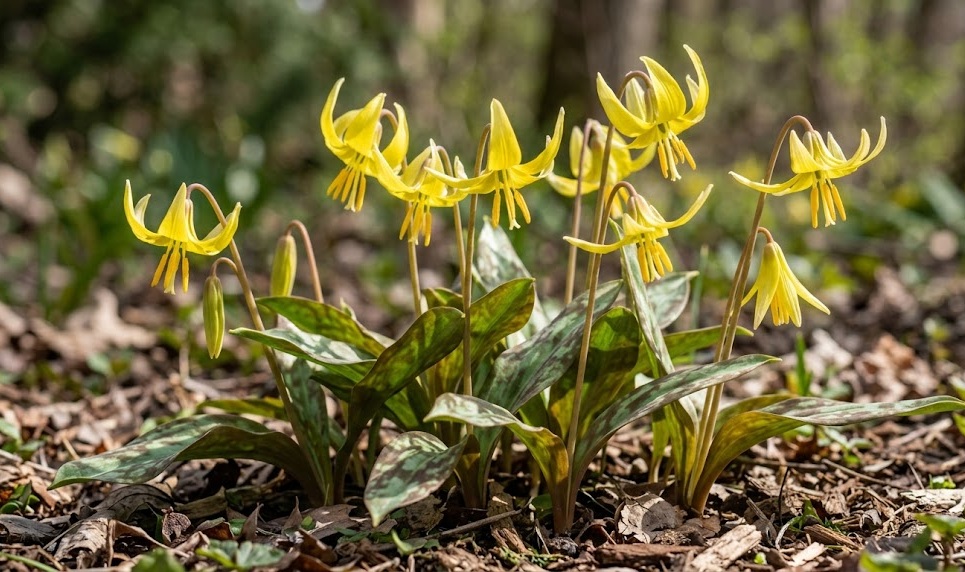

Pruning and cutting back the ‘Pagoda’ dog’s tooth violet is a task that requires more restraint than active intervention, as the plant manages much of its life cycle naturally. Unlike woody shrubs or long-blooming perennials, these spring ephemerals have a very specific window where they are visible above ground. You must understand the biological purpose of the foliage and flowers to know when it is appropriate to step in with your garden shears. The goal of pruning in this context is to maintain garden hygiene without compromising the plant’s future energy reserves.
The most important rule when it comes to cutting back this variety is to never remove the leaves while they are still green and healthy. Even after the flowers have faded, the leaves continue to perform the vital task of photosynthesis, storing energy in the bulb for the following year. You should only consider cutting the foliage back once it has turned completely yellow or brown and has begun to go limp on the ground. This transition usually happens in the early to mid-summer, signaling that the plant has successfully moved its resources back into its underground bulb.
During the blooming period, you might find it beneficial to “deadhead” the faded flowers to keep the display looking tidy. Deadheading involves removing the spent flower stems before they have a chance to develop seed pods, which can redirect the plant’s energy from seed production back to the bulb. You should cut the flower stem as close to the base as possible without damaging the surrounding leaves. However, if you are interested in collecting seeds for propagation, you should leave a few of the strongest-looking flowers to mature naturally.
Maintaining a clean area around the base of the plant is another aspect of “pruning” that helps to prevent disease and pest issues. You should remove any fallen leaves from other trees that might be smothering the violet’s foliage or trapping too much moisture. Similarly, if you notice any individual leaves that are clearly diseased or damaged by slugs, you can remove them to prevent the problem from spreading. This selective thinning keeps the plant looking its best and ensures that air can circulate freely around the delicate stems.
Aesthetic and hygienic maintenance
Aesthetic pruning is often about small, subtle changes that improve the overall presentation of your woodland garden bed. You should periodically check the colony for any dead or decaying matter that might detract from the beautiful mottled leaves of the ‘Pagoda’ variety. Removing these isolated bits of debris helps the healthy parts of the plant to stand out and keeps the entire garden looking professional. A well-maintained patch of violets is a source of pride for any gardener and shows a high level of care and attention to detail.
More articles on this topic
When the foliage does finally begin to senesce in the summer, you can gently pull the yellowed leaves away from the plant rather than cutting them. If the plant is truly ready for dormancy, the leaves should come away with a light tug, indicating that the connection to the bulb has been naturally severed. If you feel any resistance, it is a sign that the plant is still drawing nutrients from the leaf, and you should wait a few more days. This “gentle harvest” of old foliage is the safest way to tidy up the garden without causing any physical stress to the bulbs.
In cases where you have a large colony that has finished its cycle, you might choose to cut the entire area back with a pair of clean garden shears once the foliage is fully dormant. This clears the space for late-emerging perennials like hostas or ferns that will fill the gap for the remainder of the summer. You must ensure that your tools are sharp and sterilized to prevent the introduction of any pathogens into the soil during this process. A clean cut at the soil surface is all that is needed to prepare the bed for its summer phase.
If you are growing your violets in a more formal garden setting, you may be more concerned about the “untidy” look of yellowing foliage. One way to manage this is to interplant the violets with other groundcovers that will naturally mask the fading leaves as they decline. This allows you to leave the foliage in place—which is best for the plant’s health—without compromising the overall beauty of your garden design. It is a win-win strategy that prioritizes the plant’s biological needs while satisfying your aesthetic goals.
Strategic management for future growth
Strategic pruning can also involve the management of nearby plants that might be encroaching on the dog’s tooth violet’s space. You should look for any aggressive neighbors that might be shading the violets too much or competing with their shallow root systems. Pruning back these nearby plants ensures that your violets have the “elbow room” they need to spread and form a healthy colony. This broader perspective on garden maintenance is what allows specialized plants like the ‘Pagoda’ variety to truly thrive over many years.
More articles on this topic
You should also consider the “pruning” of the soil itself through the careful removal of weeds that can quickly overwhelm the low-growing foliage. Hand-weeding is always the best approach, as it allows you to be precise and avoid disturbing the sensitive bulbs just beneath the surface. Removing these competitors while they are small prevents them from stealing the moisture and nutrients that the violets need during their short growing window. A weed-free garden bed is a more productive and healthy environment for your prized woodland plants.
After the foliage has been removed in the summer, you should avoid any further digging or major soil disturbance in that area until the following spring. It can be helpful to place a few small markers or a light layer of fresh mulch to remind yourself where the dormant bulbs are located. This “invisible phase” of the plant’s life is just as important as when it is in bloom, and it requires its own kind of quiet maintenance. By respecting the plant’s natural rhythms, you ensure that it returns with even more vigor in the next growing season.
Finally, remember that the best pruning advice is often to do as little as possible and let the plant follow its natural course. Nature has a very efficient system for managing the life cycle of woodland ephemerals, and our role as gardeners is simply to support that process. By providing a clean, safe environment and removing only what is truly necessary, you allow the ‘Pagoda’ dog’s tooth violet to shine in all its glory. Your patient and thoughtful care will be rewarded every spring with a stunning display of those iconic, nodding yellow flowers.