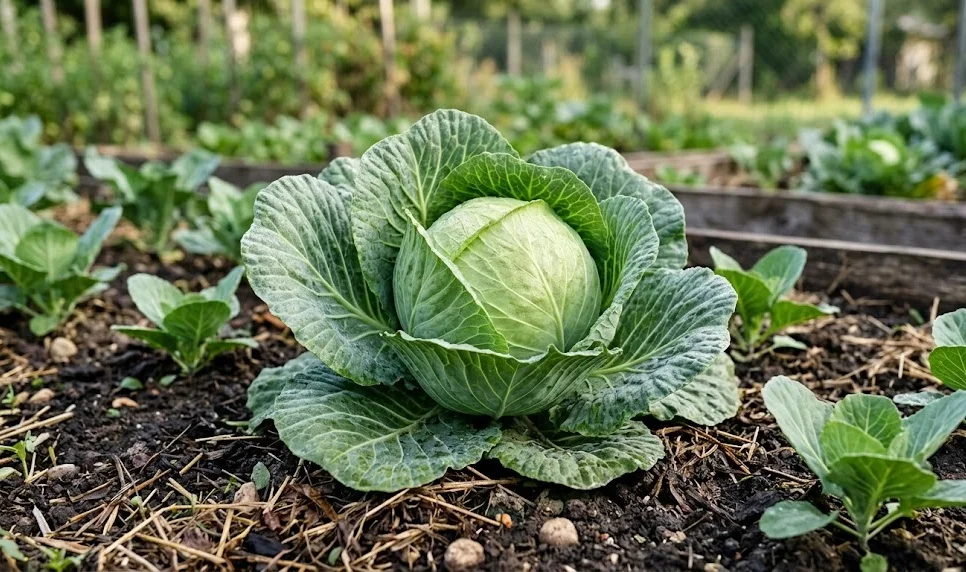

Pruning is a technique that is often associated with fruit trees or ornamental shrubs, but it also has a professional application in the management of a healthy cabbage crop. You should focus your pruning efforts on removing the oldest, lower leaves that have finished their productive life and are beginning to turn yellow or brown. By cutting these leaves back close to the stem, you improve the airflow around the base of the plant, which is the most effective way to prevent soil-borne diseases. This proactive maintenance ensures that the plant’s energy is not wasted on maintaining non-functional tissue and instead goes directly into the developing head.
When you perform this type of maintenance, it is essential to use a sharp, sterilized knife to make clean cuts that will heal quickly without inviting pathogens. You should avoid tearing the leaves away by hand, as this can create a jagged wound that is more susceptible to rot and pest infestation. Making a single, smooth cut is a professional standard that protects the long-term health of the main stalk. You will notice that the plant looks much cleaner and more organized after a pruning session, making it easier to monitor for any hidden issues.
In some situations, you may also need to prune the developing head itself if you notice any damaged or diseased inner leaves. This is a delicate operation that should only be done if absolutely necessary to prevent the spread of a localized problem to the rest of the vegetable. You should carefully peel back the outer wrapper leaves to access the issue, then use a small, clean blade to remove the affected area before replacing the protective leaves. This level of precision care is what distinguishes a dedicated gardener who is willing to go the extra mile for their crop’s success.
Pruning also plays a vital role in managing the overall size and shape of the plant, especially in tight garden spaces where every centimeter counts. If the outer leaves of your cabbage are encroaching on a neighbor’s space or blocking a path, you can selectively remove a few of the largest leaves without harming the plant’s health. This allows you to maintain a professional and orderly garden layout while still ensuring each plant has the resources it needs. Balancing the needs of the individual plant with the needs of the entire garden is a key part of professional horticultural management.
Thinning for optimal development
Thinning is a form of early-season pruning that involves removing excess seedlings to ensure that the remaining plants have enough room to grow to their full potential. You should perform this task as soon as the seedlings are a few centimeters tall and have their first true leaves, choosing the strongest and healthiest individuals to keep. It is often painful for new gardeners to pull up perfectly healthy plants, but it is a professional necessity to prevent overcrowding and stunted growth later on. This initial selection process is the first step in ensuring a high-quality and professional-grade harvest.
More articles on this topic
When thinning, you should use small scissors to snip the unwanted seedlings at the soil line rather than pulling them up by the roots. This prevents disturbing the delicate root systems of the plants you intend to keep, ensuring they can continue their growth without any interruption or transplant shock. This “no-disturbance” method is a professional secret that leads to much more uniform and vigorous development across the entire garden bed. You will find that the remaining plants quickly expand to fill the available space once the competition is removed.
Proper thinning also reduces the risk of pest and disease outbreaks by ensuring that there is adequate light and air reaching every part of the plant. Overcrowded cabbage patches create a humid microclimate that is the perfect breeding ground for aphids, slugs, and various fungal issues. By providing the recommended spacing from the very beginning, you make your maintenance tasks much easier and reduce the need for future interventions. A professional gardener views thinning not as a loss, but as an investment in the health and productivity of the final crop.
If you are growing particularly large or “giant” varieties of cabbage, your thinning and spacing requirements will be even more significant. You should research the specific needs of your chosen variety and adjust your thinning strategy to accommodate its expected final diameter. This foresight prevents the frustration of having a beautiful crop that is impossible to manage because the plants are crushed together. Taking the time to do it correctly at the start of the season is the hallmark of an organized and professional gardening operation.
Secondary harvesting and rejuvenation
One of the most interesting ways to use pruning techniques with cabbage is through the process of encouraging a secondary harvest after the main head has been removed. You should leave the main root system and about ten to fifteen centimeters of the stalk in the ground, making a shallow “X” cut on the top of the remaining stump. Over the next few weeks, you will see several small miniature heads, or “sprouts,” beginning to form along the sides of the stem. This rejuvenation process allows you to get a second, smaller yield from the same plant with almost no additional effort.
More articles on this topic
To ensure these secondary sprouts grow to a useful size, you should prune away all but three or four of the strongest ones, allowing the plant to focus its remaining energy on them. You can treat these small heads like individual vegetables, harvesting them when they are firm and about the size of a golf ball. This technique is particularly effective in regions with a long growing season, where the primary harvest happens in mid-summer and there is still plenty of time for secondary growth. It is a professional way to maximize the “ROI” of your garden space and your time.
If you are not interested in a secondary harvest, the final “pruning” step of the season is the complete removal of the plant material to prepare the bed for the next crop. You should clear away all the remaining leaves and stems, being careful to remove as much of the root system as possible to prevent any diseases from overwintering in the soil. Composting this material, provided it is free from major pathogens, returns the organic matter and nutrients to your garden’s cycle. This clean-up phase is the professional conclusion to a successful growing season and sets the stage for future success.
Finally, reflecting on how the plants responded to your pruning and thinning efforts will help you refine your techniques for the next year. You might find that some varieties respond better to secondary harvesting or that your spacing needs to be adjusted based on the vigor of your soil. A professional gardener uses every action in the garden as a learning opportunity, building a body of knowledge that is specific to their own unique growing environment. Mastering the art of pruning and cutting back cabbage is a significant milestone in your journey toward becoming an expert horticulturalist.