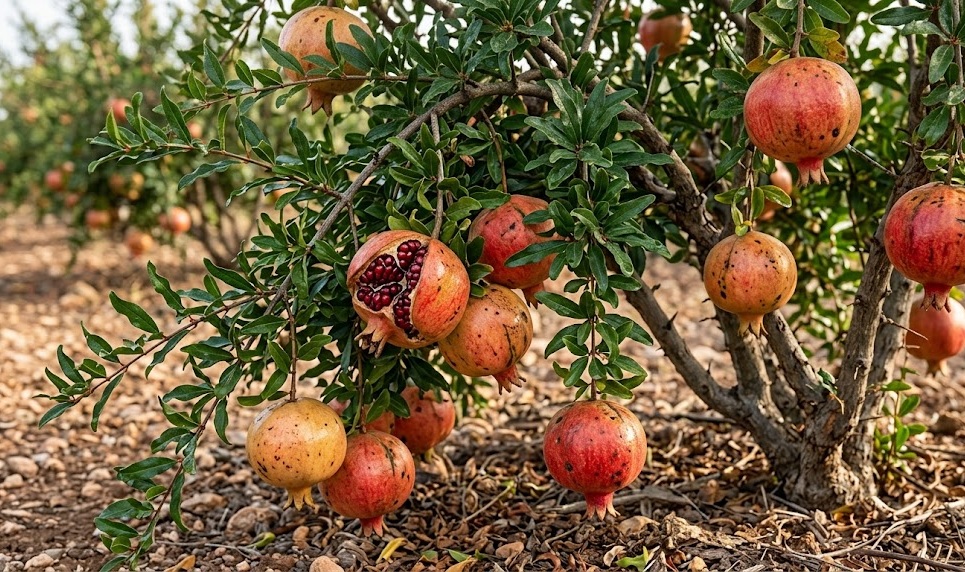

The twin pillars of high-yield pomegranate cultivation are a precise irrigation strategy and a well-balanced nutrient program. You must understand that while the pomegranate is drought-tolerant once established, its ability to produce juicy, high-quality fruit depends on consistent moisture. Fertilization should be viewed not as a one-time event but as a continuous effort to replenish the soil’s natural reserves. Achieving the right balance between water and food prevents physiological disorders like fruit cracking and ensures the tree’s overall vigor.
Developing a watering schedule requires you to pay close attention to the soil moisture levels and the current weather conditions. You should aim to keep the soil consistently damp during the critical flowering and fruit-setting stages in the late spring and early summer. If the tree experiences a cycle of extreme dryness followed by heavy watering, the sudden internal pressure can cause the developing fruit to split open. Consistency is the primary goal for any irrigator who wants to bring a perfect crop to harvest at the end of the season.
Nutrient management involves identifying the specific needs of the tree at different points in its annual growth cycle. You should focus on nitrogen-rich amendments in the early spring to stimulate the growth of new leaves and stems that will support the fruit. As the season progresses, shifting toward fertilizers with higher phosphorus and potassium levels will encourage better bloom production and sugar development in the arils. This targeted approach ensures that the tree has the right building blocks at the right time to maximize its reproductive potential.
The method of delivery for both water and fertilizer can significantly impact the efficiency of your resource use. You should consider using drip irrigation or soaker hoses to deliver water directly to the root zone, reducing waste through evaporation and runoff. Similarly, applying fertilizers in a way that minimizes contact with the trunk prevents localized burns and ensures the nutrients reach the active root tips. Mastering these delivery techniques allows you to be a more sustainable and effective grower in any agricultural setting.
Principles of effective irrigation
The most important rule in pomegranate irrigation is to water deeply and less frequently rather than providing shallow daily sips. This practice encourages the roots to grow deeper into the soil profile, where they can find more stable moisture levels and better anchorage. You should apply enough water to penetrate at least twelve to eighteen inches below the surface, depending on the age of the tree. Deep roots make the pomegranate much more resilient during heatwaves and periods when regular irrigation might be interrupted.
More articles on this topic
Seasonal adjustments are mandatory because the water requirements of the tree fluctuate dramatically between the dormant winter and the scorching summer. In the spring, you should increase watering as the first leaves appear and the tree’s metabolic rate begins to climb. During the peak of summer, especially when the fruit is growing rapidly, the demand for water will be at its absolute highest. Conversely, you should gradually reduce irrigation in the late autumn to encourage the tree to enter its natural dormancy and prepare for the cold.
Soil type also dictates how you should manage your irrigation system to avoid overwatering or leaving the roots parched. Sandy soils drain quickly and require more frequent watering sessions, whereas clay-heavy soils hold moisture much longer and can become waterlogged if you are not careful. You can use a simple soil moisture meter or the manual “squeeze test” to determine when it is truly time to turn on the tap. Professional growers often install automated systems with rain sensors to ensure that irrigation only occurs when it is actually needed by the plants.
Water quality is a factor that is often overlooked but can have long-term effects on the health of your pomegranate grove. If your water source is high in salts or minerals, you may need to periodically “leach” the soil by applying extra water to push the excess minerals below the root zone. You will see that trees receiving high-quality, balanced water exhibit less leaf tip burn and more consistent fruit development. Being mindful of the chemical composition of your irrigation water is a sophisticated part of modern agricultural management.
Nutrient requirements and soil health
A healthy pomegranate tree is a hungry one, especially when it is tasked with producing dozens of large, seed-filled fruits. Nitrogen is the engine of growth, and you should ensure that the tree has access to a steady supply during its most active vegetative phases. However, you must be careful not to over-apply nitrogen, as this can lead to a tree that looks beautiful and green but produces very little actual fruit. Balance is the key, and you should always look at the overall health of the foliage as a guide for your next application.
More articles on this topic
Phosphorus is essential for root development and the energy transfer processes that occur within the plant’s cells. You will find that adding a source of phosphorus, like rock phosphate or bone meal, at the beginning of the season provides long-term benefits for the tree’s structural integrity. This element is particularly important for young trees that are still trying to establish their footprint in the garden. Ensuring adequate phosphorus levels helps the tree recover more quickly from environmental stresses and pests.
Potassium is often called the “quality” nutrient because of its direct impact on the size, color, and flavor of the pomegranate fruit. It helps the tree regulate its internal water balance and improves its overall resistance to disease and drought. You should consider an extra application of potassium in mid-summer as the fruit begins its final stage of expansion. Trees that are well-supplied with potassium produce fruits that are not only larger but also have a much longer shelf life after they are harvested.
Secondary nutrients and trace elements like calcium, magnesium, and boron are also required, albeit in much smaller quantities. You can maintain these levels by regularly adding organic compost or a dedicated micronutrient spray if your soil tests show a specific deficiency. These elements act as catalysts for many of the complex chemical reactions that result in the unique antioxidants found in pomegranate juice. A holistic approach to nutrition ensures that you are feeding the entire system, not just the visible parts of the tree.
Organic vs synthetic fertilizer choices
Choosing between organic and synthetic fertilizers is a decision that affects not just the tree but the entire soil biology of your garden. Organic fertilizers, such as composted manure, fish emulsion, or seaweed extracts, provide nutrients in a slow-release form that mimics natural processes. You will find that these materials improve the soil’s structure and its ability to hold water over time, creating a more self-sustaining environment. While they may act more slowly than chemicals, the long-term health benefits for the pomegranate are often superior.
Synthetic fertilizers offer the advantage of precise control over the exact ratios of nitrogen, phosphorus, and potassium being delivered to the plant. They are typically water-soluble and provide a nearly instantaneous boost to the tree, which can be useful if you are trying to correct a severe deficiency quickly. However, you must be cautious about the potential for salt buildup in the soil and the risk of leaching into the groundwater. Using synthetic products requires a higher level of precision and monitoring to avoid damaging the delicate microbial life in the earth.
Many professional growers find success with an integrated approach that combines the best of both worlds. You might use a base layer of organic compost to build soil health and then supplement with targeted synthetic applications during high-demand periods like flowering. This strategy allows you to maintain a vibrant soil ecosystem while ensuring that the tree never runs out of the specific minerals it needs for a heavy crop. Flexibility in your fertilization program is a sign of an experienced horticulturist who can adapt to the needs of their plants.
Regardless of the type of fertilizer you choose, you should always follow the application instructions carefully to prevent over-dosage. It is better to apply small amounts more frequently than to overwhelm the tree with a massive dose of nutrients all at once. You should also make sure to water the area thoroughly after fertilizing to help wash the nutrients down to the roots and prevent any surface crusting. Consistent, thoughtful feeding is the most reliable way to ensure that your pomegranates remain the pride of your garden or farm.
Timing and application techniques
The calendar is your most important tool when it comes to deciding when to apply fertilizers to your pomegranate trees. You should start your program in the late winter or very early spring, just as the tree begins to wake up from its dormant state. This initial feeding provides the energy needed for the first flush of leaves and the development of the flower buds that will become your harvest. Missing this early window can lead to a sluggish start and a reduced number of fruits later in the year.
A second application is often beneficial in the late spring or early summer, once the fruit has successfully set and begun to grow. This feeding supports the heavy energy demands of fruit development and helps the tree maintain its vigor during the transition into the hot summer months. You should avoid any heavy fertilization after mid-summer, as this can stimulate late-season growth that will not have time to harden off before the winter. Following this seasonal rhythm ensures that the plant’s resources are always focused on the most important tasks of the moment.
When applying granular fertilizers, you should spread them evenly around the “drip line” of the tree, which is the area directly under the outermost branches. This is where the most active feeder roots are located, and putting the nutrients here ensures the most efficient uptake. You should never pile fertilizer directly against the trunk, as this can cause moisture to trap against the bark and lead to decay or fungal infections. Scratching the fertilizer lightly into the top inch of soil helps prevent it from being washed away by rain or irrigation.
Foliar feeding, which involves spraying a liquid nutrient solution directly onto the leaves, can be an effective way to deliver micronutrients quickly. This method is particularly useful if the soil pH is making certain minerals unavailable to the roots or if the tree is showing immediate signs of stress. You should apply foliar sprays in the early morning or late evening when temperatures are cooler to prevent leaf scorch. Combining ground-based fertilization with occasional foliar boosts creates a comprehensive nutrient strategy that leaves no gap in the tree’s health.
Managing the water-fertilizer relationship
Water and fertilizer are deeply interconnected; you cannot manage one effectively without considering the other. Water acts as the primary transport mechanism that carries nutrients from the soil into the roots and then up through the entire structure of the tree. If you apply fertilizer but fail to provide enough water, the nutrients will sit unused in the soil or may even reach toxic concentrations that can damage the plant. Conversely, overwatering can wash away expensive and valuable nutrients before the tree has a chance to absorb them.
Maintaining a consistent moisture level is the best way to ensure that the tree can access the nutrients you have worked so hard to provide. You should aim for a “damp sponge” consistency in the soil, where the earth feels moist but does not release liquid when squeezed firmly. This environment is ideal for the various chemical and biological processes that break down fertilizers and make them available to the plant. Using mulch, as mentioned in previous care guides, is a fantastic way to maintain this balance and protect your investment in soil fertility.
If you are using a fertigation system, where fertilizer is delivered through the irrigation lines, you must monitor the concentrations very closely. This method provides the most precise control over nutrient delivery but also leaves the least room for error if the equipment malfunctions. You should regularly flush your irrigation lines with clean water to prevent the buildup of salts or algae that can clog the emitters. Professional-grade equipment and regular maintenance are essential for anyone using these advanced agricultural technologies.
By observing the growth rate and the appearance of the fruit, you can fine-tune both your watering and fertilization programs over time. If the leaves are a deep, healthy green and the fruit is sizing up without splitting, you have likely found the “sweet spot” for your specific location. Every garden and orchard is different, and the most successful growers are those who are willing to listen to what their trees are telling them. A harmonious relationship between water and nutrients is the ultimate secret to a bountiful pomegranate harvest.