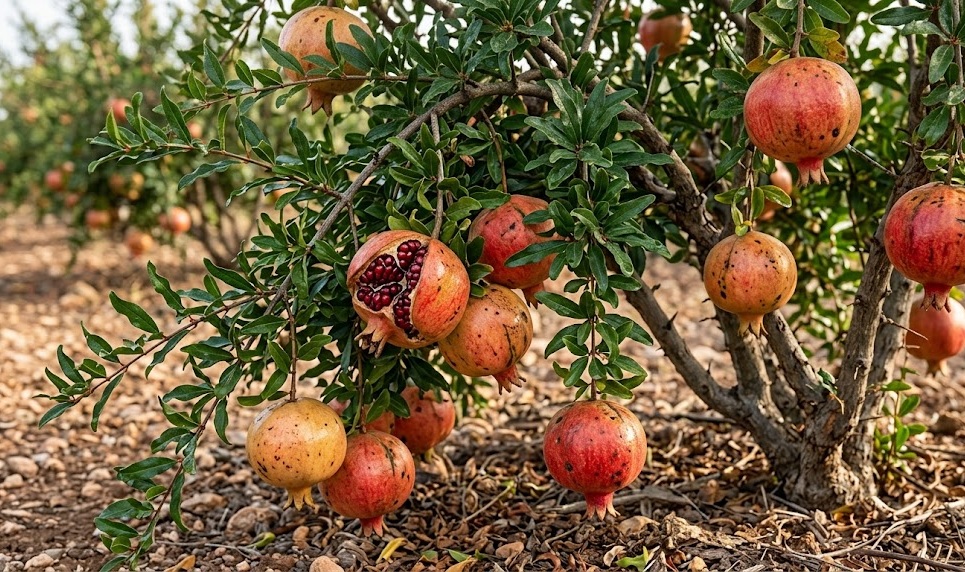

Success in establishing a pomegranate orchard or a single garden specimen begins with the precise execution of the planting process. You must choose a location that offers the maximum amount of sunlight and protection from harsh environmental elements that could stunt early growth. The preparation of the site is just as important as the health of the sapling you intend to put into the ground. A well-planned start provides the tree with the necessary resources to develop a deep and resilient root system from the very first day.
The timing of your planting efforts can significantly influence how quickly the pomegranate adapts to its new home. It is generally best to plant during the dormant season or in early spring before the first leaves begin to emerge from the buds. This allows the roots to settle into the soil and begin their initial expansion without the added stress of supporting a full canopy of foliage. By coordinating your planting with the natural cycle of the plant, you increase the survival rate and minimize transplant shock.
Spacing is a critical consideration if you are planting multiple trees for a high-yield agricultural purpose or a decorative hedge. You should provide at least twelve to fifteen feet between each tree to allow for their natural spread and to ensure adequate air movement. If the trees are planted too closely, they will compete for light and nutrients, leading to a decrease in overall fruit production and quality. Giving each plant enough room to grow is a fundamental rule for any professional horticulturist seeking long-term success.
Before you even touch the soil, you should inspect your young plant for any signs of root-bound conditions or visible stress. If the roots have begun to circle the inside of the nursery pot, you must gently loosen them to encourage outward growth into the surrounding garden soil. A healthy root system should be firm and light in color, indicating that the plant is ready for a vigorous start in its permanent location. Taking these small but vital steps during the planting phase sets the foundation for a productive and healthy pomegranate tree.
Site selection and soil preparation
The first step in planting a pomegranate is identifying a spot in your landscape that receives at least six to eight hours of direct sunlight daily. Sunlight is the primary driver for fruit production and the development of the deep red pigments that characterize high-quality pomegranates. You should avoid low-lying areas where cold air or water tends to settle, as these conditions can damage the plant or lead to root diseases. A south-facing slope or a protected area near a wall can often provide the extra warmth these Mediterranean plants crave.
More articles on this topic
Once the site is chosen, you must turn your attention to the soil and its ability to support a long-lived fruit tree. You should dig a hole that is twice as wide as the root ball but no deeper than the original container to prevent the trunk from sinking. Mixing the native soil with a small amount of well-aged compost can provide an initial boost of organic matter and improve the soil’s structure. It is vital to avoid adding heavy fertilizers directly into the planting hole, as this can burn the sensitive new roots.
Testing the soil’s drainage capacity at the chosen site is a professional habit that prevents many future heartaches for the gardener. You can fill the dug hole with water and observe how long it takes to drain away completely; it should be gone within a few hours. If the water lingers for a day or more, you may need to reconsider the location or install a drainage system to protect the tree. High-quality soil preparation ensures that the roots have easy access to both oxygen and moisture in the correct proportions.
Clear the surrounding area of any grass or weeds that might compete with the newly planted pomegranate for essential resources. You can create a clean circle around the planting site, which makes it easier to apply mulch and manage irrigation during the critical first year. Removing competition allows the young tree to focus all its energy on establishing its root network rather than fighting for space. This level of detail in site preparation distinguishes a professional installation from a casual garden project.
Techniques for successful seed propagation
Propagating pomegranates from seed is a rewarding process that allows you to observe the entire life cycle of the plant from its very beginning. You should start by selecting a ripe, healthy fruit and extracting the seeds, ensuring you remove all traces of the fleshy pulp. The seeds should be cleaned thoroughly in cool water and then allowed to dry slightly before being placed in a germinating medium. Using a sterile, well-draining seed-starting mix prevents common fungal issues like damping-off that can kill young seedlings.
More articles on this topic
Temperature control is one of the most important factors in achieving a high germination rate for pomegranate seeds. You will find that keeping the soil consistently warm, ideally between 75 and 80 degrees Fahrenheit, significantly speeds up the process. Many growers use a heating mat or place their seed trays in a sunny, warm window to provide the necessary thermal energy. The soil should remain moist but never waterlogged, as the delicate embryos need oxygen as much as they need water to wake up.
Once the seedlings emerge, they require bright light to prevent them from becoming leggy and weak as they search for the sun. You should provide at least twelve to fourteen hours of light, using supplemental grow lights if the natural day length is too short. As the first true leaves appear, you can begin to introduce a very dilute, balanced liquid fertilizer to support their rapid development. Growing pomegranates from seed requires patience, as it may take several years before the resulting tree is large enough to produce fruit.
It is important to remember that pomegranates grown from seed may not be identical to their parent plant due to genetic variation. You might discover a new and interesting variety, or you might find that the fruit quality is different from what you originally expected. For this reason, seed propagation is often used for creating rootstocks or for the sheer joy of experimentation rather than commercial production. Regardless of the outcome, the process offers deep insights into the resilience and growth habits of the species.
Vegetative propagation through cuttings
If you wish to produce an exact genetic clone of a specific pomegranate variety, vegetative propagation through cuttings is the most effective method. You should take hardwood cuttings during the late winter while the parent tree is still in its dormant state for the best results. Select healthy, straight branches from the previous season’s growth that are about the thickness of a pencil. Each cutting should be around eight to ten inches long and include several nodes where new roots and leaves will emerge.
The preparation of the cutting involves making a clean, slanted cut at the bottom and a straight cut at the top to help you identify the orientation. You can increase your success rate by dipping the bottom end of the cutting into a rooting hormone before placing it in the growing medium. Use a mix of perlite and peat moss or clean sand to provide a stable environment that holds moisture while allowing for plenty of aeration. Burying at least half of the cutting ensures that multiple nodes are in contact with the moist medium where roots will form.
Keeping the environment humid is vital for the survival of the cuttings until they have developed their own root systems to take up water. You might use a plastic dome or a simple clear bag to create a mini-greenhouse effect around your propagation trays. Place the cuttings in a bright location but out of direct, scorching sunlight, which could overheat the enclosed space and cook the delicate tissues. You should see signs of new growth within six to eight weeks, indicating that the rooting process has been successful.
Once the cuttings have established a robust root system, they can be gradually hardened off and moved into individual pots for further growth. This method allows you to rapidly expand your pomegranate collection with plants that you already know and trust for their fruit quality. Propagating from cuttings is a standard practice in commercial nurseries because it ensures consistency in harvest timing and fruit characteristics across the entire orchard. It is a fundamental skill that every pomegranate enthusiast should master to ensure the longevity of their favorite varieties.
Grafting and layering methods
Grafting is a more advanced propagation technique used to combine the desirable traits of two different pomegranate plants into a single tree. You might graft a high-quality fruiting variety onto a rootstock that is specifically chosen for its resistance to soil-borne diseases or its ability to handle poor soil. This process requires precision and a sharp grafting knife to ensure that the cambium layers of the scion and the rootstock are perfectly aligned. Successful grafting allows you to grow varieties that might otherwise struggle in your specific soil or climate conditions.
Air layering is another useful method for propagating pomegranates, especially when you want to start with a larger plant than a standard cutting would provide. You select a healthy branch and remove a small ring of bark, then wrap the area in moist sphagnum moss and seal it with plastic. Over several months, roots will form inside the moss, allowing you to eventually cut the branch away from the parent tree and plant it as a new individual. This technique has a very high success rate because the developing plant continues to receive water and nutrients from the mother tree during the rooting process.
Both grafting and layering require a bit more time and attention than simple cuttings, but they offer unique advantages for specific garden goals. You should monitor the graft union or the layering site closely for any signs of drying out or infection during the healing period. Once the new plant is successfully established, it will often begin producing fruit much sooner than a seedling would. These methods allow you to manipulate the growth habits of your trees and optimize them for your specific agricultural environment.
Experimenting with different propagation styles can lead to a deeper connection with your garden and a better understanding of plant physiology. You will find that pomegranates are surprisingly forgiving, making them excellent subjects for practicing these horticultural arts. Whether you are aiming to preserve a family heirloom tree or simply want to try a new challenge, propagation is a key part of the pomegranate journey. Each new plant you create is a testament to your skill and dedication as a grower and a steward of the land.