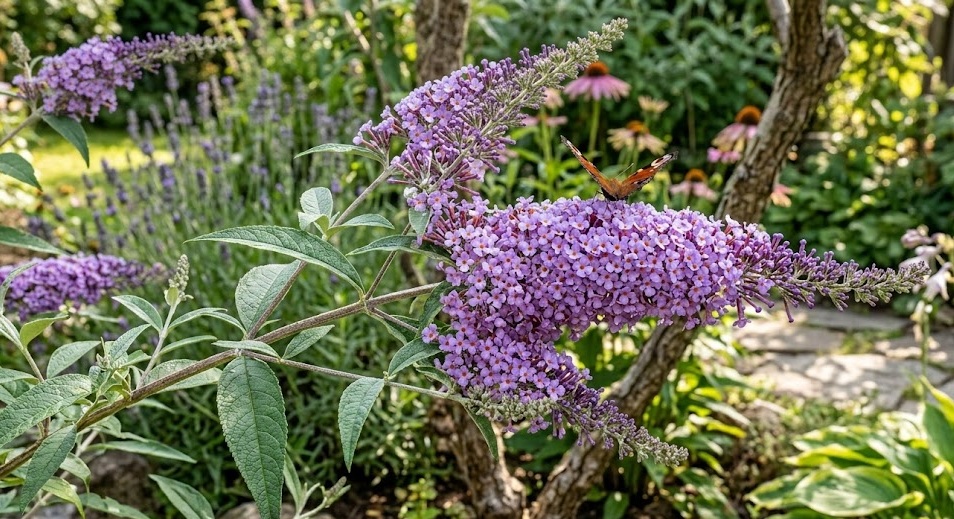

Establishing a new butterfly bush in your landscape starts with understanding the fundamental requirements for a successful planting process. This versatile shrub is a favorite among gardeners for its ability to quickly fill spaces with color and life, provided it is given the right start. Whether you are looking to add a single specimen or create a blooming hedge, the initial steps you take will dictate the plant’s vigor for years to come. Propagation offers an excellent way to expand your collection or share these beautiful plants with others using simple, effective techniques.
Site selection and timing for planting
Choosing the right location is the most important decision you will make when adding a butterfly bush to your garden. These plants are sun-loving and require a spot that receives at least six to eight hours of direct light every day. Without sufficient sunlight, the stems will become leggy and weak, and the floral production will be significantly diminished. You should also look for a location with well-draining soil, as these shrubs are highly susceptible to root rot in soggy conditions.
The best time to plant a butterfly bush is during the mild weather of spring or early autumn. Planting in the spring allows the root system to establish itself before the intense heat of summer arrives, providing a strong foundation for growth. If you choose to plant in the autumn, make sure to do so at least six weeks before the first hard frost to give the roots time to settle. Avoiding the extreme temperatures of mid-summer or deep winter will reduce transplant shock and increase your success rate.
When assessing your site, consider the ultimate size of the mature shrub to ensure it has enough room to expand. A typical butterfly bush can reach heights and widths of six to ten feet, depending on the specific variety you choose. Placing it too close to a building or a walkway might require excessive pruning later on, which can stress the plant. You should also check for underground utilities or nearby large trees that might compete for water and nutrients in the soil.
Air circulation is an often overlooked factor in site selection but is crucial for maintaining healthy foliage. A spot that is too enclosed can trap humidity, leading to fungal issues that can mar the appearance of the leaves and flowers. You should aim for a location that has a gentle breeze or enough open space to allow for natural drying after rain or irrigation. By taking the time to evaluate these environmental factors, you set the stage for a professional and thriving garden installation.
More articles on this topic
Proper planting techniques
Once you have selected the perfect site, the actual planting process should be handled with care and precision. You should dig a hole that is twice as wide as the root ball but no deeper than the container the plant came in. Placing the plant too deep in the ground can suffocate the roots and lead to trunk rot at the soil line. Loosening the soil on the sides of the hole will help the new roots penetrate the surrounding earth more easily as they begin to grow.
Before placing the shrub in the hole, gently tease out any roots that have started to circle around the inside of the nursery pot. This encourages them to grow outward into the garden soil rather than continuing to grow in a tight, restrictive spiral. If the plant is particularly root-bound, you may need to make a few shallow vertical cuts in the root ball to stimulate new growth. Position the plant in the center of the hole and ensure it is standing upright before you begin to backfill with soil.
When filling the hole, use the native soil you removed, perhaps amended with a small amount of high-quality compost for a nutrient boost. You should firm the soil gently with your hands as you go to remove any large air pockets that could dry out the roots. Avoid tamping the soil down too hard with your feet, as this can compress the earth and make it difficult for water to penetrate. Once the hole is filled, the base of the stem should be level with the surrounding ground surface.
Immediate aftercare is essential for the survival of your newly planted butterfly bush. You should water the area thoroughly to help settle the soil and ensure that the roots have direct contact with moisture. Applying a two-inch layer of organic mulch around the base will help retain this moisture and suppress competing weeds. Be careful to keep the mulch a few inches away from the actual stem to prevent moisture from sitting against the bark, which can cause disease.
More articles on this topic
Propagation through softwood cuttings
Propagating a butterfly bush from cuttings is a rewarding way to create new plants that are identical to the parent. The most successful method involves taking softwood cuttings in late spring or early summer when the plant is growing vigorously. You should look for young, flexible stems that have not yet become woody or started to produce flower buds. These tips have the highest concentration of growth hormones and are the most likely to develop roots quickly.
Using a sharp, sterilized pair of shears, cut a four to six-inch section from the tip of a healthy branch. You should make the cut just below a leaf node, as this is where the highest concentration of rooting cells is located. Remove the leaves from the bottom half of the cutting to reduce moisture loss and expose the nodes for rooting. If the remaining leaves are very large, you can cut them in half horizontally to further minimize the stress on the cutting.
While butterfly bushes root relatively easily, using a rooting hormone can significantly speed up the process and improve the success rate. Dip the bottom inch of the prepared cutting into the hormone powder or liquid before inserting it into a pot filled with a light, sterile starting mix. A combination of peat and perlite or vermiculite provides the ideal balance of moisture retention and aeration. You should space the cuttings so that their leaves do not touch, which helps prevent the spread of mold.
To create a humid environment, you can cover the pot with a clear plastic bag or place it in a specialized propagation dome. Keep the cuttings in a bright location but out of direct sunlight, as the heat can quickly cook the delicate stems inside the plastic. You should check the moisture levels regularly and mist the leaves if the environment seems dry. In about three to six weeks, you can gently tug on the cuttings to see if they have developed roots, at which point they can be transitioned to larger pots.
Growing from seeds and division
While less common than cuttings, growing a butterfly bush from seed is a fascinating way to see the natural variation within the species. You can collect the small, winged seeds from dried flower spikes in late autumn once they have turned brown and started to open. Keep in mind that seeds from hybrid varieties may not produce plants that look exactly like the parent. This can lead to unexpected and interesting flower colors or growth habits in your new seedlings.
If you choose to start seeds indoors, you should sow them on the surface of a fine seed-starting mix in late winter. They require light to germinate, so do not cover them with soil; instead, press them gently into the surface to ensure good contact. Keeping the trays in a warm spot with consistent moisture will usually result in germination within a couple of weeks. Once the seedlings have developed a few sets of true leaves, they can be transplanted into individual pots to grow on until planting time.
Division is another propagation technique, though it is generally more difficult with butterfly bushes due to their woody structure. This method is best attempted on younger plants that have multiple stems emerging from the ground rather than a single central trunk. You should lift the entire root ball in early spring and use a sharp spade or saw to carefully split the crown into two or more sections. Ensure that each new piece has a healthy amount of both roots and stems before replanting them immediately.
Regardless of the method you choose, the young plants will require extra care during their first year of life. They are more sensitive to drying out and extreme temperatures than established shrubs, so you must monitor them closely. Gradually hardening them off by exposing them to outdoor conditions for increasing periods each day will prepare them for a permanent life in the garden. Watching a tiny cutting or seed grow into a massive, flowering bush is one of the most satisfying experiences for any professional gardener.