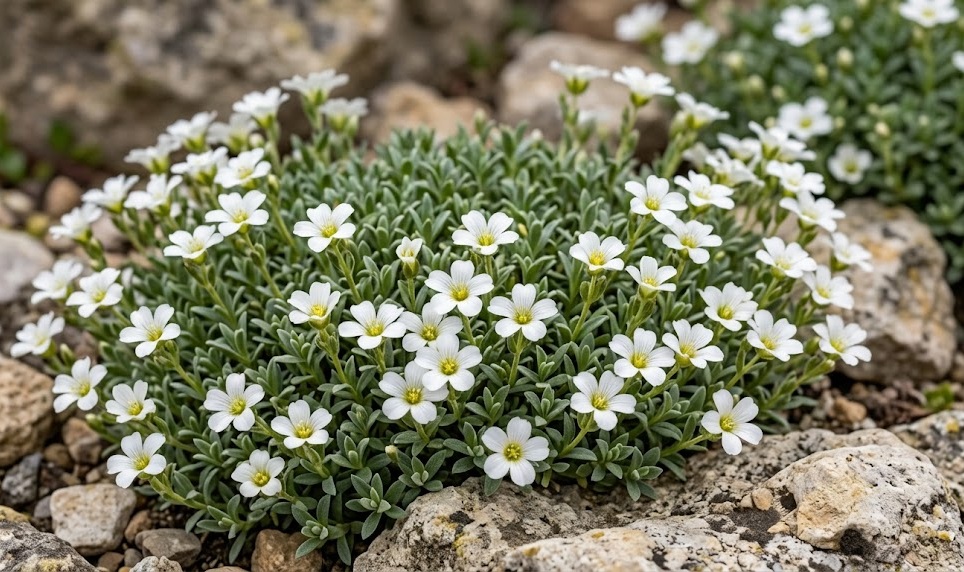

Establishing a successful colony of mountain sandwort begins with a strategic approach to both planting and the various methods of propagation. This versatile perennial is known for its ability to thrive in challenging environments, but it requires a careful hand during the early stages of development. Whether you are starting from seed, taking cuttings, or dividing existing mats, the goal is always to provide the best possible foundation for future growth. A professional understanding of these techniques allows any gardener to expand their collection and ensure a consistent floral display year after year.
Site preparation and planting techniques
The foundation of a healthy sandwort plant is the quality of the site where it is first installed. Before you even bring the plant home, you should spend time preparing the soil to meet its specific alpine requirements. This involves digging deep into the planting area to ensure there are no compacted layers that could trap water. Mixing in significant amounts of horticultural grit or coarse sand will improve the drainage profile of even the toughest soils.
When it comes time to actually place the plant in the ground, the depth of the hole is a critical factor. You should aim to plant the sandwort at the same level it was growing in its nursery container. Planting it too deep can lead to crown rot, as the stems are sensitive to being buried in heavy, moist soil. Conversely, planting it too high can expose the delicate root system to the drying effects of the sun and wind.
Spacing is another important consideration that will impact the long-term health and appearance of your garden. If you want to create a continuous carpet quickly, space the plants about twenty to thirty centimeters apart. This gives each individual enough room to expand without immediately competing for nutrients and light. Over time, these individual plants will grow together to form a seamless mat that covers the ground beautifully.
After the initial planting is complete, it is essential to water the area thoroughly to settle the soil around the roots. This initial soaking removes air pockets that could otherwise cause the roots to dry out before they can establish themselves. You should also consider applying a thin layer of fine gravel around the base of the new plant. This acts as a protective barrier that keeps the foliage off the bare earth and helps maintain a stable soil temperature.
More articles on this topic
Propagation through seed sowing
Growing mountain sandwort from seed is a rewarding process that allows you to produce a large number of plants at a relatively low cost. The seeds of this species are small and require specific conditions to germinate successfully. Many professional growers prefer to start the seeds indoors during the late winter months to give the seedlings a head start. This controlled environment protects the delicate sprouts from the unpredictable weather of early spring.
The choice of seed-starting mix is vital for success, as the young plants need a balance of moisture retention and drainage. A mixture of fine peat moss and perlite or vermiculite usually provides the ideal texture for germination. Surface sow the seeds and press them lightly into the mix, but do not cover them deeply with soil. They often benefit from exposure to light during the germination process, which can take several weeks depending on the temperature.
Cold stratification is a technique that can significantly improve the germination rate of sandwort seeds. This involves mimicking the natural winter conditions that the seeds would experience in the wild. You can achieve this by placing the seeded trays in a refrigerator for a few weeks before moving them to a warmer location. This thermal shock signals to the seeds that winter has passed and it is now safe to begin the growing process.
Once the seedlings have developed their first true leaves, they are ready to be moved into individual pots. This stage requires a gentle touch, as the tiny root systems are very fragile and easily damaged. Continue to grow them in a bright, cool location until they are large enough to be hardened off and planted outdoors. This gradual introduction to the outside world ensures that the young plants are strong enough to survive the transition to the garden.
More articles on this topic
Division of established mats
Division is perhaps the most reliable and efficient way to propagate mountain sandwort once you have an established colony. This method involves physically separating a large plant into smaller sections, each with its own set of roots and stems. Not only does this provide you with new plants, but it also rejuvenates the original specimen by removing older, less productive growth. Most gardeners find that dividing their plants every three to four years keeps them looking their absolute best.
The best time to perform a division is in the early spring, just as the plant is beginning its active growth cycle. Using a sharp spade or a garden fork, carefully lift the entire mat out of the ground, taking care to preserve as much of the root ball as possible. Once the plant is out of the soil, you can use your hands or a sharp knife to pull it apart into smaller clumps. Each new section should have a healthy amount of green foliage and a vigorous root system.
Replanting the new divisions should happen immediately to prevent the roots from drying out in the air. Prepare the new planting sites in advance using the same soil preparation techniques discussed earlier. Firm the soil gently around each new plant and water them in well to encourage quick establishment. You may notice a slight period of wilting after the division, but the plants should recover quickly if they are kept consistently moist.
One of the benefits of division is that the new plants are genetically identical to the parent, ensuring a consistent look across your garden. This is particularly useful if you have a specific cultivar that you want to replicate in different areas of the landscape. It also allows you to fill in any bare spots that may have developed in your borders over the years. Division is a fundamental skill that allows you to manage the scale and health of your garden with precision.
Stem cuttings for rapid expansion
Taking stem cuttings is another effective propagation method that can be done during the summer months. This technique involves taking a small piece of a healthy stem and encouraging it to grow its own roots. Cuttings are an excellent choice if you want to expand your collection without disturbing your established plants too much. Choose non-flowering stems for the best results, as these have more energy available for root development.
To take a cutting, use a sterilized pair of snips to remove a three to five-centimeter section of a healthy stem. Remove the leaves from the bottom half of the cutting to expose the nodes where the new roots will form. Some gardeners find that dipping the base of the cutting in a rooting hormone can speed up the process. Place the cutting into a pot filled with a gritty, well-draining propagation mix and press the soil firmly around it.
Keeping the humidity high around the cuttings is essential until they have established their own root systems. You can create a simple mini-greenhouse by placing a clear plastic bag over the pot or using a dedicated propagation tray. Place the pots in a bright location but out of direct sunlight, which could cause the cuttings to overheat and wilt. Within a few weeks, you should see new growth indicating that the roots have successfully formed.
Once the cuttings are well-rooted, they can be moved into larger pots or planted directly into a sheltered part of the garden. It is often best to let them grow in a container for a few months to build up a more substantial root system before they face the challenges of the open landscape. This method provides a high success rate and allows you to produce many new plants from a single parent specimen. With a little patience, your small cuttings will soon grow into the lush, flowering mats that make mountain sandwort so special.