
The process of establishing American pokeweed in your garden begins with a clear understanding of its reproductive cycle and environmental preferences. This plant is known for its incredible resilience, which makes the initial planting phase relatively straightforward if you follow the correct professional guidelines. You must choose a location that can accommodate its significant mature size, as this perennial will grow rapidly once the roots take hold. Successful planting is the first step toward enjoying the dramatic architectural presence of this species in your landscape.
When you are ready to start your pokeweed journey, the most common method is starting from seeds collected during the previous autumn. These seeds require a period of cold stratification to mimic the natural winter conditions they would experience in the wild. You can achieve this by placing the seeds in a damp paper towel and storing them in the refrigerator for several weeks before planting. This treatment breaks the seed’s dormancy and significantly increases the germination rate once they are moved to a warmer environment.
Early spring is the ideal time to sow the seeds directly into the garden or into containers if you prefer to transplant them later. The soil should be warm enough to support growth, typically after the danger of the last major frost has passed for the season. You only need to plant the seeds about a quarter-inch deep, as they require some light to stimulate the germination process. Keeping the soil consistently moist during this initial period is crucial for the survival of the young and delicate seedlings.
If you choose to start your plants in pots, be aware that the pokeweed develops a deep taproot very quickly, which can make later transplantation difficult. It is best to move the young plants to their permanent home as soon as they have developed their first set of true leaves. This minimizes root disturbance and allows the plant to start establishing its deep vertical structure immediately in the open ground. Proper timing during this early stage will lead to a much stronger and more resilient adult plant in the future.
Soil selection and site preparation
Selecting the right site is perhaps the most important decision you will make when planting American pokeweed in your garden. This plant is not particularly picky, but it will reach its full potential in deep, fertile soil that offers plenty of organic matter. You should look for an area that provides excellent drainage to prevent the large root system from rotting during the wet spring months. Preparing the site by tilling in some well-rotted compost will give the seedlings the nutrient boost they need to grow rapidly.
More articles on this topic
While the pokeweed is often found growing in disturbed soils along forest edges, it appreciates a bit of structure in a garden setting. You should clear the planting area of any aggressive weeds that might compete with the young pokeweed for water and light. Creating a clean slate allows the plant to focus its energy on building a strong root system rather than fighting for resources. A well-prepared site is the foundation of a healthy plant that can withstand the challenges of the growing season.
The location you choose should also take into account the plant’s height and spread to avoid future conflicts with other garden features. You do not want to plant it too close to structures or walkways where its large branches might become an obstruction as it matures. Think about the pokeweed as a living screen or a background element that can provide structure to the entire garden design. Giving it enough space from the start will save you the trouble of having to move or heavily prune it later on.
Once the site is selected and the soil is prepared, you should consider the moisture levels of the area throughout the entire day. Pokeweed enjoys a site that stays moderately moist but never becomes waterlogged or swampy for extended periods of time. If your chosen spot is naturally dry, you might need to plan for supplemental irrigation during the establishment phase. Understanding the natural rhythm of your garden’s environment will help you choose the perfect home for your new plants.
Transplantation techniques and care
If you have started your pokeweed in a nursery bed or a container, moving it to its final location requires a gentle and professional touch. You should wait for a cloudy day or late afternoon to perform the transplant to reduce the amount of stress on the young plant. Dig a hole that is twice as wide as the current root ball to allow the roots to spread out easily into the surrounding soil. Being careful not to damage the central taproot is essential for the plant’s ability to recover quickly from the move.
More articles on this topic
After placing the plant in the hole, fill it back in with the original soil mixed with a small amount of organic fertilizer. Firm the soil down gently with your hands to remove any large air pockets that could dry out the roots. You should water the plant thoroughly immediately after transplanting to help settle the soil and provide much-needed hydration. This initial watering is a critical step in helping the plant overcome transplant shock and begin its new growth.
Applying a thin layer of organic mulch around the base of the newly transplanted pokeweed can help retain moisture and suppress weeds. Make sure to keep the mulch a few inches away from the stem to prevent any rot or moisture-related issues at the soil line. The mulch will gradually break down and add even more nutrients to the soil, further supporting the plant’s development. This simple addition creates a more stable environment for the young plant as it settles into its permanent home.
Monitor the transplanted pokeweed closely for the first two weeks to ensure it is adapting well to its new environment. You might see some minor wilting in the first day or two, but the plant should bounce back quickly if it is getting enough water. If the weather is particularly hot, you may need to provide some temporary shade until the roots have fully established themselves. With a little extra attention during this period, your pokeweed will soon start putting on the rapid growth it is known for.
Natural self-seeding and colony management
Once you have established your first American pokeweed, you will likely notice that it is very good at propagating itself without any extra help. The plant produces hundreds of seeds each year, many of which will fall directly beneath the parent plant or be moved by birds. This natural self-seeding can be a great way to expand your collection if you have a large property or a wilder garden style. However, you must be proactive in managing these new arrivals to prevent the garden from becoming overcrowded or messy.
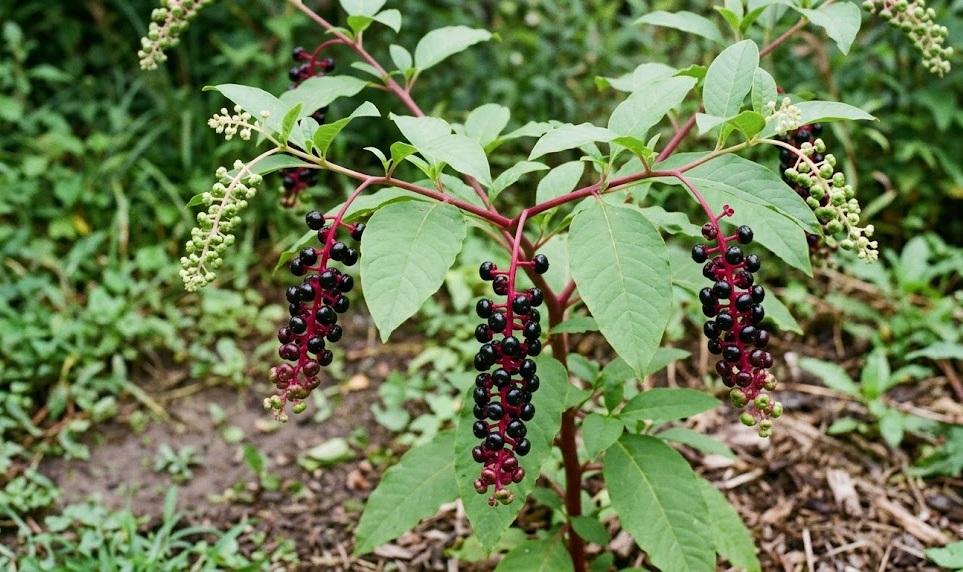
You can identify young pokeweed seedlings by their distinctive oval leaves and often reddish stems, even when they are only a few inches tall. If you see a seedling growing in a favorable spot, you can choose to leave it there and let it mature into a full-sized plant. This is often the easiest way to propagate the species, as the plant has already chosen a location where it can thrive. Managing a natural colony requires a balance between allowing new growth and maintaining the overall structure of your landscape.
To keep the self-seeding under control, you should remove any unwanted seedlings as soon as they appear in the spring. At this stage, the roots are still shallow and can be easily pulled out by hand or with a small garden hoe. If you wait too long, the taproot will dive deep into the soil, making removal much more difficult and labor-intensive. Regular patrolling of your garden beds will help you maintain the desired number of plants without being overwhelmed by new growth.
By understanding how the American pokeweed propagates in nature, you can work with the plant rather than against it. This professional approach to garden management allows you to enjoy the benefits of a self-sustaining plant population while keeping it within your design boundaries. You are the conductor of this botanical orchestra, deciding which plants stay and which are removed to create a beautiful and balanced scene. Propagation is a powerful tool in the hands of a knowledgeable gardener who knows how to use it wisely.