
Ensuring the survival of your common blue violets through the cold months is a process that begins long before the first frost arrives. While these plants are naturally adapted to temperate winters, a little bit of professional preparation can prevent root damage and ensure a vigorous return in the spring. You need to understand the biological changes the plant undergoes as it enters dormancy and how you can support this transition. By following a few simple steps, you can protect your investment and enjoy an even more beautiful display of violets when the garden wakes up again.
Biology of winter dormancy in perennials
The common blue violet is a herbaceous perennial, meaning its soft green stems and leaves will naturally die back to the ground as temperatures drop. This is a survival strategy that allows the plant to protect its sensitive growing points from the drying winds and freezing temperatures of winter. The energy that was used for leaf and flower production during the summer is relocated down into the thick, fleshy rhizomes. These underground structures act as a storage tank, holding the nutrients and sugars needed to fuel the rapid growth that occurs in early spring.
As the days grow shorter and the nights become cooler, the plant’s internal chemistry changes to increase its frost resistance. You will notice the leaves losing their vibrant green color and eventually turning brown or yellow as the chlorophyll breaks down. This process is completely normal and should not be mistaken for disease or lack of water. It is important to let the leaves wither naturally rather than cutting them off while they are still green, as the plant is still drawing valuable resources back into the roots.
The dormancy period is not a time of complete inactivity, as the roots may still grow slowly as long as the ground is not frozen. Microbial activity in the soil also continues, albeit at a much slower pace, breaking down organic matter and preparing the earth for the next season. The plant remains in this resting state until it is triggered by a combination of warming soil temperatures and increasing day length. This careful timing ensures that the new growth does not emerge too early and risk being killed by a late-season cold snap.
Understanding this natural cycle helps you as a gardener to avoid unnecessary interventions that could disrupt the plant’s rest. For example, you should never apply high-nitrogen fertilizers in late autumn, as this could trick the plant into producing new leaves instead of preparing for winter. This soft, unhardened growth would be the first thing to die when the frost hits, potentially draining the plant’s energy reserves and leaving it weakened. Trusting the plant’s inherent wisdom is a key part of successful long-term gardening with native species.
More articles on this topic
Protecting the root system from freezing
The most significant threat to your violets during the winter is the physical damage caused by the soil freezing and thawing repeatedly. This process, known as “frost heaving,” can actually push the dormant rhizomes out of the ground, exposing them to the lethal drying effects of the air. You should aim to keep the soil temperature as stable as possible throughout the winter months. A consistent layer of mulch is your best defense against these temperature fluctuations, acting like an insulating blanket for the earth.
If you live in an area with reliable snow cover, you have a natural advantage, as snow is one of the best insulators for dormant plants. However, in regions with cold winds but little snow, you must provide artificial protection to prevent the roots from desiccating. A three-inch layer of shredded leaves, straw, or wood chips applied after the ground has frozen will work wonders. This timing is important because applying mulch too early can trap heat and encourage rodents to nest near the tender plant crowns.
The moisture level of the soil also plays a role in how well the roots survive the winter cold. Moist soil actually holds more heat than dry soil, providing a small but significant buffer against extreme temperature drops. You should ensure your violets are well-hydrated throughout the autumn, especially if the season has been unusually dry. If you have a period of several weeks without rain or snow in the early winter, a light watering during a warm spell can be very beneficial.
For violets growing in containers, the risk of root freezing is much higher because the pots are exposed to the cold air on all sides. You should move your containers to a protected location, such as an unheated garage or a sheltered corner of a porch, once the plants have gone dormant. Alternatively, you can bury the entire pot in a garden bed or wrap it in several layers of burlap and bubble wrap for insulation. This extra effort ensures that the roots don’t experience the lethal “deep freeze” that can occur in exposed pots.
More articles on this topic
Pruning and cleaning before the winter
While it is best to let the leaves die back naturally, you should perform a light cleanup once the foliage has completely turned brown and brittle. Removing the dead material helps to eliminate the overwintering sites for various fungal spores and insect eggs. This is particularly important if your violets suffered from any leaf spot or mildew issues during the previous summer. Use a pair of clean garden shears to snip the old stems near the ground, being careful not to damage the dormant crown.
Clearing away large, un-shredded leaves from nearby trees is also a good idea, as these can form a heavy mat that traps too much moisture. While a little bit of leaf litter is natural and beneficial, a thick layer of soggy maple or oak leaves can lead to crown rot during a wet winter. You can run over these leaves with a lawnmower to shred them before returning them to the garden as a light, breathable mulch. This practice recycles the nutrients back into the soil while providing the protection the violets need without the risk of suffocation.
This is also an excellent time to re-evaluate the boundaries of your violet colony and remove any plants that have strayed too far. Since the ground is often soft and the other garden plants have died back, it is easy to see exactly where the violets have expanded. You can dig up these “volunteers” and either move them to a new location or compost them if you have enough plants. Managing the spread now saves you a lot of work in the busy spring months when everything is growing at once.
Finally, take a moment to inspect your garden labels and any structural supports that might be in the area. Winter winds and snow can easily displace markers, leaving you guessing about plant locations in the early spring. Replacing old or faded labels and ensuring they are firmly anchored will make your spring transition much smoother. A tidy garden in the winter is not just about aesthetics; it’s about setting the stage for a healthy and organized start to the next growing year.
Spring recovery and early season care
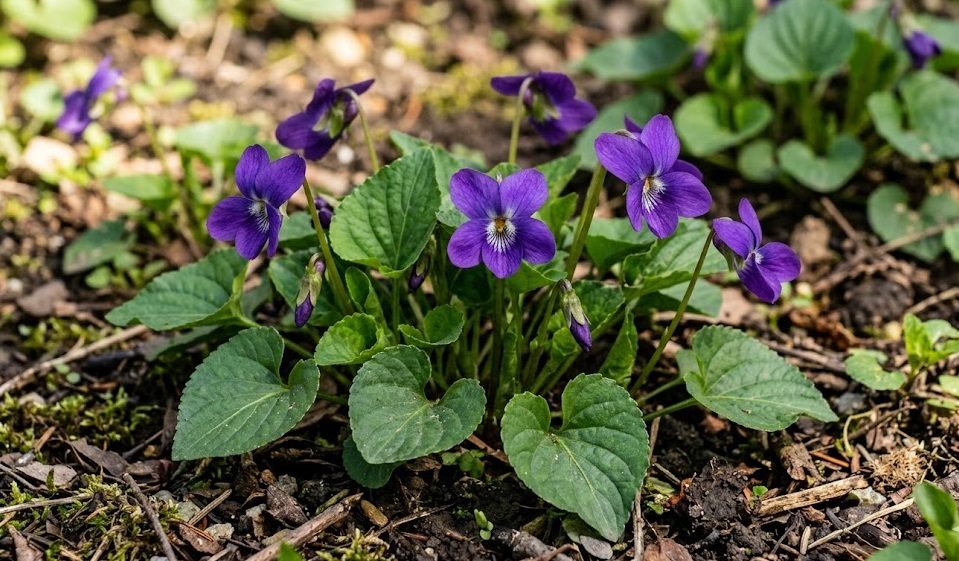
As the days begin to lengthen and the first hints of warmth return to the soil, your common blue violets will be among the first plants to stir. You will see the tightly curled new leaves, often with a purplish tint, emerging from the center of the dormant crowns. This is the signal to gradually remove any heavy winter mulching that might be obstructing the new growth. Be careful not to do this too early, as a late-season frost can still damage the tender new tissue if it is fully exposed.
Providing a light application of compost or a very mild organic fertilizer at this stage will give the plants the boost they need for their spring bloom. As the spring rains begin, ensure that the area has good drainage so the new roots aren’t sitting in cold, stagnant water. This is also the best time to check for any signs of frost heaving that may have occurred over the winter. If you find any rhizomes exposed on the surface, gently press them back into the soil and cover them with a fresh layer of earth.
Early spring is the peak flowering time for the common blue violet, and the blossoms will appear shortly after the first few leaves have expanded. These flowers are not only beautiful but also provide an important early food source for emerging pollinators like queen bumblebees. Avoid using any broad-spectrum pesticides during this time to protect these beneficial insects as they visit your garden. The sight of these first purple flowers is one of the most rewarding moments for any gardener who has cared for their plants through the winter.
Once the flowering period begins to fade, the plant will transition into its primary foliage-building phase for the summer. You will notice the leaves becoming much larger and more robust as they work to capture energy for the next year. Keeping the area well-weeded during this transition is important, as the violets are still building the density needed to shade out competitors. With the right winter care and a little bit of spring attention, your violets will continue to thrive and expand their presence in your garden.