
Preparing your green peas for the challenges of the winter season is a specialized skill that can lead to an exceptionally early spring harvest. You should understand that only certain varieties, often referred to as winter-hardy or autumn-sown peas, are capable of surviving freezing temperatures. Successful overwintering requires a strategic approach to timing, soil preparation, and physical protection from the harshest elements. By mastering these techniques, you can extend your growing season and enjoy fresh legumes while other gardeners are still waiting for the ground to thaw.
The primary goal of overwintering is to allow the plants to establish a strong root system and a small amount of top growth before the deep cold sets in. You want the seedlings to be about five to ten centimeters tall when the first hard frost arrives in your local area. If the plants are too large, they will be more susceptible to wind damage and extreme cold; if they are too small, their roots may not be deep enough to survive. Finding this perfect developmental window is the most critical part of your autumn gardening schedule.
Soil drainage becomes even more important during the winter months when the ground is often saturated with cold rain or melting snow. You must ensure that your pea patch is located in a spot where water does not pool, as “wet feet” in winter is the fastest way to kill even the heartiest varieties. Raising the planting beds by just ten or fifteen centimeters can provide the extra drainage needed to keep the roots healthy and oxygenated. Professional growers often incorporate extra grit or coarse organic matter into the soil specifically for overwintering crops.
Temperature fluctuations are often more dangerous to your peas than consistent cold, as rapid thawing and freezing can heave the roots right out of the ground. You should monitor the soil surface for any signs of “frost heaving,” which can expose the delicate crown of the plant to the drying winter wind. Applying a thick layer of mulch once the ground has frozen for the first time can help stabilize the soil temperature throughout the season. This protective blanket acts as a buffer, preventing the ground from warming up too quickly during a mid-winter sun spell.
Selecting the right varieties for cold survival
Not all green peas are created equal when it comes to their ability to withstand the rigors of a cold winter. You should specifically look for heirloom varieties like “Meteor” or “Feltham First,” which have been selected for generations for their cold-hardy characteristics. These varieties have a unique cellular structure that allows them to tolerate freezing without the cell walls bursting and killing the tissue. Using standard spring varieties for overwintering will almost certainly lead to disappointment and a dead crop by February.
More articles on this topic
The seeds you choose for autumn sowing should be of the highest quality and treated with the same care as your spring-sown crops. You might notice that these winter varieties are often “round-seeded” rather than “wrinkled-seeded,” which is a biological clue to their hardiness. Round seeds are generally more resistant to rotting in cold, damp soil, making them the ideal choice for late-year propagation. Understanding these subtle differences in seed morphology allows you to make informed decisions for your winter garden.
In addition to traditional shelling peas, you can also find winter-hardy versions of sugar snap and snow peas that perform well in cooler climates. You should check the descriptions in your seed catalogs carefully to ensure that the variety you are selecting is explicitly rated for autumn sowing. Some modern hybrids have also been developed with improved cold tolerance, offering you more choices for your winter vegetable palette. Diversifying the types of peas you overwinter can provide a variety of flavors and textures in the early spring.
Local knowledge is an invaluable resource when you are choosing which varieties to trust with your winter garden space. You should talk to other experienced gardeners in your area or consult with local agricultural extensions to see what has worked historically in your specific microclimate. Factors such as typical snowfall, minimum temperatures, and winter wind patterns will all influence which pea variety is the best fit for you. Taking the time to research the best genetics for your region is a professional step that guarantees a much higher success rate.
Protective measures and garden infrastructure
Providing a physical barrier against the biting winter winds can mean the difference between life and death for your young pea plants. You should consider installing a low tunnel or using cloches made of glass or heavy-duty plastic to cover your rows during the coldest months. These structures create a slightly warmer microclimate that protects the foliage from desiccation and physical damage from heavy snow. It is essential to ensure these covers are well-anchored to the ground so they do not blow away during winter storms.
More articles on this topic
Agricultural fleece or frost blankets are another excellent tool that you can use to provide an extra layer of insulation for your overwintering peas. You should drape the fabric loosely over the plants and secure the edges with stones, bricks, or specialized garden staples. This material allows light and moisture to pass through while trapping a thin layer of warmer air near the soil surface. On particularly cold nights, you can even double the layer of fleece for added protection without worrying about crushing the hardy seedlings.
Windbreaks are a simple but effective form of protection that you can create using natural materials or existing garden features. You might plant your winter peas near a south-facing wall or use a dense row of evergreens to shield them from the prevailing north winds. If your garden is very open, you can create a temporary windbreak using hurdles made of willow or even simple snow fencing. Reducing the wind speed around the plants significantly lowers the chill factor and prevents the soil from drying out too quickly.
Monitoring the moisture levels under your winter covers is a task that you should not forget even during the coldest weeks of the year. You will find that covered plants can sometimes dry out if there hasn’t been significant rain or if the covers block natural precipitation. On warmer winter days, you should check the soil and provide a small amount of water if the top few centimeters are completely dry. However, you must be careful not to overwater, as dormant plants require very little hydration and are prone to rot in soggy conditions.
Managing the transition to spring growth
As the days begin to lengthen and the sun regains its strength, your overwintered peas will start to show signs of new growth. You should be prepared to remove any heavy winter mulches or extra layers of fleece to prevent the plants from overheating during the day. This transition period is a delicate time when the plants are waking up and becoming more active but are still vulnerable to late-spring frosts. Gradually exposing the plants to more air and light helps them harden off and prepare for the rapid growth phase ahead.
Early spring is the perfect time for you to provide a light application of a balanced organic fertilizer to support the coming explosion of growth. You will notice that the plants respond quickly to the warming soil and the increased availability of nutrients as the soil life becomes active. Be careful not to provide too much nitrogen too early, as this can lead to soft growth that is easily damaged by a sudden cold snap. A gentle boost of compost tea or a side-dressing of aged compost is usually sufficient to get the vines moving.
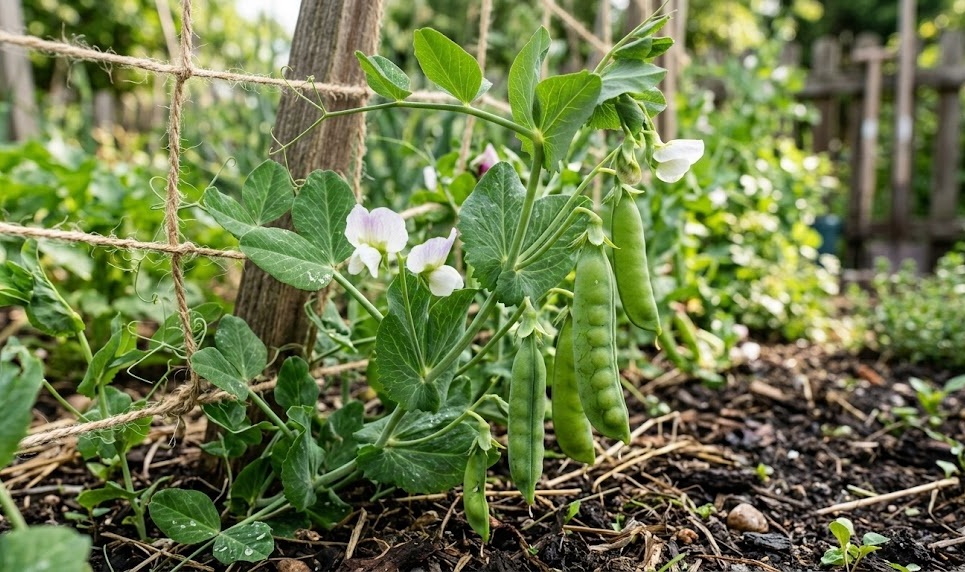
Providing vertical support should be one of your first priorities once the vines reach ten or fifteen centimeters in height. You will find that overwintered peas often grow much faster than spring-sown ones because they already have an established root system. Installing your trellises or pea brush early ensures that the plants have something to climb as soon as they are ready. Watching the winter-weary vines suddenly take off and reach for the sky is one of the most rewarding moments of the gardening year.
The primary advantage of all your hard work is that you will be harvesting peas several weeks, or even a full month, before your neighbors have even planted theirs. You should be ready to begin your harvest as soon as the first pods reach the desired size, which can happen surprisingly early in the season. These early peas are often the sweetest and most tender because they develop during the cool, gentle weather of mid-spring. Your success with overwintering is a testament to your skill and dedication as a professional gardener.
Soil health and winter recovery
Overwintering peas not only provides an early crop but also serves as a living mulch that protects your garden soil from erosion. You should appreciate how the roots of the peas hold the soil in place during heavy winter rains and prevent valuable topsoil from washing away. The presence of living roots also supports the beneficial fungi and bacteria in the soil, keeping the underground ecosystem active even in the cold. This holistic approach to gardening improves the overall health and structure of your beds for the entire year.
Once the overwintered crop is finished, you will find that the soil in that bed is in excellent condition for the next planting. You should leave the nitrogen-rich roots in the ground and simply cut the vines at the surface to maintain the soil’s organic matter. The bed is now perfectly primed for a summer crop of tomatoes, peppers, or other heat-loving vegetables that benefit from the residual nitrogen. This seamless transition from one crop to the next is a key strategy for maximizing the productivity of a small garden.
If you find that some of your plants did not survive the winter, you should use this as a learning opportunity to refine your techniques for next year. You might adjust your planting dates, try a different variety, or improve the drainage in that specific area of your garden. Gardening is a continuous process of experimentation and adaptation to the unique conditions of your own land. Even a partial success with overwintering provides valuable data that will make you a more effective and knowledgeable grower in the future.
The ultimate reward for overwintering is the sense of connection you feel to the natural cycles of the seasons throughout the entire year. You will find yourself checking on your garden even in the depths of winter, observing the resilience of life in the face of the cold. This practice transforms the garden from a seasonal hobby into a year-round commitment to professional excellence and sustainable food production. Your dedication to the care of your green peas, even in winter, is what truly defines you as an expert gardener.