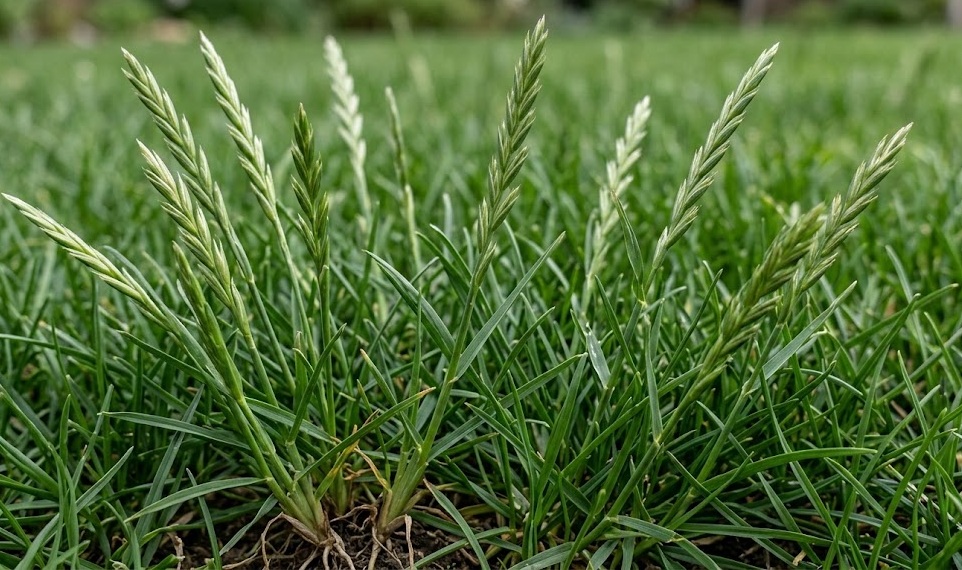

Mastering the art of mowing is perhaps the most significant daily task in maintaining a professional-grade perennial ryegrass lawn. You must realize that every time you cut the grass, you are performing a physical intervention that affects the plant’s physiology and health. This species is particularly responsive to mowing, as it has been bred to thrive under the frequent cutting required for sports pitches and high-end residential landscapes. A structured and thoughtful approach to mowing ensures that the turf remains dense, green, and resilient throughout the entire growing season.
The primary rule of professional mowing is the “one-third rule,” which states that you should never remove more than one-third of the total leaf height at once. You should understand that the leaves are the plant’s food factories, and removing too much at one time causes a severe shock to the system. If the lawn has grown too tall, it is better to lower the height gradually over several sessions rather than cutting it all at once. This patient approach prevents “scalping” and ensures that the grass can recover quickly from each cut.
The ideal mowing height for perennial ryegrass typically falls between three and five centimeters, depending on the specific use of the lawn and the time of year. You should aim for the shorter end of this range during the peak growing seasons of spring and autumn to encourage a dense, carpet-like texture. During the heat of summer, it is often wise to raise the height slightly to provide more shade for the soil and the plant’s sensitive crown. Higher grass also develops a deeper root system, which is vital for surviving periods of drought and high temperatures.
Mowing frequency is determined by the growth rate of the grass rather than a fixed schedule on a calendar. You should be prepared to mow as often as twice a week during the spring when growth is most vigorous and the conditions are perfect. During the slower growth periods of summer or late autumn, once every ten days might be sufficient to keep the lawn looking tidy. Staying responsive to the actual height of the grass ensures that you are always working within the biological limits of the plants.
Equipment maintenance and technique
The quality of the cut depends entirely on the condition of your mower’s blades and the technique you use across the landscape. You should ensure that your blades are kept extremely sharp at all times to provide a clean, surgical cut to the grass tissues. Dull blades will tear and shred the leaves, leaving ragged edges that turn brown and provide entry points for various fungal diseases. Checking and sharpening your blades at least twice a season is a hallmark of a professional maintenance routine.
More articles on this topic
Alternating your mowing pattern with each session is a simple but effective way to prevent soil compaction and ensure even growth. You should avoid following the exact same path every time, as this can lead to “ruts” in the soil and cause the grass to lean in one direction. Changing the direction of travel—for example, mowing north-to-south one week and east-to-west the next—encourages the blades to grow straight and strong. This practice also ensures that the weight of the mower is distributed differently across the surface over time.
Mowing when the grass is dry is always preferred for both the health of the plant and the performance of your equipment. You should avoid cutting wet grass as it tends to clump together, which can clog the mower and lead to an uneven finish on the lawn. Wet blades are also more prone to being pulled out of the ground rather than being cut cleanly, which can damage the delicate root systems. Waiting for the morning dew to dry or mowing in the late afternoon usually yields the best and most professional-looking results.
Checking the mower’s deck height and ensuring it is level is a vital step before you begin each session on the lawn. You should make sure that all wheels are set to the same height to prevent an uneven cut that can make the lawn look striped in an undesirable way. If you notice that one side of the mower is cutting lower than the other, adjust the settings immediately to avoid scalping high spots. A well-calibrated mower is the professional’s most important tool for achieving a perfect and uniform green surface.
Managing grass clippings and thatch
Deciding what to do with the clippings after you mow is an important part of your overall nutrient and soil management strategy. You should consider using a mulching mower that finely chops the clippings and returns them to the soil surface. These small pieces of grass break down quickly and return valuable nitrogen and organic matter to the root zone, reducing your need for supplemental fertilizers. As long as you mow frequently enough that the clippings are small, they will not contribute significantly to thatch buildup.
More articles on this topic
If the grass has grown too long between mows, it is often better to collect and compost the clippings to avoid smothering the lawn. You should never leave thick clumps of wet grass on the surface, as they will block the light and can quickly kill the grass underneath. Large amounts of clippings can also create a barrier that prevents water and air from reaching the soil, potentially leading to fungal issues. Using a grass collection bag or a lawn sweeper after a heavy cut is a professional way to keep the surface clean and healthy.
Thatch management is closely related to your mowing practices and the overall biological activity in your soil. You should monitor the thickness of the thatch layer and aim to keep it around one centimeter for optimal protection and insulation. If you notice that the thatch is becoming too thick, it may be a sign that you are over-fertilizing or that the soil microbes are not active enough to break down the organic matter. Regular aeration and proper mowing frequency are the best long-term ways to keep thatch at a healthy level.
Vertical mowing, as discussed in other care sections, is the ultimate physical remedy for excessive thatch that cannot be managed by standard mowing alone. You should view this as a restorative procedure that is performed only once every few years when the lawn feels overly spongy or thick. Following up a vertical mow with a standard cut and a light fertilization helps the grass recover quickly and restores a dense, professional appearance. A balanced approach to clipping and thatch management ensures that your perennial ryegrass remains vibrant and healthy for many years.
Specialized mowing for different goals
Adjusting your mowing style based on the specific goals for your landscape allows you to achieve different aesthetic and functional results. If you are maintaining a high-traffic area, you should keep the grass slightly taller to provide more cushioning and resilience against wear. For a formal, ornamental lawn, a slightly shorter and more frequent cut will produce a finer texture and a more uniform, carpet-like look. Understanding the trade-offs between height and durability helps you make the best decisions for your specific gardening project.
Mowing for weed control is a subtle but effective strategy that involves keeping the grass tall enough to shade out competing species. You should avoid cutting the grass too short in the spring when many common weed seeds are trying to germinate on the soil surface. By maintaining a dense canopy of ryegrass, you naturally inhibit the growth of broadleaf weeds without the need for chemical herbicides. This cultural approach to weed management is both environmentally friendly and highly effective over the long term.
Seasonal mowing adjustments, as previously mentioned, are vital for helping the grass handle changes in temperature and light. You should be especially careful during the autumn to keep the grass at the correct height to prevent winter diseases like snow mold. In the spring, the first few mows of the season should be handled with extra care as the young plants are still recovering from their winter dormancy. Being mindful of the plant’s life cycle throughout the year allows you to provide the best possible care through your mowing routine.
Final inspections after each mowing session give you a chance to evaluate the health of your perennial ryegrass and identify any emerging issues. You should look for signs of pest damage, disease, or nutrient deficiency that may have been hidden by the taller growth. This is also the time to trim any edges and clear any debris that may have been missed during the main cutting process. A professional-grade lawn is a product of both the major tasks like mowing and the attention to detail that only a dedicated gardener can provide.