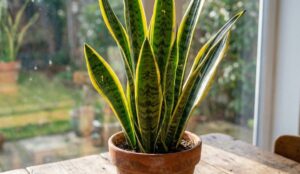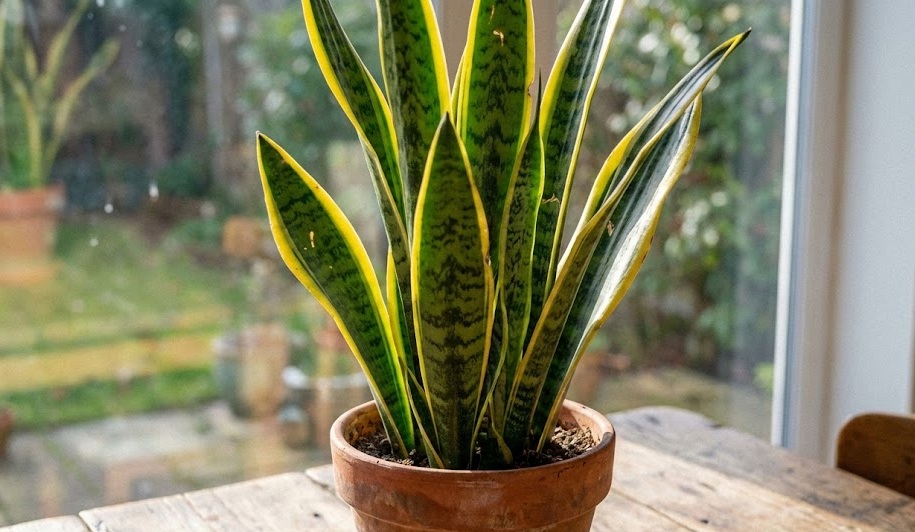

Understanding the light requirements of a variegated snake plant is essential for maintaining the striking contrast between its dark green centers and bright yellow margins. You will find that while this plant is often sold as a “low-light” option, its true beauty is only revealed when it receives the correct intensity and duration of illumination. A professional lighting strategy involves balancing the plant’s need for energy with its vulnerability to scorching from direct, high-intensity sunlight. By placing your plant in the optimal spot, you can ensure it remains a vibrant and structurally sound feature of your interior landscape.
The unique variegation of this species is actually a result of lower chlorophyll levels in the yellow sections of the leaves. Because of this, the plant has to work slightly harder than its solid green cousins to produce the energy it needs for growth. You should observe how the light moves through your home during different times of the day to find a spot that offers consistent brightness without harsh extremes. A professional gardener doesn’t just look at a room; they study the quality and direction of the light that enters it throughout the seasons.
While the plant is incredibly adaptable, its growth rate and the clarity of its patterns are directly proportional to the light it receives. In very low light, you might notice that the plant survives but stops growing entirely, and the yellow edges may begin to fade or turn a dull lime green. Conversely, too much direct afternoon sun can bleach the leaves and cause permanent brown scorch marks that ruin the plant’s aesthetic. Finding the “goldilocks” zone of light is the secret to a professional-looking variegated specimen.
Seasonal changes mean that the best spot for your plant in July might not be the best spot in December. You must be prepared to move your plant or adjust its orientation to compensate for the changing angle of the sun. A proactive approach to light management ensures that the plant’s metabolic needs are met year-round, preventing the stress that can lead to pests or disease. Understanding light is about understanding the very fuel that powers your variegated snake plant’s life.
Optimal light intensity and duration for health
The variegated snake plant thrives best in bright, indirect light, which mimics the dappled sunlight it would receive in its native African habitat. You should look for a spot near a north or east-facing window where the light is consistent but never overly intense. In these locations, the plant receives enough energy to maintain its vibrant yellow borders without the risk of the leaves becoming overheated. A professional placement ensures the plant gets at least six to eight hours of this quality light every single day.
More articles on this topic
If you only have south or west-facing windows, you should place the plant a few feet back from the glass or use a sheer curtain to filter the light. The goal is to provide a bright environment where you can still see a soft shadow but not a sharp, distinct one. This diffused light is the safest way to encourage steady growth while protecting the delicate variegated tissues from UV damage. You will find that the plant’s colors look much more saturated and rich when it is kept in these optimal lighting conditions.
For those living in modern offices or apartments with limited natural light, the plant can still survive, provided you are patient with its slow progress. You might notice that the leaves grow thinner and more elongated as they “reach” for whatever light is available. In professional interior design, these plants are often used in darker corners, but even there, they should ideally be rotated into a brighter spot for a few weeks every few months. This “recharging” period helps the plant maintain its internal energy stores and overall health.
You can also supplement natural light with specialized LED grow lights if your space is truly dark. These lights should be kept several feet above the plant and used for ten to twelve hours a day to mimic a natural day-night cycle. A professional lighting setup allows you to grow spectacular variegated snake plants even in windowless rooms. The key is to provide a spectrum of light that includes both the blue and red wavelengths necessary for photosynthesis and structural strength.
Effects of low light on variegation and growth
When a variegated snake plant is kept in low light for an extended period, it undergoes several physiological changes to adapt to the scarcity of energy. You will notice that the most prominent change is the fading of the bright yellow margins as the plant tries to produce more chlorophyll-rich green tissue. This is a survival strategy, as the plant prioritizes energy production over its aesthetic appearance. A professional gardener recognizes this “reversion” as a clear signal that the plant needs more light immediately.
More articles on this topic
Low light also leads to a much slower growth rate, as the plant simply doesn’t have the “fuel” to produce new leaves or expand its root system. You might find that a plant in a dark corner stays exactly the same size for years, which can be useful for design but isn’t ideal for the plant’s vitality. Over time, the lack of energy can make the plant more susceptible to issues like overwatering, as its metabolism isn’t active enough to use the water in the soil. Professional monitoring involves checking the growth rate as an indicator of light adequacy.
Another common issue in low light is the loss of the plant’s upright, architectural form. The leaves may begin to lean heavily toward the nearest light source, a phenomenon known as phototropism, or they may become weak and floppy. If your plant starts to look “tired” or loses its rigid posture, it is often a sign that it is struggling to produce enough structural cellulose due to low light. A professional fix involves moving the plant to a brighter location and rotating it regularly to encourage straight, even growth.
If the plant remains in very poor light for too long, it may eventually enter a state of decline where it begins to lose its older leaves. While it is a tough species, it cannot live in total darkness forever, as it needs some light to maintain its basic biological functions. You should always aim for at least enough light to read a book comfortably for several hours a day in the plant’s location. By providing adequate light, you are ensuring that your variegated snake plant remains a strong, vibrant, and long-lived member of your home.
Protecting from direct scorching sun and heat stress
While the variegated snake plant likes light, it is not a desert cactus and cannot handle the intense, direct heat of a midsummer afternoon. You should be especially careful with the variegated parts of the leaf, as they lack the protective pigments found in the green sections. Direct sun can cause “solar scaly,” appearing as bleached white or dry brown patches that will never heal or turn green again. A professional gardener always acts to prevent this permanent cosmetic damage by monitoring the intensity of the sun.
During heatwaves, the combination of high temperatures and direct sunlight can cause the plant to transpire water faster than its roots can pull it from the soil. You might notice the leaves curling slightly or feeling warm to the touch, which are early signs of heat stress. In these conditions, you should temporarily move the plant deeper into the room or close the blinds during the hottest part of the day. Providing a bit of extra shade when the sun is at its peak is a simple but effective way to protect your investment.
Heat stress can also affect the soil and the roots, especially if the plant is in a dark-colored pot that absorbs thermal energy. You should feel the pot itself during the day; if it is hot to the touch, the roots inside are likely suffering and could even be “cooked” in the damp soil. A professional approach involves using light-colored or terracotta pots that stay cooler and help regulate the temperature of the root zone. Protecting the roots from heat is just as important as protecting the leaves from light.
If your plant does suffer from sun scorch, you should not immediately cut off the affected leaves unless they are completely dead. The healthy parts of the leaf can still provide some energy to the plant while it recovers from the shock. You should move the plant to a shaded, stable environment and ensure its watering needs are met with precision. With time and proper care, the plant will produce new, healthy leaves, though the scorched ones will remain as a reminder to be more careful with light intensity in the future.