
The common snowberry is highly regarded in professional horticulture for its exceptional adaptability to a wide range of light conditions. Whether situated in the bright, unfiltered sun of an open meadow or the dappled shade of a woodland edge, this shrub remains a reliable and attractive performer. However, the specific amount of light it receives has a significant impact on its growth habit, foliage density, and the quality of its iconic white berries. Understanding how to manage these light requirements is essential for any professional gardener looking to maximize the ornamental value of this species.
In its natural habitat, the common snowberry often occupies the transitional zones between dense forests and open grasslands, where light levels fluctuate throughout the day. This evolutionary background has equipped the plant with the ability to thrive where many other ornamental shrubs would struggle. For the professional landscape designer, this flexibility makes the snowberry an invaluable tool for filling challenging spots in the garden. However, while it is tolerant of shade, the most prolific fruit displays are typically achieved when the plant receives a substantial amount of direct sunlight.
The intensity and duration of light exposure directly influence the physiological processes of the shrub, including photosynthesis and flower induction. In full sun, the plant tends to grow more compactly and produce a higher number of flowers, which later develop into dense clusters of berries. Conversely, in deep shade, the snowberry may become more leggy and produce fewer fruits, as it stretches its stems to find better light. A professional approach involves matching the plant’s location with the desired aesthetic outcome for the specific site.
Monitoring the plant’s response to its lighting environment is an ongoing task that allows the gardener to make informed management decisions. If a specimen is becoming overly sparse or failing to produce its characteristic berries, it may be a sign that it is receiving insufficient light. Professional care may involve thinning out nearby trees or repositioning the shrub to improve its access to the sun. By proactively managing the light environment, you can ensure that the common snowberry remains a vibrant and productive component of the landscape.
Optimal light conditions for berry production
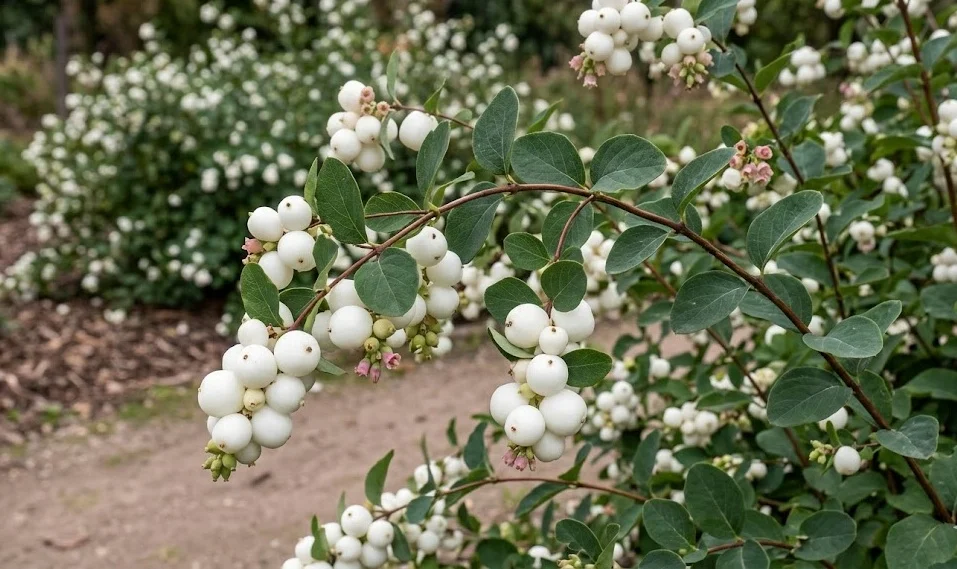
For those who value the common snowberry primarily for its ornamental fruit, providing a location with at least six hours of direct sunlight is a professional recommendation. The energy required to produce a heavy crop of berries is significant, and sunlight is the primary driver of this process. In sunny spots, the berries often grow larger and persist longer on the stems, providing a better visual impact throughout the autumn and winter. Professional growers often prioritize these brighter locations for specimens that are meant to be focal points in the garden design.
More articles on this topic
While full sun is beneficial for fruit production, it is important to consider the impact of intense afternoon heat, especially in warmer climates. In these regions, a professional might choose a site that offers morning sun but provides some relief from the harsh rays of the late afternoon. This balance prevents the foliage from scorching and ensures that the plant remains healthy and hydrated during the peak of summer. A professional understanding of local climate patterns is key to finding the “sweet spot” for light exposure.
In sites where light is more limited, such as in partial shade, the common snowberry still provides excellent value as a foliage plant. While the berry count may be lower, the delicate green leaves and graceful, arching stems create a beautiful woodland aesthetic. Professionals often use the shrub in these areas to provide texture and structure beneath the canopy of larger trees. This ability to perform across the light spectrum is what makes the snowberry such a versatile choice for professional landscaping projects.
The transition from a shady nursery environment to a full-sun landscape position should be managed carefully to avoid light-related stress. Professionals often “harden off” new plants by gradually increasing their exposure to direct sunlight over a period of several days. This allows the leaves to adjust their internal chemistry and prevents the sudden shock of high-intensity light. Taking this extra step ensures that the young shrub can begin its life in the garden with strength and vitality.
Managing growth habits in different light levels
The physical form of the common snowberry is a direct reflection of the light environment in which it is grown, requiring different management strategies for different sites. In high-light areas, the shrub naturally maintains a denser, more upright habit that requires less pruning to stay tidy. This compact growth is ideal for hedges or mass plantings where a uniform appearance is desired by the professional gardener. Understanding this natural tendency allows for more efficient planning and maintenance of the landscape.
More articles on this topic
In more shaded locations, the professional must be prepared for a plant that is more inclined to spread and reach toward the light. This can lead to a more open and informal look, which may be perfect for naturalistic or wildlife gardens but less so for formal settings. Regular pruning becomes more important in these areas to prevent the shrub from becoming too thin or unkempt. A professional approach involves using light to guide the structural development of the plant, rather than fighting against its natural inclinations.
The density of the foliage is also affected by light levels, with shaded plants often having larger but fewer leaves to maximize their light-capturing surface area. This can create a different texture in the garden, which a professional designer can use to create depth and interest in a planting scheme. However, it is important to monitor for pests and diseases, as the softer growth produced in the shade can sometimes be more vulnerable. Professional management in shady spots focuses on maintaining good air circulation to counteract these potential issues.
If a snowberry has been grown in a shady spot for many years and is then suddenly exposed to full sun—perhaps due to a tree being removed—it may require extra care. The existing leaves may burn, and the plant will need time to produce a new set of foliage adapted to the higher light intensity. A professional will provide extra water during this transition and may even offer some temporary shade to help the plant adjust. This level of attentiveness to environmental changes is the hallmark of a professional horticulturalist.
Light and the seasonal cycle of the snowberry
The way the common snowberry interacts with light changes as the seasons progress, influencing everything from spring bud break to winter dormancy. In the early spring, the warming effect of sunlight on the stems and soil is the primary trigger for the plant to begin its new growth cycle. Professional gardeners often clear away any debris that might be shading the base of the plant to ensure it receives the maximum benefit from the early sun. This proactive step helps the shrub to get a head start on the season and develop a strong canopy.
During the summer, the duration of daylight plays a role in the timing of the plant’s flowering and the subsequent development of its berries. The common snowberry is a “long-day” plant, meaning it responds to the extended light hours of June and July to initiate its reproductive phase. Professionals who understand these photoperiodic responses can better predict when the fruit will appear and plan their maintenance activities accordingly. This scientific approach to gardening leads to more consistent and professional results year after year.
As the sun’s angle changes in the autumn, the quality of light becomes softer, and the plant begins its transition into its most ornamental phase. The white berries often seem to “glow” in the low light of the late afternoon, creating a spectacular effect in the garden. Professional designers often place snowberries in positions where they can be backlit by the autumn sun to maximize this visual appeal. Using the natural properties of light to enhance the garden’s beauty is a sophisticated professional technique.
Even in winter, the light continues to be an important factor for the common snowberry, highlighting the stark beauty of its white fruit against the bare branches. While the plant is dormant and not actively photosynthesizing, the light provides essential visual interest in an otherwise muted landscape. A professional view of the garden considers how every season’s light will interact with the plant’s form and features. With a deep understanding of light requirements, the common snowberry can be managed as a year-round star of the landscape.