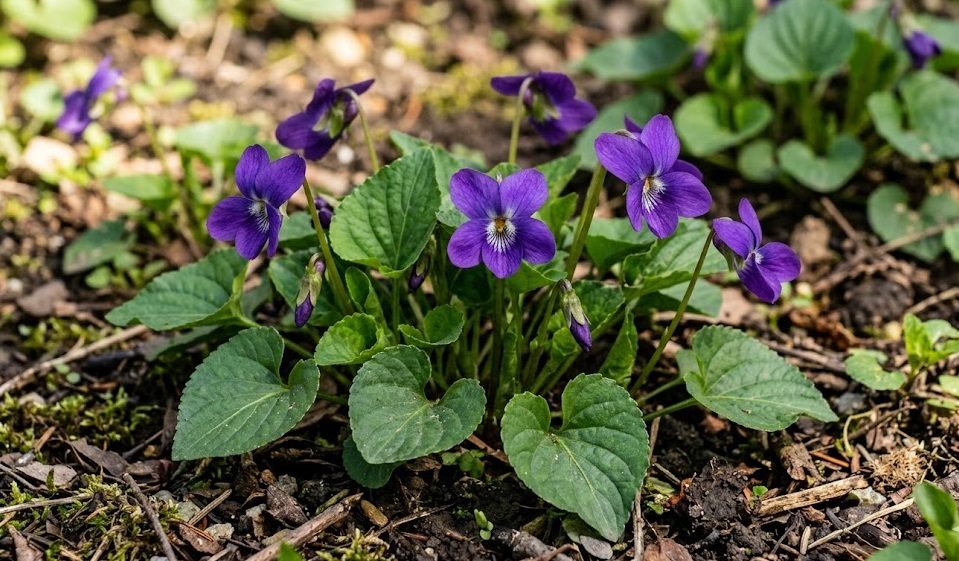

Understanding the light preferences of the common blue violet is the key to achieving a lush, healthy groundcover that flowers reliably every year. These plants have a fascinating relationship with the sun, being both shade-lovers and opportunistic light-seekers depending on the season. You must learn to position them in a way that respects their woodland origins while allowing them enough energy to thrive. By mastering the nuances of light exposure, you can place your violets in the most effective spots throughout your landscape for maximum impact.
Optimal exposure and the woodland cycle
The native habitat of the common blue violet is the floor of deciduous forests, which provides a very specific light environment. In the early spring, before the tall trees have produced their leaves, the forest floor is flooded with bright, direct sunlight. This is when the violets do most of their flowering and initial leaf growth, taking advantage of the temporary abundance of energy. You should try to replicate this in your garden by planting them in areas that are sunny in the spring but shaded in the summer.
As the tree canopy fills in during late May and June, the light on the ground changes to a dappled or filtered state. This cooling shade protects the violet foliage from the intense heat of the summer sun, which would otherwise cause the leaves to wilt or burn. Under these conditions, the plants can maintain their deep green color and continue to grow slowly throughout the season. They are exceptionally well-adapted to this “low-light” lifestyle, using their broad leaves to capture every available bit of filtered energy.
If you plant your violets in deep, permanent shade, such as on the north side of a building or under dense evergreens, they may struggle to thrive. While they will likely survive, you will notice that the growth is much slower and the spring flowering is significantly reduced. The plants may also become “leggy,” with long, thin stems as they stretch toward any source of brighter light they can find. For the best results, aim for an area that receives at least two to three hours of direct morning sun followed by afternoon shade.
On the other end of the spectrum, full sun exposure can be tolerated only if the soil is kept exceptionally moist at all times. In most garden settings, plants in full sun will enter a state of dormancy during the hottest part of the summer to protect themselves. The leaves may turn yellow or develop brown, scorched edges as they struggle to manage the intense radiation. If you must plant in a sunny spot, consider using taller companion plants to provide at least some intermittent shade during the day.
More articles on this topic
Adjusting to local conditions and microclimates
Your geographic location and the specific layout of your yard will influence how much light your violets actually receive and need. In northern climates with cooler summers, these plants can handle significantly more sun than they can in the hot, humid south. You might find that a spot that is considered “partial shade” in Maine would be “full sun” in Georgia due to the difference in solar intensity. Always observe how the plants in your local area are performing before deciding on the final planting location.
Microclimates within your own garden can also create surprising opportunities or challenges for light management. For example, a light-colored wall can reflect a surprising amount of heat and light onto nearby plants, even if they are technically in the shade. Conversely, a low-lying area that stays cool and damp might allow the violets to handle more sun than they could on a dry hilltop. Pay attention to these small variations in your landscape to find the perfect “niche” for your violet colony.
Seasonal changes in the angle of the sun mean that a spot that is perfectly shaded in June might be in full sun by September. You should track the movement of shadows across your planting beds throughout the year to ensure there are no surprises. If you notice your violets are starting to look stressed in late summer, it might be because the sun has dropped low enough to shine under the tree canopy. Providing temporary shade during these transition periods can help the plants stay healthy until they go dormant.
If you find that your chosen location is either too sunny or too dark, the common blue violet is fortunately very easy to move. You can transplant them to a better spot in the early spring or autumn without causing much stress to the plant. This flexibility allows you to experiment with different light levels until you find the one that produces the best balance of growth and flowers. Successful gardening is often a process of trial and error, and these resilient plants are the perfect subjects for learning.
More articles on this topic
Signs of light stress and how to fix them
Learning to read the leaves is the best way to determine if your violets are getting the right amount of light. If the leaves are a very dark, rich green and the plant is spreading steadily, you have likely found the perfect exposure. However, if the leaves are turning a pale, washed-out green or yellow, it is often a sign of too much direct sun. You might also see the leaves folding inward or drooping midday as a defense mechanism to reduce their surface area and conserve water.
Another sign of excessive light is the appearance of “bleached” spots on the upper surface of the leaves, which eventually turn brown and crispy. This is actual tissue damage caused by the sun’s UV rays and cannot be reversed once it has occurred. If you see this happening, you should increase the watering frequency and consider providing some temporary shade with a piece of lattice or a taller plant. Long-term, moving the violets to a more protected location is the most sustainable solution for the health of the colony.
Insufficient light is usually indicated by a lack of flowers in the spring and a general “stretched” appearance of the entire plant. You might notice that the leaves are much thinner and more delicate than usual, making them more prone to tearing or damage. If the plants are not spreading at all or are actually shrinking in size over several seasons, they are likely not getting enough energy from the sun. Pruning back overhanging branches or moving the plants to a slightly brighter edge of the garden will usually solve the problem.
Finally, keep an eye on the overall density of the violet carpet, as this is a good indicator of long-term light satisfaction. A healthy colony should be thick enough to completely cover the ground, leaving no room for weeds to penetrate. If the patch looks “holey” or sparse, it may be struggling with its light levels or competing too much with other roots. By adjusting the light environment, you can encourage the plants to fill in the gaps and create the lush, green sanctuary you desire.