
Understanding the light requirements of green peas is essential for maximizing both the quantity and the quality of your garden harvest. You should know that as a cool-season crop, these plants have a unique relationship with solar energy that differs from heat-loving vegetables like tomatoes. While they need plenty of light to produce sugars and develop pods, they also struggle when the intensity of the sun is paired with high temperatures. Finding the right balance of exposure throughout the day is the key to maintaining healthy vines and sweet, succulent peas.
Direct sunlight is the primary engine of growth for your green pea plants, providing the energy needed for photosynthesis and the creation of flowers. You should aim to site your pea patch in a location that receives at least six to eight hours of full sun every day. This amount of light ensures that the vines grow strong and that the plants have enough energy to fill the pods with plump, sweet seeds. Without adequate light, the plants will become “leggy,” with long gaps between the leaves and a significantly reduced yield.
The timing of the light exposure can be just as important as the total number of hours the plants spend in the sun. In many regions, the gentle morning light is highly beneficial because it helps dry the dew off the leaves, reducing the risk of fungal infections. Conversely, the intense, high-angle sun of the late afternoon can sometimes be too much for the cool-loving pea plants to handle comfortably. If you have a choice, placing your rows in a spot with strong morning light and some afternoon filtered shade can be an ideal professional strategy.
Photoperiodism, or the plant’s response to the length of the day, also plays a subtle role in how green peas develop and when they begin to flower. You might notice that some varieties are more sensitive to day length than others, which can affect their performance as the season progresses into the long days of early summer. Choosing varieties that are adapted to your specific latitude is a professional detail that can improve your success rate significantly. By understanding how light interacts with the biology of the pea, you can create the perfect environment for a bountiful crop.
Managing shade and solar exposure
If your garden has limited full sun, you will find that green peas are one of the few vegetables that can still produce a respectable crop in partial shade. You should understand that “partial shade” generally means about four to five hours of direct sun, often during the cooler parts of the day. While the plants may grow a bit more slowly and the peas might be slightly less sweet, they will still provide a worthwhile harvest for your table. This flexibility makes peas an excellent choice for gardeners with challenging light conditions or smaller urban spaces.
More articles on this topic
In very hot climates, you might actually find that providing some artificial shade is necessary to extend the life of your pea plants into the early summer. You can use specialized shade cloths that block about thirty to forty percent of the sun’s intensity during the hottest hours of the afternoon. This technique lowers the temperature of the foliage and prevents the blossoms from drying out and dropping off before they can form pods. It is a proactive way for you to fight back against the heat and keep your garden productive for as long as possible.
The orientation of your planting rows is another professional consideration that affects how light is distributed among your pea plants. You should ideally align your rows in a north-south direction so that the sun passes over the vines evenly throughout the entire day. This orientation prevents the plants on one side of the row from being permanently shaded by their neighbors on the trellis. Even light distribution ensures that all the pods ripen at a similar rate, making your harvesting schedule much more predictable and efficient.
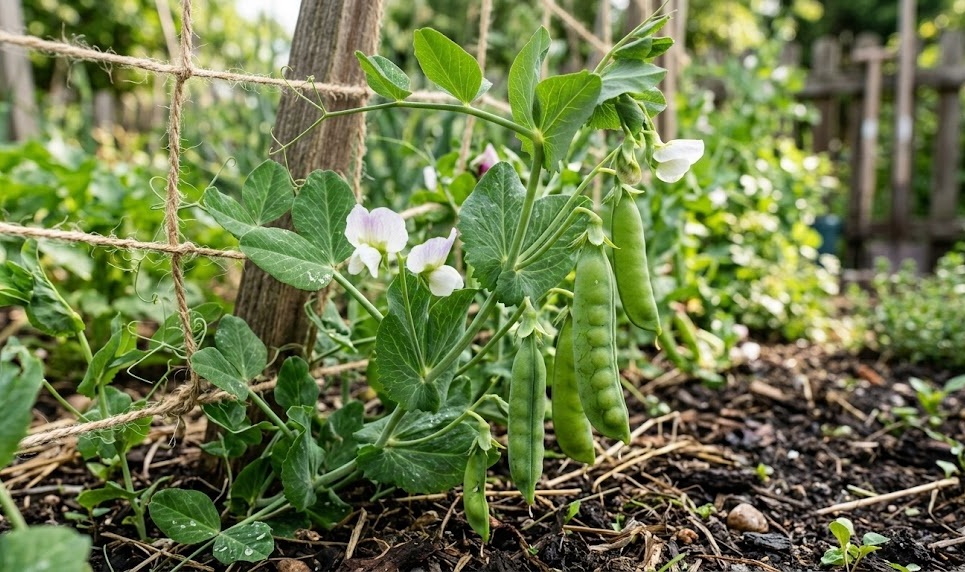
If you are growing tall, climbing varieties on a trellis, you must be mindful of the shadows they will cast on other parts of your garden. You should avoid planting shorter, sun-loving crops directly to the north of your pea fence, as they will be shaded out for most of the day. Instead, use that shaded area for cool-season greens like spinach or lettuce, which will appreciate the protection provided by the pea vines. Managing the “light footprint” of your vertical garden is a hallmark of an advanced and thoughtful garden design.
Light and the development of quality
The intensity of light directly influences the sugar content of the peas, which is the most important factor for flavor in this particular crop. You will notice that peas grown in bright, sunny conditions are often much sweeter and more flavorful than those grown in deep shade or during very cloudy springs. This is because the plant uses solar energy to convert carbon dioxide and water into the sugars that are stored in the developing seeds. Ensuring your plants have maximum light exposure during the pod-filling stage is the secret to a gourmet-quality harvest.
More articles on this topic
Light also plays a critical role in the structural integrity of the pea vines and their ability to climb their supports effectively. You should observe how the young tendrils reach toward the strongest light source as they search for something to grip onto. In low-light conditions, these tendrils may be weak and sparse, making it difficult for the plant to lift its foliage off the damp ground. A well-lit garden produces robust vines with thick stems and active tendrils that can support a heavy load of ripening pods.
Color development in both the foliage and the pods is a visual indicator of how well the plant is utilizing the light it receives. You should look for a deep, vibrant green color in the leaves, which indicates a high concentration of chlorophyll and an efficient photosynthetic process. If the leaves appear pale or yellowish despite proper fertilization, it may be a sign that the light levels are simply too low for the plant’s needs. Maintaining optimal light levels is the best way for you to ensure that your garden stays healthy and visually stunning throughout the season.
Finally, remember that light and water are inextricably linked in the life of a plant, as more light usually means higher water consumption. You must be prepared to increase your irrigation frequency if your peas are growing in a very bright and open location with high solar exposure. The more energy the plant produces, the more water it needs to transport those nutrients and keep its tissues hydrated and cool. Your dedication to balancing these two essential elements will result in the most successful and professional green pea crop you have ever grown.