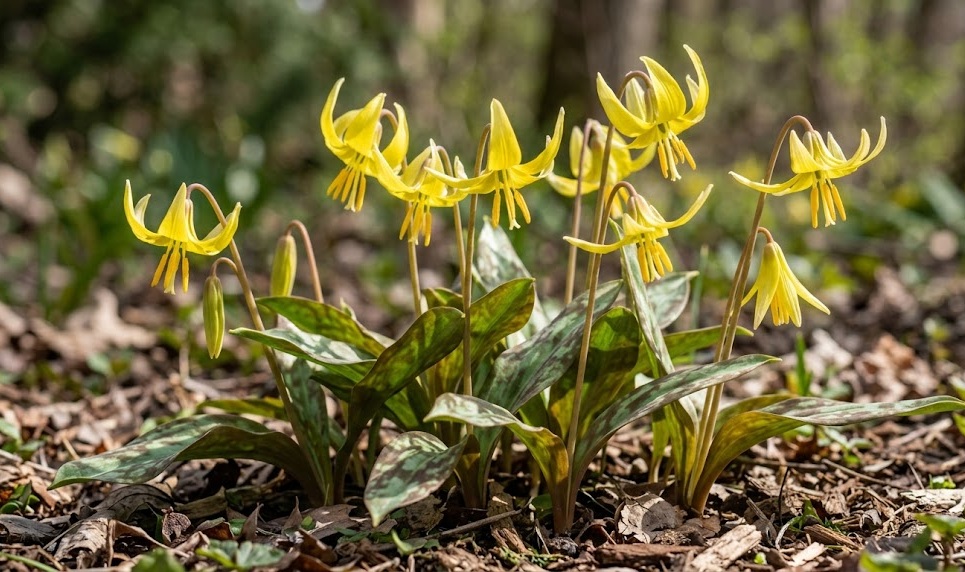

Understanding the specific light requirements of the ‘Pagoda’ dog’s tooth violet is the key to unlocking its full aesthetic and biological potential. As a plant that has evolved in the dappled light of woodland environments, it is uniquely adapted to a specific type of illumination that shifts with the seasons. You must find a location in your garden that provides “goldilocks” lighting—not too bright to scorch the leaves, but not so dark that the plant fails to flower. This balance is what allows the distinctive mottled foliage and bright yellow blooms to look their absolute best.
The ideal lighting for this variety is often described as “dappled shade,” which is the light that filters through the canopy of deciduous trees. In the early spring, before the trees have fully leafed out, the violets receive plenty of bright, indirect light that fuels their rapid growth and flowering. As the season progresses and the canopy closes, the plants are then protected from the intense heat of the late spring and summer sun. This natural progression perfectly matches the plant’s life cycle, providing energy when needed and protection during dormancy.
If you plant your dog’s tooth violets in full, direct sun, you will likely find that the leaves become scorched and the flowers fade much too quickly. The thin, delicate foliage of the ‘Pagoda’ variety is not designed to handle the ultraviolet intensity of direct midday sun, especially in warmer climates. You might notice brown, crispy edges on the leaves or a general loss of the vibrant green and bronze patterning that makes the plant so famous. Protecting the plants from the harsh afternoon sun is one of the most important factors in maintaining their visual appeal.
Conversely, planting in too much deep shade, such as under heavy evergreens or on the north side of a solid wall, can lead to poor flowering and weak, spindly growth. Without enough light to power photosynthesis, the plant will struggle to build up the energy reserves it needs within the bulb. You may see the leaves emerge, but the plant might fail to produce its iconic yellow flowers, or the flower stems may be too weak to stand upright. Finding that perfect balance of light and shadow is the hallmark of an expert woodland gardener.
Adapting to seasonal light shifts
Because the dog’s tooth violet is an ephemeral plant, its relationship with light changes significantly over the course of just a few months. During the peak of its growth in March and April, it can handle—and even appreciates—a fair amount of bright morning sun. This early season light is less intense than summer sun and provides the warmth necessary to encourage the flowers to open. You should observe your garden at different times of the day during the spring to see how the light moves across your chosen planting site.
More articles on this topic
As the days get longer and the sun rises higher in the sky, the cooling shade provided by nearby shrubs or trees becomes increasingly important. You should ensure that your planting site has some form of overhead protection that “activates” by late morning or early afternoon. If your garden lacks natural tree cover, you can achieve a similar effect by planting the violets on the eastern side of larger perennials or garden structures. This positioning ensures they get the “good” morning light but are shielded from the “stressful” afternoon heat.
During the dormant summer months, the bulbs themselves are still sensitive to the temperature of the soil, which is directly influenced by the amount of light hitting the ground. Even though there are no leaves above ground, a site that is baked by the summer sun can cause the soil to become too dry and hot for the dormant bulbs. Maintaining a shaded environment throughout the summer helps to keep the bulbs cool and hydrated while they are “sleeping.” This is why these plants thrive so well when integrated into a permanent woodland-style planting scheme.
In the autumn, light is less of a concern for the dormant plant, but it is a good time for you to assess the light levels for the following year. You can use this time to prune back any overhanging branches that might have become too dense, ensuring that just enough light will reach the ground in the spring. This proactive management of your garden’s “light architecture” is a continuous process that benefits all your shade-loving plants. By thinking ahead, you can ensure that the ‘Pagoda’ variety continues to receive its ideal lighting year after year.
Maximizing the visual impact of light
The way light interacts with the ‘Pagoda’ flowers is one of the most rewarding aspects of growing this variety in your garden. The petals have a slightly translucent quality that allows them to “glow” when hit by low-angled morning light. You can enhance this effect by placing your plants where they can be backlit by the sun, making the yellow color appear even more vibrant and intense. This clever use of lighting can turn a small colony of plants into a truly spectacular garden feature.
More articles on this topic
The mottled patterning of the leaves is also highly sensitive to light levels, often appearing more pronounced in brighter, indirect light. In very deep shade, the leaves may become more uniformly green as the plant tries to maximize its chlorophyll production to capture more energy. By providing the right amount of light, you are not only helping the plant stay healthy but also ensuring that it looks its most characteristic and beautiful. The contrast between the bronze-patterned leaves and the clear yellow flowers is best appreciated in bright, soft light.
If you are unsure about the light levels in a particular spot, you can use “indicator plants” to help you decide if it is suitable for the ‘Pagoda’ variety. If plants like hostas or ferns are thriving in an area without their leaves burning, it is likely a good candidate for dog’s tooth violets. You can also move a few potted specimens around the garden for a season to see how they respond to different light exposures. This experimental approach is a great way to learn about the unique light patterns of your specific outdoor space.
Finally, remember that light requirements can vary slightly depending on your local climate and altitude. In cooler, northern regions, the plants may be able to handle a bit more direct sun than in hotter, southern areas. You should always adapt general gardening advice to your specific local conditions, observing how your plants respond to their environment. With a bit of attention and the right placement, your dog’s tooth violets will bask in the perfect light, rewarding you with their exquisite beauty every spring.