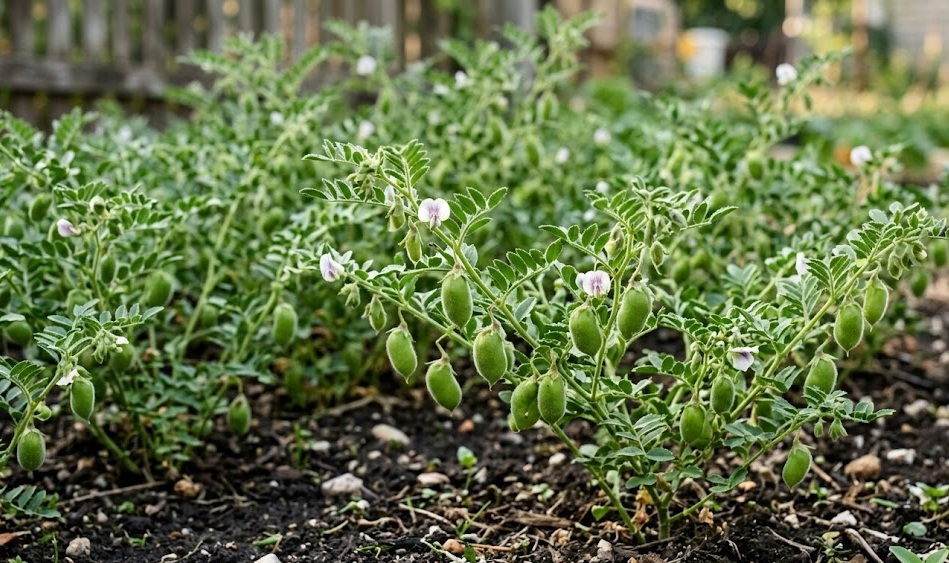

Sunlight is the primary source of energy that drives the growth and seed production of the chickpea plant. You must understand that these legumes are sun-loving species that require a high intensity of light to perform their metabolic functions efficiently. Any significant reduction in the available light can lead to a host of problems, from leggy growth to a total failure of the pod-filling process. By positioning your crop in the best possible location, you ensure that the plants have the fuel they need to produce a heavy and nutritious harvest.
Sunlight exposure and intensity
Chickpeas require full sun exposure, which means at least six to eight hours of direct sunlight every single day during the growing season. You should choose a planting site that is not shaded by tall trees, buildings, or other structures that could block the sun’s rays. In professional agriculture, the orientation of the rows is often planned to maximize the amount of light each individual plant receives throughout the day. When the plants receive adequate light, they develop thick stems and a dense canopy of leaves that can support a large number of pods.
The intensity of the light is just as important as the duration, as it influences the rate of photosynthesis and the production of sugars. In regions with very long summer days, chickpeas can grow incredibly quickly if they have enough water and nutrients to match the solar energy. However, you must be careful if you are growing in an area with frequent cloud cover or fog, as this can slow down the development of the crop. Understanding the solar profile of your land is a fundamental part of a professional approach to gardening and field management.
During the flowering stage, high light intensity is particularly important for ensuring that the blossoms develop correctly and attract any necessary pollinators. You will notice that plants grown in partial shade often produce fewer flowers and the ones they do produce are more likely to drop off. Sunlight also helps to dry out the foliage after a rain, which is a natural way to prevent the development of fungal diseases. A sun-drenched field is generally a healthier and more productive field for this specific type of crop.
Shading effects and competition
When chickpeas are forced to grow in the shade, they often exhibit a phenomenon called etiolation, where the stems become long, thin, and weak. You will see the plants “reaching” for the light, which makes them much more likely to fall over or break during a storm. These shaded plants also tend to have a lighter green color because they are not producing as much chlorophyll as they would in full sun. This structural weakness is a major disadvantage that will eventually lead to a lower yield and a more difficult harvest.
More articles on this topic
Weed competition can also create a localized shading effect that is very damaging to young chickpea seedlings. You must ensure that the area around the plants is kept clear so that every leaf has unhindered access to the sky. If you allow tall weeds to overtop your crop, they will not only steal nutrients but also cast a shadow that stunts the growth of the legumes. Professional weed management is as much about light conservation as it is about resource competition in the soil.
Even within a single field, the plants can sometimes shade each other if they are planted too closely together. You need to follow the recommended spacing guidelines to ensure that the lower leaves of the plants still receive enough light to stay healthy. If the canopy becomes too dense, the interior of the plant will become a dark, humid environment that is perfect for mold and pests. Proper spacing creates a professional and organized look while also optimizing the light distribution across the entire stand.
Photosynthetic efficiency and yield
The efficiency with which a chickpea plant converts light into chemical energy is the ultimate driver of your final harvest weight. You can support this process by ensuring the leaves remain healthy and free from dust, pests, or disease throughout the season. Healthy green leaves are like solar panels that capture the sun’s energy and turn it into the proteins and carbohydrates found in the seeds. If the leaves are damaged or covered in residue, the plant’s “engine” will not be able to run at its full capacity.
Sunlight also plays a role in the ripening process, helping the pods dry out and the seeds reach their final hardness. You will notice that the side of the plant facing the sun often matures slightly faster than the side in the shadow of its own branches. In a professional setting, you want the ripening to be as uniform as possible, which is why even light distribution is so critical. As the season comes to an end, the golden color of a sun-ripened field is a beautiful indicator of a successful agricultural cycle.
More articles on this topic
Finally, you should consider the role of light when planning your crop rotations and the layout of your entire garden or farm. You don’t want to follow a very tall crop with chickpeas if the residues or structures will cast a shadow on the new seedlings. Thinking about the movement of the sun across your land at different times of the year allows you to be a more effective and professional manager. Success with chickpeas is built on a foundation of solar energy, and by respecting the plant’s light requirements, you set yourself up for victory.