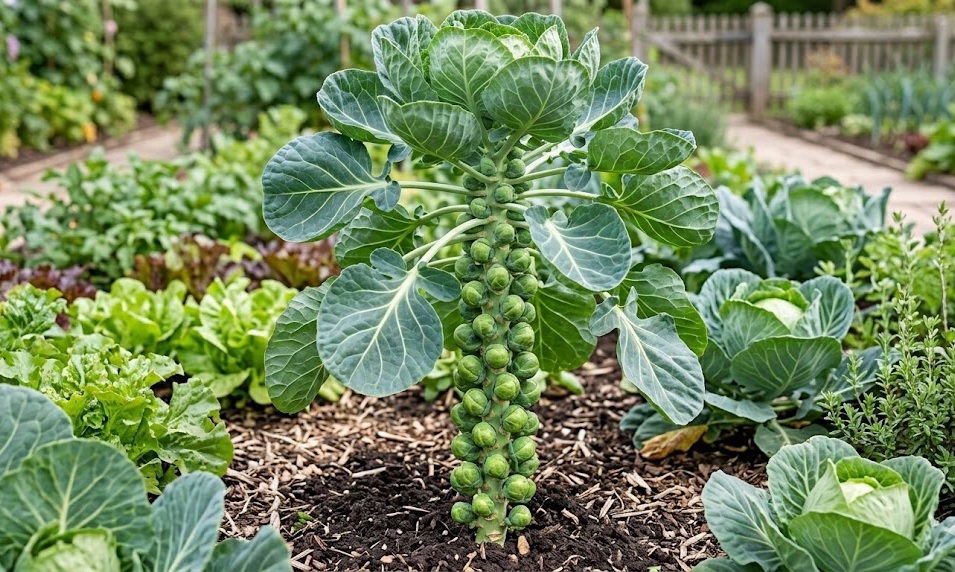

Understanding the light requirements of Brussels sprouts is essential for ensuring that these large, energy-hungry plants have the resources they need to thrive. As members of the brassica family, they are designed to maximize solar collection through their broad, expansive leaves throughout the long growing season. You must carefully select your planting site to provide the optimal balance of intensity and duration that supports both vegetative growth and sprout development. A professional approach to light management involves more than just finding a sunny spot; it requires an understanding of how light interacts with the plant’s biology over many months.
Full sun is generally considered the gold standard for Brussels sprouts, meaning at least six to eight hours of direct light every day. This high level of energy is necessary to power the production of the massive stem and the dozens of dense sprouts that form along its length. Without sufficient light, the plants may become “leggy,” stretching toward the nearest light source and developing weak, spindly stems that cannot support the weight of the harvest. Ensuring that your garden site is free from significant shadows during the peak of the day is a fundamental requirement for success.
While they love the sun, these plants are also adapted to the cooler temperatures of the shoulder seasons, which creates a unique relationship with light. In the heat of mid-summer, very intense direct light can sometimes cause the plants to become stressed or wilting if moisture levels are not perfectly maintained. You should observe how your plants respond to the sun during different times of the day and be prepared to provide some temporary relief if needed. Finding the “sweet spot” where the plant gets plenty of energy without being scorched is a hallmark of expert horticultural management.
The orientation of your planting rows can also influence how much light each individual plant receives as the sun moves across the sky. You should ideally align your rows in a north-south direction to ensure that the sun hits both sides of the plants relatively evenly throughout the day. This prevents one side of the stalk from being permanently shaded by its own leaves, which can lead to uneven sprout development and lower overall yields. Precision in your garden layout is a simple but effective way to maximize the natural resources available to your crop.
Optimizing sun exposure in the garden
The placement of your Brussels sprouts in relation to other tall crops or structures in the garden is a critical consideration during the planning phase. You should avoid planting them in the shadow of tall corn, trellised tomatoes, or nearby trees that might block the afternoon sun. Because they are in the ground for such a long time, the angle of the sun will change significantly from the time you plant until the time you harvest. A spot that is sunny in May might be shaded by a neighboring building by the time October arrives, so plan with the entire season in mind.
More articles on this topic
Using reflective mulches or light-colored garden paths can sometimes help bounce additional light up into the lower canopy of the plants. This can be particularly useful in the autumn when the sun is lower in the sky and the shadows are longer and more persistent. Increasing the “ambient” light in the garden helps the plant maintain its energy production even as the total number of daylight hours begins to dwindle. Every bit of extra light you can capture goes toward building larger, firmer, and more flavorful sprouts for your table.
If you have a garden with limited sun, you might still be able to grow a successful crop by choosing varieties that are slightly more shade-tolerant. While no Brussels sprout will thrive in deep shade, some types are better at making do with five or six hours of light than others. You can also help by spacing the plants even further apart to ensure that the light can penetrate deep into the rows and reach the lower sprouts. Adapting your techniques to the limitations of your site is a sign of a truly skilled and professional gardener.
Monitoring the color and texture of the leaves will tell you if your plants are receiving the right amount of light for their needs. Healthy, sun-rich plants will have deep green or even slightly bluish leaves that feel thick and waxy to the touch. If the leaves are pale, thin, or unusually large, it may be a sign that the plant is struggling to capture enough light to meet its metabolic demands. Staying in tune with these subtle visual cues allows you to make informed decisions about your garden management and future planting locations.
The impact of shade and light intensity
Partial shade can be a useful tool during the hottest part of the summer, especially in regions where the sun is exceptionally intense. You can use temporary shade cloth or tall companion plants to provide a “dappled” light environment during the midday hours to prevent heat stress. This protection can help keep the soil cooler and reduce the amount of water the plant loses through transpiration, leading to a more stable growth rate. However, you must ensure that the shade is only temporary and that the plants still get their full quota of direct sun during the rest of the day.
More articles on this topic
Too much shade during the early growth stages can have a permanent negative impact on the architecture of the plant. A seedling that has to stretch for light will have a thinner stem and a less developed root system, making it more vulnerable to wind and pests later in life. You should always start your plants in the brightest environment possible to encourage a compact and sturdy habit from the very beginning. The strength of the main stalk is the backbone of your harvest, and it depends entirely on the light the plant receives in its youth.
In the autumn, the reduction in light intensity and duration acts as a signal for the plant to shift its energy into the maturation of the sprouts. The cooler, less intense light of the late season is perfect for the slow development of the sugars and flavors we value in this crop. You do not need to worry about the fading sun as long as the plants are established and healthy, as they are perfectly adapted to this seasonal transition. In fact, the lower light levels of autumn are a natural part of the ripening process that brings out the best in the brassicas.
If you are gardening in an urban environment with many tall buildings, you may need to get creative with your use of light and space. Using containers on wheels allows you to move your plants around a patio or balcony to follow the sun as it moves throughout the day. While this is more labor-intensive, it can allow you to grow a professional-quality crop in a space that might otherwise be too shaded. Understanding the “light footprint” of your garden is one of the most important lessons for any successful vegetable grower.
Managing seasonal light changes effectively
As the growing season progresses from the long days of June to the short days of November, you must be prepared for the change in energy availability. Your plants will naturally slow their growth as the light levels drop, and their demand for water and nutrients will decrease accordingly. You should match your care routine to this natural rhythm to avoid over-stressing the plants during the low-light months of the late year. A professional gardener works in harmony with the changing seasons, not against them.
Late in the season, you can improve light penetration to the maturing sprouts by removing some of the large, lower leaves that may be shading them. This practice, when done carefully, allows the sun to hit the buttons directly, which can help them firm up and finish ripening. You should only remove a few leaves at a time and always leave the top canopy intact to continue powering the plant. This final bit of light management can make a noticeable difference in the uniformity and quality of your final harvest.
Cloudy and overcast weather for extended periods can also affect the growth rate and flavor of your Brussels sprouts. During long stretches of gray weather, the plants may grow more slowly and produce less sugar, leading to a slightly different flavor profile. There is little you can do about the weather, but knowing how it affects your crop helps you manage your expectations and harvest timing. Being a professional means understanding that you are a partner with nature and that every season will be unique.
Reflecting on how light affected your crop at the end of the season will help you make better decisions for next year’s garden layout. Take note of which areas of the garden produced the strongest plants and which varieties seemed most resilient to the changing light levels. This kind of observation and analysis is what builds the expertise needed to master the cultivation of challenging crops like Brussels sprouts. Your commitment to understanding the fundamental needs of your plants is the key to your long-term success as a gardener.