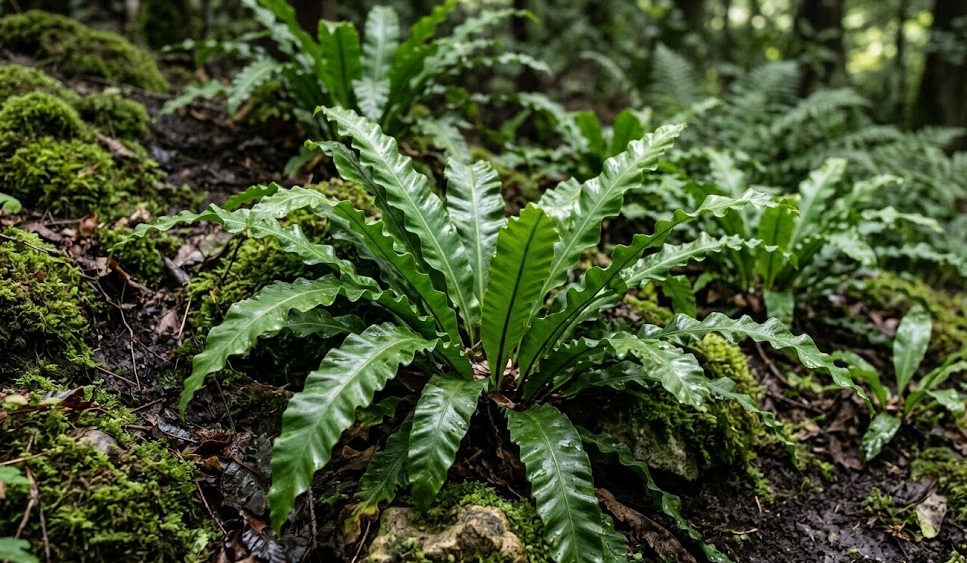

Correctly managing the water and nutrient levels is the most critical part of keeping your hart’s tongue fern healthy and vibrant throughout the seasons. These plants have specific requirements that differ from many other common garden species due to their natural adaptation to damp, alkaline environments. You must learn to read the subtle signs the plant gives you when it is thirsty or in need of supplemental nutrition to maintain its glossy appearance. Mastering these two aspects of care will ensure that your ferns remain a standout feature in your collection for years to come.
Understanding hydration needs
The hart’s tongue fern thrives in consistently moist but never waterlogged soil, reflecting its natural habitat in shaded woodlands and rocky crevices. You should aim to keep the growing medium at a level of dampness similar to a wrung-out sponge, which provides the roots with both water and oxygen. Allowing the soil to dry out completely can cause the fronds to wilt and develop permanent brown edges that detract from their beauty. Conversely, excessive watering can lead to stagnant conditions that encourage root rot and other debilitating fungal diseases.
Your watering frequency will naturally change depending on the season, the ambient temperature, and the specific microclimate of your garden or home. During the heat of summer, you may find that you need to water every couple of days, especially for ferns kept in containers. In the winter, when growth slows down significantly, the plant’s demand for water decreases, and you should adjust your routine accordingly. Always check the moisture level of the soil with your finger before adding more water to avoid over-saturation.
The method you use to water is just as important as the frequency and amount of liquid you provide to the plant. You should try to apply water directly to the soil surface around the base of the fern rather than pouring it over the center of the crown. Standing water in the crown can lead to rot, particularly in cooler weather when evaporation rates are much lower. A long-necked watering can or a gentle hose setting is ideal for delivering hydration precisely where it is needed most by the roots.
Quality of water is another factor that can influence the long-term health of your fern and the chemistry of the soil. You should use rainwater whenever possible, as it is naturally soft and free from the chemicals often found in municipal tap water. If you must use tap water, letting it sit out for twenty-four hours can help dissipate chlorine and bring the water to room temperature. This prevents shocking the sensitive root system with cold or chemically treated water, which can hinder nutrient uptake and overall vigor.
More articles on this topic
Selecting the right fertilizers
While hart’s tongue ferns are not particularly hungry plants, they do benefit from a light application of nutrients during their active growing phase. You should choose a balanced, liquid fertilizer that contains a wide range of essential macro and micronutrients for optimal results. It is often best to dilute the fertilizer to half or even a quarter of the strength recommended on the packaging to avoid over-feeding. This gentle approach ensures the plant receives a steady supply of energy without the risk of chemical burns on the roots.
Organic options are often superior for ferns because they release nutrients slowly and improve the overall structure and health of the soil. You can use well-diluted seaweed extract or a weak compost tea to provide a natural boost to your plants throughout the spring and summer. these organic amendments also foster a healthy population of soil microbes, which play a vital role in making nutrients more accessible to the fern. A healthy soil ecosystem is the best foundation for a resilient and beautiful plant that can withstand environmental stress.
Timing your fertilizer applications is essential to ensure the plant can actually use the nutrients you are providing. You should only fertilize when the fern is actively producing new fronds, typically from late spring through the end of the summer months. Avoid feeding during the winter dormant period, as the plant cannot process the extra nutrients, leading to a harmful buildup of salts in the soil. Starting with a very light dose in the spring helps “wake up” the plant and supports the first flush of new growth.
Specific deficiencies can sometimes be addressed with targeted supplements, but this should be done with caution and based on clear visual evidence. For example, if the leaves are looking pale, a small amount of magnesium-rich salts might help restore the deep green color. However, you should always double-check the pH of your soil first, as an incorrect pH can block the uptake of minerals even if they are present. Keeping your fertilization routine simple and consistent is usually the most effective strategy for long-term success with these ferns.
More articles on this topic
Managing soil moisture levels
Maintaining a stable moisture level in the root zone is much easier if you use the right tools and techniques to monitor the environment. You should consider using a simple moisture meter if you have many ferns, as this can give you a more accurate reading than the finger test alone. Placing your pots on trays filled with wet pebbles is a great way to increase local humidity while ensuring the base of the pot is not sitting in water. This “micro-environment” approach helps buffer the plant against the drying effects of indoor heating or summer heatwaves.
Mulching is one of the most effective ways to manage soil moisture in the garden and reduce the need for frequent watering. You should apply a thick layer of organic material, such as leaf mold or bark chips, around the base of your ferns every spring. This layer acts as an insulating blanket, keeping the soil cool and preventing moisture from evaporating too quickly during the day. As the mulch breaks down, it also adds valuable organic matter to the soil, further improving its ability to hold and distribute water.
The type of container you choose will also have a significant impact on how quickly the soil dries out and how you should water. Terracotta pots are beautiful and allow the soil to breathe, but they are porous and will require more frequent watering than plastic or glazed ceramic options. You need to match your watering routine to the specific characteristics of your pots to ensure a consistent environment for the roots. If you find you are watering too often, moving the plant to a non-porous container or a larger pot can help retain moisture.
In times of extreme weather, such as a prolonged drought or a heatwave, you may need to take extra steps to protect your ferns from dehydration. You should consider moving container-grown plants to a deeper shade or even bringing them indoors temporarily if the outdoor conditions are too harsh. Providing a deep watering in the early morning or late evening ensures the plant has plenty of moisture before the heat of the day arrives. These proactive measures can prevent significant stress and allow the fern to survive even the most challenging summer conditions.
Identifying water and nutrient stress
Learning to recognize the early signs of stress will allow you to adjust your care routine before any permanent damage is done to the foliage. You should look for drooping or limp fronds, which are often the first indicator that the plant is not receiving enough water at the root level. If the leaves feel dry or crispy to the touch, the humidity levels in the air are likely too low for the plant’s comfort. Quick intervention with water or a misting spray can often reverse these symptoms if they are caught early enough.
Nutrient stress often manifests as changes in the color or texture of the leaves, rather than a physical wilting of the plant. You might notice that the new growth is much smaller than usual or that the entire plant seems to have stopped growing during the peak season. Yellowing leaves, especially on the older parts of the plant, can indicate a nitrogen deficiency or an issue with soil pH. Conversely, dark brown spots on the tips of the leaves could be a sign of fertilizer burn from an overly concentrated application.
If you suspect your plant is suffering from an accumulation of salts due to over-fertilizing or hard water, you can flush the soil to clean it. You should pour a large amount of clean, distilled water or rainwater through the pot and allow it to drain away completely several times. This process helps wash out excess minerals and restores a more natural balance to the root environment. After flushing, you should avoid fertilizing for several weeks to give the plant time to recover and restart its natural processes.
Recovery from water or nutrient stress is a slow process that requires patience and consistent, gentle care from the grower. You should not expect to see an immediate change in the appearance of damaged leaves, as ferns do not repair existing tissue in the same way some other plants do. Instead, focus on the health of the new growth that emerges after you have corrected the underlying issue. The appearance of strong, vibrant new fronds is the best sign that your adjustments have been successful and the plant is back on track.
Seasonal adjustments and routines
Creating a seasonal calendar for your watering and fertilizing tasks will help you stay organized and ensure no important steps are missed. You should start the year by gradually increasing your watering as the days get longer and the temperatures begin to rise in the spring. This is also the time to apply your first light dose of fertilizer to support the emergence of the new season’s growth. By establishing a routine early, you can provide a stable foundation for the plant’s most productive months.
Throughout the peak of summer, your main focus should be on maintaining consistent moisture and high humidity during the hottest parts of the day. You should monitor your plants daily and be prepared to provide extra water or shade if the conditions become particularly challenging. Continuing with a regular, diluted feeding schedule will help the plant maintain its energy levels and produce the best possible foliage. Regular observation is your most valuable tool during this busy time in the gardening year.
As autumn approaches and growth begins to slow down, you should start to reduce the frequency of both watering and fertilizing. You need to let the plant naturally prepare for its dormant period by allowing the soil to stay slightly drier than during the summer. Stopping all fertilization by the end of August ensures that no soft, new growth is produced that would be vulnerable to the coming frosts. This transition period is vital for the long-term health and hardiness of your hart’s tongue fern collection.
During the winter months, your role becomes one of minimal intervention and careful monitoring to prevent the soil from drying out completely. You should only water when the soil feels quite dry, and you must never fertilize during this time of rest. If you are growing ferns indoors, you may need to pay more attention to humidity as central heating can make the air very dry. Keeping a close eye on your plants throughout the winter ensures they are ready to burst into growth once spring arrives again.