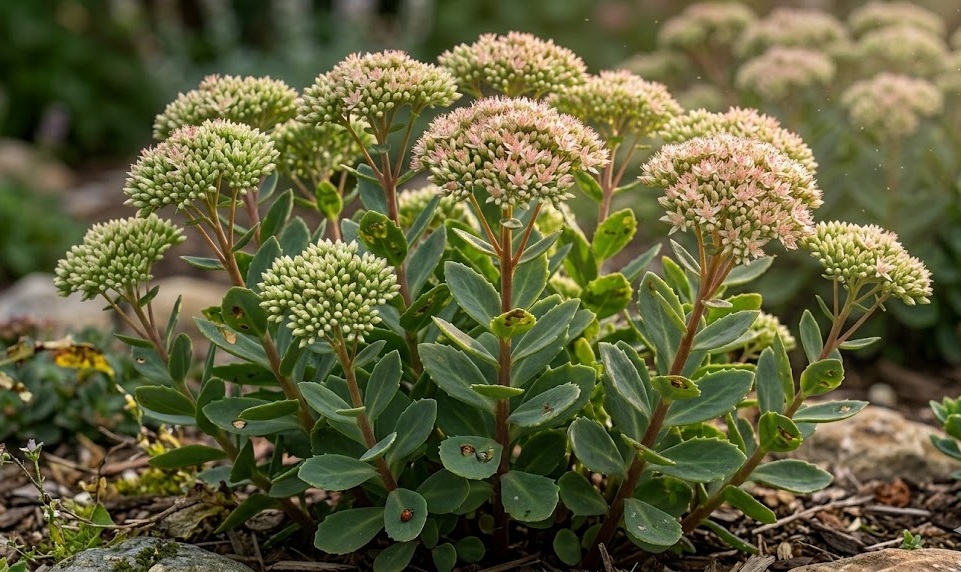

Protecting the great stonecrop from biological threats requires a proactive approach centered on environmental management and early detection. While this plant is notably tougher than many of its garden counterparts, it is not entirely immune to the pressures of fungal pathogens and opportunistic insects. By maintaining high standards of garden hygiene and understanding the lifecycle of common threats, you can prevent most issues before they require chemical intervention. A healthy stonecrop is its own best defense, using its thick cuticle and robust metabolism to ward off many potential invaders.
Common fungal infections and prevention
Fungal diseases are the primary concern for any gardener growing great stonecrop, especially in climates with high humidity or frequent summer rains. Powdery mildew is one of the most visible issues, appearing as a white, flour-like dusting on the surface of the fleshy leaves. While it rarely kills the plant, it can significantly reduce its aesthetic value and weaken its ability to photosynthesize. You can prevent this by ensuring your plants have plenty of space for air to circulate freely around each stem and leaf.
Leaf spot is another fungal problem that manifests as small, dark lesions on the foliage, which can eventually merge and cause entire leaves to drop. This pathogen often spreads through water droplets splashing from the soil onto the lower leaves during heavy rain or overhead watering. To minimize this risk, always water at the base of the plant and maintain a clean layer of stone mulch to act as a barrier. Removing any affected leaves as soon as you spot them helps break the infection cycle and keeps the fungus from spreading to healthy tissue.
The most effective way to prevent fungal outbreaks is to avoid creating the damp, stagnant conditions that these organisms love. If your garden is naturally prone to high humidity, you might consider thinning out the stems of very dense clumps to improve internal airflow. Always use clean tools when working with your plants, as many fungal spores can be carried from one specimen to another on dirty pruners. Professional gardeners often wipe their tools with isopropyl alcohol between plants to ensure a sterile working environment.
In cases where fungal pressure is exceptionally high, you might choose to use an organic fungicide based on sulfur or potassium bicarbonate as a preventative measure. These treatments should be applied in the early morning before the sun is strong to avoid damaging the succulent leaves. However, chemical treatments should always be a last resort after you have exhausted all cultural and environmental improvements. Focus on creating a dry, airy habitat where fungi find it difficult to establish a foothold in the first place.
More articles on this topic
Identifying root rot symptoms
Root rot is perhaps the most devastating condition that can affect the great stonecrop, as it is often invisible until it is too late to save the plant. This condition is almost always caused by excessive soil moisture, which allows water-mold pathogens like Phytophthora to attack the root system. The first sign you might notice is a general lack of vigor or a slight yellowing of the leaves, even when the soil appears to be dry on the surface. As the disease progresses, the plant may suddenly collapse or pull out of the ground with very little effort.
If you suspect root rot, you should carefully excavate a small portion of the root zone to inspect the health of the tissues. Healthy stonecrop roots should be firm and light in color, whereas diseased roots will appear dark brown or black and feel slimy to the touch. You may also notice a distinct, unpleasant odor coming from the soil, which is a byproduct of the anaerobic decomposition occurring underground. At this stage, the best course of action is usually to remove the affected plant and the surrounding soil to prevent the disease from spreading.
Prevention of root rot is entirely dependent on your ability to manage soil drainage and avoid overwatering. If you are planting in heavy clay, you must either amend the soil significantly or build raised beds to ensure that the roots are never sitting in stagnant water. Choosing the right planting site from the beginning is much easier than trying to fix a drainage problem once a plant is established. Remember that the great stonecrop is naturally a desert and mountain plant, and its roots are not equipped to survive in boggy conditions.
If you catch the symptoms very early, you might be able to save a specimen by lifting it out of the ground and trimming away the decayed roots. After pruning back to healthy tissue, allow the plant to sit in a dry, shaded area for a few days to callous over before replanting it in fresh, very sandy soil. Do not water the replanted specimen for at least a week, giving it time to start forming new, healthy roots. This recovery process is slow and requires patience, but it is a testament to the remarkable resilience of this succulent species.
More articles on this topic
Controlling aphid and scale infestations
While the thick skin of the great stonecrop protects it from many chewing insects, it can still fall prey to sap-sucking pests like aphids. These small, soft-bodied insects often cluster on the tender new growth at the tips of the stems or under the developing flower heads. Their feeding can cause the leaves to become distorted or stunted, and they also secrete a sticky substance called honeydew. This honeydew can lead to the growth of black sooty mold, which further disfigures the plant and blocks sunlight.
Scale insects are another common threat, appearing as small, immobile bumps on the stems and leaves that can be mistaken for part of the plant. These pests hide under a protective waxy shell, making them more difficult to control than aphids with standard contact sprays. If you find scale on your stonecrop, you can often remove them manually using a soft brush or a cotton swab dipped in rubbing alcohol. For larger infestations, an application of horticultural oil can smother the insects by cutting off their oxygen supply.
A strong stream of water from a garden hose is often the most effective and least harmful way to dislodge aphids from your plants. You should perform this task early in the day so the plant can dry quickly, avoiding the moisture issues mentioned in the fungal sections. Encouraging natural predators like ladybugs and lacewings into your garden is a sustainable, long-term strategy for keeping these pests in check. A diverse garden ecosystem usually maintains a balance where pest populations never reach a level that causes significant damage.
If you must use a pesticide, opt for insecticidal soaps which are less harmful to beneficial insects and the surrounding environment. Always follow the manufacturer’s instructions carefully and test the spray on a small, inconspicuous part of the plant first to ensure it doesn’t cause a reaction. Succulents can be sensitive to certain chemicals, especially those containing heavy oils or harsh solvents. By being observant and acting quickly at the first sign of an infestation, you can keep your great stonecrops looking pristine.
Dealing with slugs and snails
Despite their succulent nature, the leaves of the great stonecrop are surprisingly attractive to slugs and snails, especially during damp spring evenings. These pests can cause significant cosmetic damage by rasping large, irregular holes in the foliage and leaving silvery slime trails across the plant. While they rarely kill a mature plant, they can quickly decimate young transplants or newly emerging spring rosettes. Because slugs are primarily active at night, you may only see the evidence of their work the following morning.
One of the best ways to discourage these mollusks is to maintain a dry environment and use a sharp, inorganic mulch like crushed eggshells or coarse gravel. These materials are uncomfortable for slugs to crawl over and act as a physical deterrent around the base of your stonecrops. You should also remove any debris, large stones, or low-hanging boards near the plants where slugs might hide during the heat of the day. A clean, open garden layout makes it much harder for these pests to reach their target without being exposed.
Manual removal is a very effective, albeit time-consuming, method for controlling slug populations in a smaller garden. You can go out after dark with a flashlight and pick the pests off the plants, placing them in a bucket of soapy water. Alternatively, you can set simple traps using shallow containers filled with beer, which attracts the slugs and causes them to drown. These low-tech solutions are often just as effective as chemical baits without the risk of harming birds or other wildlife that might eat the slugs.
If the problem is severe, you can use iron phosphate pellets, which are a safer alternative to traditional metaldehyde-based slug baits. These pellets are effective even in wet weather and do not pose a threat to pets or beneficial garden organisms. Always apply baits sparingly and follow the label instructions to ensure the best results with the least amount of product. By combining these different strategies, you can protect the beautiful foliage of your great stonecrop from even the most persistent nocturnal nibblers.
Integrated pest management strategies
Successful long-term protection of the great stonecrop relies on an Integrated Pest Management (IPM) approach that combines multiple layers of defense. This philosophy starts with choosing the right plant for the right place, ensuring it has the sun and drainage it needs to stay naturally healthy. A stressed plant is much more likely to attract pests and succumb to diseases than one that is growing in its ideal conditions. Your first and most important task is always to optimize the environmental factors under your control.
Regular monitoring is the second pillar of an effective IPM strategy, allowing you to catch problems while they are still small and manageable. Spend a few minutes each week inspecting your plants, looking under the leaves and at the base of the stems for any unusual signs. Early detection often means you can solve a problem with a simple blast of water or a quick pruning rather than resorting to chemicals. Keeping a garden log can help you identify patterns, such as certain pests appearing at the same time every year.
Encouraging biodiversity in your garden creates a natural system of checks and balances that works in your favor. By planting a variety of species, you provide habitats for birds, predatory insects, and spiders that will do much of the pest control work for you. Avoid the use of broad-spectrum insecticides that kill these “garden allies” along with the pests you are trying to target. A healthy, complex ecosystem is much more stable and resilient than a sterilized, monocultural environment.
Finally, practice good hygiene by removing spent flowers, dead leaves, and any diseased material from the garden immediately. Many pests and pathogens overwinter in garden debris, waiting for the right conditions to strike again in the spring. By keeping your stonecrop beds tidy, you significantly reduce the amount of “inoculum” present in your landscape. This holistic approach ensures that your great stonecrop remains a low-maintenance and high-reward feature of your garden for many years to come.