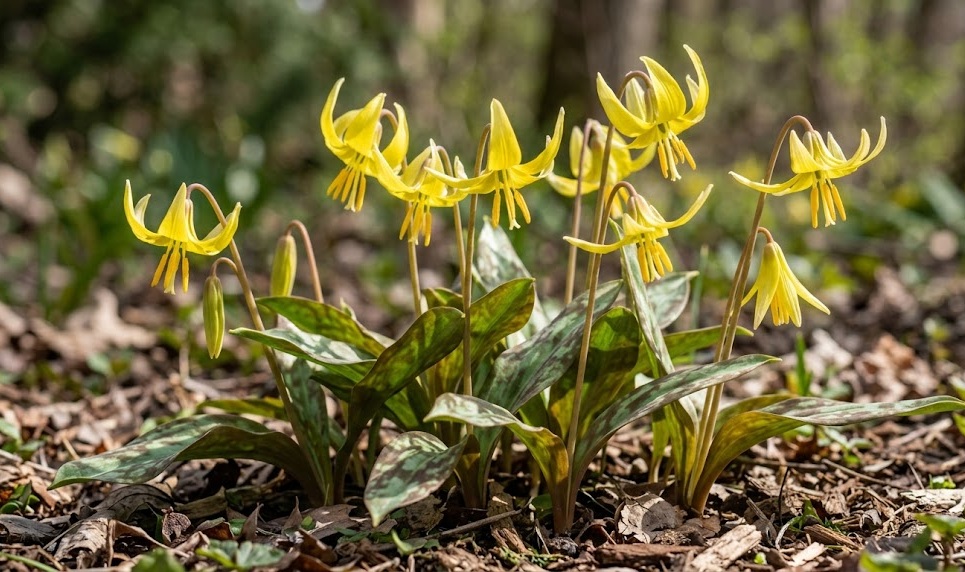

While the ‘Pagoda’ dog’s tooth violet is generally a robust and resilient hybrid, it is not entirely immune to the various pests and diseases that can inhabit a woodland garden. Being proactive in your observations is the most effective way to prevent minor issues from becoming major setbacks for your colony. You must understand that most problems arise when the plant is stressed by its environment, such as being too wet, too dry, or too crowded. By maintaining a healthy growing environment, you are already providing the best defense against the most common threats.
One of the most persistent pests you will encounter in the spring garden is the common slug or snail, which finds the tender foliage of the violet irresistible. These gastropods can cause significant damage in a very short amount of time, leaving unsightly holes in the leaves or even consuming entire flower buds. You should monitor your plants closely during damp evenings or after spring rains when these pests are most active. Implementing a multi-layered control strategy, such as using physical barriers or organic baits, can help keep their populations in check without harming the local ecosystem.
Fungal diseases, particularly those that cause rot, are the primary health concern for the underground bulbs of the dog’s tooth violet. If the soil remains excessively wet for long periods, especially during the dormant summer months, the bulbs can fall victim to various soil-borne pathogens. You might notice that a plant fails to emerge in the spring, or that its growth is stunted and yellowed, which often indicates root or bulb decay. Ensuring excellent drainage and avoiding over-watering are your most powerful tools in preventing these invisible but devastating fungal attacks.
Virus infections, although less common, can occasionally affect these plants and are usually characterized by distorted growth or unusual streaking on the leaves. Unlike fungal issues, viral diseases cannot be “cured” with sprays and require the immediate removal and destruction of the affected plant to prevent further spread. You should always source your bulbs from reputable suppliers to minimize the risk of introducing viruses into your garden beds. Keeping your gardening tools clean and sterilized between use is another simple yet effective way to maintain a healthy and disease-free collection.
Managing common garden pests
In addition to slugs and snails, you should also keep an eye out for smaller pests like aphids that can sometimes cluster on the succulent flower stems. These tiny insects sap the plant’s energy and can transmit diseases as they move from one host to another. A gentle spray of water or an application of insecticidal soap is usually enough to manage a minor infestation before it causes visible damage. Encouraging natural predators like ladybugs and lacewings into your garden provides a long-term, biological solution to many common pest problems.
More articles on this topic
Rodents, such as voles or squirrels, can sometimes pose a threat to the bulbs, particularly during the winter months when other food sources are scarce. You might find that bulbs have been dug up or chewed, which can be incredibly frustrating for any gardener who has spent time establishing a colony. Using wire mesh cages buried in the soil at planting time can provide a physical barrier that protects the bulbs from hungry burrowers. Additionally, planting unpalatable neighbors like daffodils nearby can sometimes discourage rodents from frequenting the area.
Vine weevil larvae are another subterranean threat that can feed on the roots and the base of the bulbs, often going unnoticed until the damage is severe. These C-shaped white grubs are most active in the soil during the autumn and winter, quietly undermining the plant’s health. If you suspect vine weevils, you can use beneficial nematodes as a biological control that targets the larvae without affecting other soil life. Maintaining a diverse garden environment helps to balance these populations naturally, preventing any single pest from becoming a dominant problem.
Leaf miners are occasionally seen on the foliage of dog’s tooth violets, creating characteristic winding tunnels as the larvae feed between the leaf layers. While the damage is often purely aesthetic and rarely threatens the overall survival of the plant, it can detract from the beauty of the mottled leaves. You can simply pinch off and dispose of the affected leaves if the infestation is localized to just a few plants. Generally, these pests are more of a nuisance than a serious threat, and healthy plants will usually outgrow the damage quite quickly.
Preventing fungal and bacterial issues
Botrytis, also known as gray mold, can sometimes appear on the leaves and flowers during particularly cool and humid spring weather. This fungus thrives in stagnant air and can cause the delicate tissues of the plant to turn brown and fuzzy as they decay. You should ensure that your plants are spaced far enough apart to allow for excellent air circulation, which keeps the foliage dry and less hospitable to mold. Removing any spent flowers or decaying organic matter from the base of the plant also helps to reduce the source of fungal spores.
More articles on this topic
Soil-borne bacterial rots can also be a concern, especially if the bulbs have been physically damaged during planting or division. These bacteria enter through wounds and can quickly turn a firm bulb into a soft, foul-smelling mass. You should always handle your bulbs with great care and use a sharp, clean knife if you need to perform any cuts during propagation. Allowing any cut surfaces to air-dry for a few hours before replanting can help the plant form a protective callous that resists bacterial invasion.
Rust is another fungal disease that occasionally appears as orange or brown pustules on the undersides of the leaves. While not as common on this specific variety as on some other garden plants, it can still occur if the environmental conditions are right. You should avoid getting water on the leaves when irrigating, as moisture on the foliage provides the perfect medium for rust spores to germinate. If rust appears, removing the infected leaves and disposing of them away from the compost pile is the best way to prevent the disease from overwintering.
Maintaining the correct soil pH and nutrient balance is a key factor in the plant’s ability to resist both bacterial and fungal infections. Plants that are over-fertilized with nitrogen often produce soft, succulent growth that is much easier for pathogens and pests to penetrate. Conversely, plants suffering from a lack of essential minerals may have weakened cell walls and a compromised immune system. A balanced approach to soil care ensures that the plant has the structural integrity and chemical defenses it needs to stay healthy.
Integrated pest management strategies
Adopting an integrated pest management (IPM) approach means that you look at the garden as a whole system rather than just focusing on individual problems. You should encourage a wide variety of birds, toads, and beneficial insects to take up residence in your garden by providing habitat and avoiding broad-spectrum pesticides. These natural allies will do much of the work for you, keeping pest populations at levels that do not cause significant damage. A garden that is teeming with life is generally a much healthier and more stable environment for specialized plants like the ‘Pagoda’ violet.
Regular “scouting” or inspection of your garden beds is a fundamental part of an effective IPM strategy. You should take a few minutes several times a week to look closely at the foliage, stems, and the surrounding soil for any early signs of trouble. Catching a slug problem or a fungal spot early makes it much easier to manage with gentle, non-toxic methods. This habit of observation also helps you become more in tune with the natural rhythms of your garden and the specific needs of your plants.
Using physical barriers is a highly effective way to protect your plants without resorting to chemicals that might harm beneficial organisms. Copper tape around the edges of containers or raised beds can deter slugs, while fine mesh netting can protect young foliage from birds or larger insects. These mechanical solutions are particularly useful for protecting small or recently divided plants that are more vulnerable than established colonies. By combining these physical protections with good cultural practices, you create a robust defense system for your garden.
Finally, remember that some degree of minor damage is a natural part of an outdoor garden and should not be a cause for panic. A few holes in a leaf or a slightly chewed stem do not necessarily mean that the plant is in danger or that your care routine has failed. You should focus on the overall health and vigor of the colony rather than aiming for artificial perfection. A resilient plant in a healthy ecosystem will naturally recover from most minor setbacks and continue to provide beauty for years to come.
Restoring health after a setback
If one of your plants does suffer from a significant pest or disease issue, your first priority should be to identify the cause and address the environmental triggers. You should carefully remove any dead or dying material and check the soil conditions to see if they need adjustment. Sometimes, simply moving a plant to a better-drained or more shaded location can be enough to help it recover its strength. Recovery may take a full growing season, as the plant needs time to rebuild its energy reserves within the bulb.
During the recovery phase, you should be extra diligent with watering and provide a very light application of a balanced organic fertilizer. Avoid any heavy-handed interventions that might further stress the plant’s system while it is trying to heal. You might also provide a bit of extra mulch to keep the soil temperature stable and protect the roots from further disturbance. Patience is essential here, as woodland bulbs operate on a slow, seasonal clock that cannot be rushed.
If a disease has affected an entire colony, you may need to consider “resting” the soil for a year or two before replanting the same species in that spot. This break allows the specific pathogens that target dog’s tooth violets to die off in the absence of a host. You can use the area for other, non-susceptible plants in the meantime, which helps to break the disease cycle naturally. Good crop rotation and soil management are just as important in the ornamental garden as they are in the vegetable patch.
Educating yourself about the specific pests and diseases in your local area will help you anticipate problems before they arise. You might talk to local garden clubs or university extension services to find out what issues are currently trending in your region. This localized knowledge is incredibly valuable for fine-tuning your prevention and treatment strategies. With a combination of expert knowledge and careful observation, you can keep your ‘Pagoda’ dog’s tooth violets healthy and vibrant for many years.