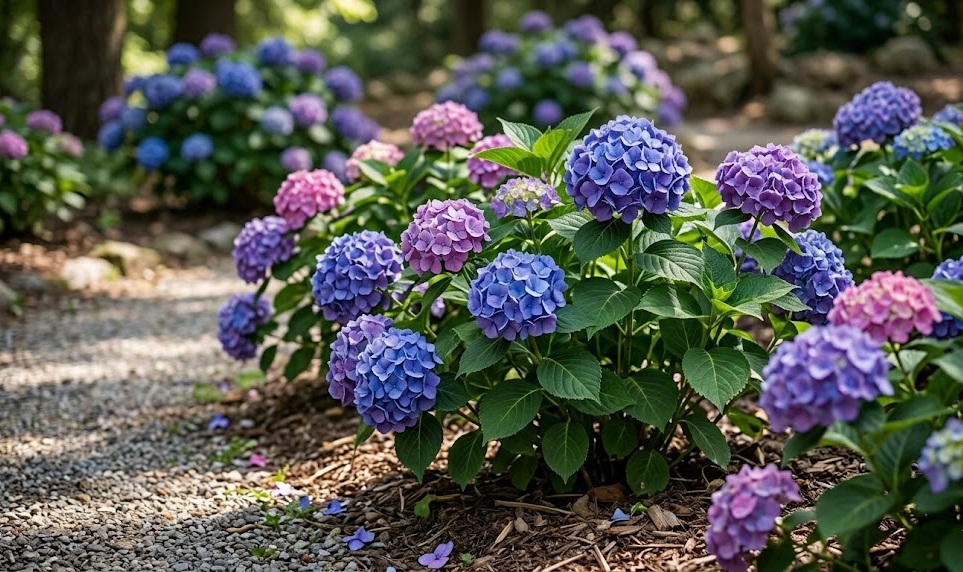

Providing the correct balance of moisture and nutrients is the cornerstone of professional care for these water-loving and hungry flowering shrubs. Their large, lush foliage and expansive flower heads create a high demand for water, especially during the peak of the summer heat. Without a consistent supply of hydration, the plants can quickly become stressed, leading to scorched leaf margins and a significant reduction in floral longevity. Similarly, a well-planned fertilization strategy ensures that the soil remains productive and capable of supporting the intensive energy requirements of these vigorous growers.
Monitoring the hydration status of the plant requires more than just looking at the surface of the soil, as deep root health depends on consistent moisture throughout the profile. Gardeners should develop a routine of checking the soil moisture at a depth of several centimeters to determine when irrigation is truly necessary. During periods of drought or extreme heat, daily checks are often required to prevent the plant from entering a state of permanent wilting. Providing water early in the morning allows the plant to hydrate fully before the stress of the midday sun arrives.
The method of delivery is just as important as the amount of water provided, with a focus on reaching the root zone directly. Overhead watering should be avoided whenever possible, as wet foliage is highly susceptible to various fungal diseases and leaf spots. Drip irrigation systems or soaker hoses are the most efficient tools for maintaining the necessary soil moisture levels without wasting water. These methods deliver hydration slowly and deeply, encouraging the roots to grow further down into the soil where they are better protected from surface drying.
The relationship between water and nutrient uptake is a fundamental concept in horticultural science that every serious gardener should understand. Nutrients in the soil are only available to the plant when they are dissolved in water, making consistent irrigation essential for effective fertilization. In times of water stress, the plant’s metabolic processes slow down, and even a nutrient-rich soil will fail to support healthy growth. By managing these two factors together, the gardener creates a synergy that results in the most impressive and resilient specimens possible.
Essential nutrients and NPK ratios
Understanding the specific nutritional needs of these shrubs involves a careful look at the primary macronutrients: nitrogen, phosphorus, and potassium. Nitrogen is responsible for the lush, green vegetative growth and the overall size of the plant’s canopy throughout the season. Phosphorus plays a critical role in root development and the initiation of the flower buds, which is essential for a spectacular display. Potassium strengthens the internal cell structures and improves the plant’s ability to resist diseases and environmental stressors like frost or drought.
More articles on this topic
A balanced fertilizer, such as one with a 10-10-10 or 12-12-12 NPK ratio, is often a safe and effective choice for general maintenance in most garden settings. However, some professional growers prefer to use formulas with slightly higher phosphorus levels in the early spring to boost the upcoming bloom cycle. It is important to avoid over-applying nitrogen late in the season, as this can stimulate soft new growth that is easily damaged by early winter frosts. Applying fertilizers in a controlled manner ensures that the plant receives what it needs without causing environmental runoff or chemical imbalances.
Micronutrients, such as iron and magnesium, are also vital for maintaining the health and color of the foliage and preventing common issues like chlorosis. Iron deficiency often manifests as yellowing leaves with green veins, a condition that can be exacerbated by overly alkaline soil conditions. Adding chelated iron or Epsom salts (magnesium sulfate) can quickly correct these specific deficiencies and restore the plant’s vibrant appearance. Regular soil testing is the best way to determine exactly which micronutrients might be lacking in a particular garden environment.
The timing of fertilizer applications should be synchronized with the plant’s natural growth phases for the most efficient results. The first application is typically made in the early spring as the buds begin to swell and the first leaves emerge from dormancy. A second, lighter feeding can be done in the early summer to support the plant through its peak flowering period and help it maintain its vigor. By late August, all fertilization should cease to allow the plant to naturally transition into its dormant phase as the days become shorter.
Organic vs chemical fertilization methods
Choosing between organic and synthetic fertilizers is a decision that impacts not only the plants but also the long-term health of the garden’s soil biology. Organic fertilizers, such as composted manure, fish emulsion, or bone meal, release nutrients slowly as they are broken down by soil microorganisms. this slow-release mechanism provides a steady supply of food for the plant and reduces the risk of root burn caused by high salt concentrations. Furthermore, organic matter improves the soil’s structure, aeration, and water-holding capacity, creating a more sustainable growing environment.
More articles on this topic
Synthetic fertilizers, on the other hand, offer precise control over nutrient ratios and are often more quickly available to the plant in cases of severe deficiency. They are convenient to use and can be tailored to specific needs, such as changing flower colors through pH-altering additives. However, over-reliance on chemical fertilizers can lead to a decline in soil health and the loss of beneficial microbial life over time. Professionals often find that a hybrid approach, using organics as the base and synthetics for targeted interventions, provides the best overall results.
The environmental impact of fertilization is an increasingly important consideration for modern gardeners who strive for sustainable practices. Synthetic fertilizers are more prone to leaching into groundwater if applied incorrectly or in excessive amounts, which can harm local ecosystems. Organic methods promote a closed-loop system where garden waste is recycled back into the soil, enriching the land for future generations. Understanding the broader consequences of these choices helps the gardener make more responsible and ethical decisions for their landscape.
Regardless of the fertilizer type chosen, proper application techniques are essential for maximizing benefits and minimizing potential risks to the plant. Fertilizers should be spread evenly over the entire root zone, which typically extends to the outer edge of the plant’s canopy, known as the drip line. After applying any fertilizer, it is critical to water the area thoroughly to help move the nutrients down into the soil where the roots can access them. This practice also helps wash away any granules that may have accidentally landed on the foliage, preventing chemical leaf scorch.
Correcting common nutrient deficiencies
Identifying the visual symptoms of nutrient imbalances is a key skill for maintaining the professional appearance and health of the garden. Chlorosis, characterized by the yellowing of the leaves, is one of the most frequent issues encountered by growers of these shrubs. This condition is often caused by a lack of available iron, which is frequently linked to a soil pH that is too high for the plant’s liking. In such cases, simply adding iron may not be enough; the underlying soil chemistry must be addressed to ensure long-term resolution.
Magnesium deficiency is another common problem that presents as yellowing between the veins of the older leaves, often starting at the bottom of the plant. This can be easily treated with a solution of Epsom salts dissolved in water and applied directly to the root zone or as a foliar spray. It is important to distinguish between nutrient issues and environmental stresses like leaf scorch or drought, which can sometimes look similar. A systematic approach to diagnosis, including soil testing, prevents the application of unnecessary or even harmful treatments.
Phosphorus deficiency is less common but can result in stunted growth and a noticeable lack of flowers even on mature, healthy-looking specimens. This is often an issue in very acidic soils or where the soil is cold and wet for extended periods in the spring. Adding bone meal or a high-phosphate rock dust can help boost the levels of this essential element and encourage better blooming in subsequent seasons. Patience is required, as the effects of phosphorus amendments are often not visible until the following year’s growth cycle.
Over-fertilization can be just as damaging as a lack of nutrients, leading to excessive vegetative growth at the expense of flowers and making the plant more attractive to pests. Signs of nitrogen toxicity include very dark green, overly lush leaves that are soft and prone to wilting even when well-watered. In severe cases, high salt levels from fertilizers can cause the leaf edges to turn brown and brittle, a clear indicator of root damage. If over-fertilization is suspected, heavy irrigation can help leach the excess salts out of the root zone and stabilize the plant’s environment.
Advanced irrigation strategies for peak health
Implementing a smart irrigation strategy involves adapting the watering schedule to the changing needs of the plant throughout its annual cycle. In the spring, when the plant is pushing out new growth, moderate but consistent moisture is required to support the rapid cell expansion. As summer approaches and temperatures rise, the volume of water must increase to compensate for the higher transpiration rates through the large leaves. Professional systems often include moisture sensors that automate this process, ensuring that the plants never reach a critical point of dehydration.
The depth of irrigation is a critical factor that determines the resilience of the root system during periods of environmental stress. Shallow, frequent watering encourages roots to stay near the surface, where they are easily damaged by heat and quick to dry out. Deep watering, performed less frequently, trains the roots to grow deeper into the soil profile where moisture is more stable and the temperature is cooler. This practice results in a much more robust plant that can better withstand several days of hot weather without significant distress.
Mulching plays a vital role in any irrigation strategy by acting as a biological sponge that retains moisture and releases it slowly to the soil below. A thick layer of organic mulch can reduce the frequency of watering needed by up to fifty percent in some climates. It also prevents the soil surface from crusting over, which can otherwise cause irrigation water to run off rather than soaking in. The presence of mulch also protects the soil from the impact of heavy rain, preventing erosion and keeping the root zone intact.
Finally, gardeners must be aware of the signals the plant sends when its watering needs are not being met correctly. While temporary wilting in the late afternoon heat is often normal, a plant that remains wilted into the following morning is in desperate need of hydration. Over-watering can also be a problem, manifesting as yellowing leaves that eventually drop off, often accompanied by a soft, mushy feel at the base of the stems. Achieving the perfect balance of “moist but not wet” is the ultimate goal of professional water management for these spectacular shrubs.