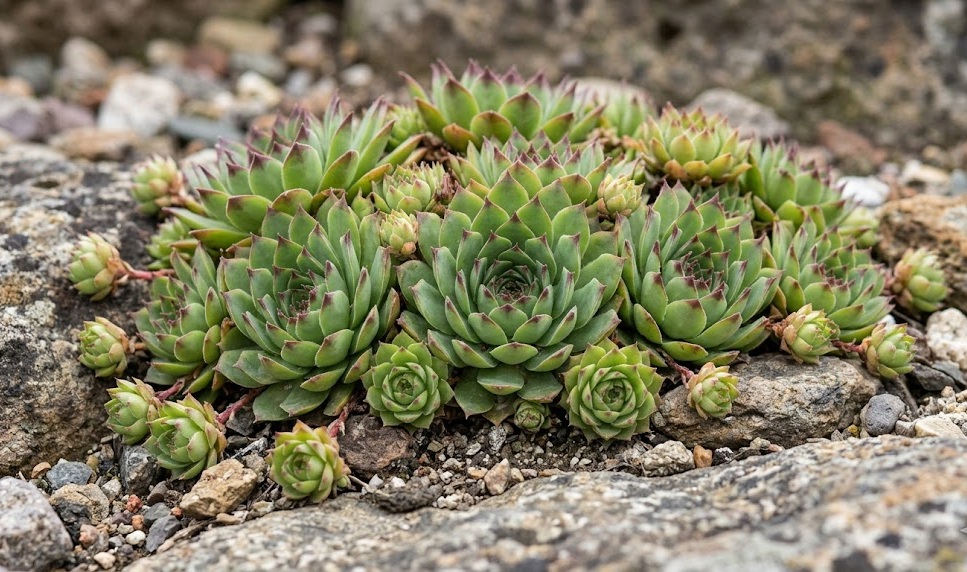

The common houseleek is a quintessential heliophyte, meaning it thrives in environments characterized by high light intensity and long durations of sun exposure. In its natural alpine habitat, the air is thin and the solar radiation is potent, a condition the plant has adapted to with its thick, waxy cuticle and pigmented leaf tips. For the gardener, providing the correct light balance is the most important factor in maintaining the plant’s iconic compact rosette shape and vivid coloration. Without sufficient light, even the best watering and soil conditions will not produce a specimen of professional quality.
A minimum of six to eight hours of direct sunlight per day is generally recommended for this species to reach its full potential. In ideal conditions, the rosettes will stay tight and low to the ground, with the leaves packed closely together around the central growing point. This structural integrity is not just aesthetic; it also helps the plant conserve moisture and protect its sensitive core from the elements. If you notice the rosettes starting to open up or flatten out, it is often a sign that the light levels are borderline insufficient.
In the height of summer, the intensity of the sun can be quite extreme, and while the common houseleek loves the light, it can occasionally suffer from heat stress. In very hot climates, providing some light, dappled shade during the hottest part of the afternoon can prevent the leaves from scorching. This is especially important for young plants or newly propagated offsets that have not yet developed their full protective mechanisms. A balance of intense morning light and a bit of afternoon relief is often the “sweet spot” for many cultivars.
The color of the houseleek is a direct response to the light it receives, with many varieties developing deep reds, purples, or bronzes in full sun. These pigments, known as anthocyanins, act as a natural sunscreen, protecting the plant’s internal tissues from UV damage. In lower light, these colors will often fade to a uniform green as the plant tries to maximize its photosynthetic efficiency. If you want to see the full range of colors listed in the cultivar description, you must provide the high-intensity light required to trigger these pigments.
Recognizing and correcting light deficiency
When a common houseleek does not receive enough light, it undergoes a process called etiolation, which is a significant physiological stress. The stem begins to elongate rapidly as the plant “stretches” toward the nearest light source, and the leaves become pale and spaced far apart. This change is irreversible for the affected rosette, and it permanently weakens the plant’s structure, making it more prone to breaking and disease. If you see your plants beginning to grow upward instead of outward, you must move them to a brighter location immediately.
More articles on this topic
In indoor settings or on shaded balconies, achieving the necessary light levels can be a challenge that requires professional solutions. If natural sunlight is not sufficient, high-quality LED grow lights can be used to supplement the plant’s needs. These lights should be positioned relatively close to the plants to provide the intensity they require, but with careful monitoring to avoid heat buildup. A timer can be used to ensure a consistent fourteen to sixteen-hour light cycle, mimicking a bright summer day.
Another sign of light deficiency is a lack of offset production, as the plant focuses all its limited energy on survival rather than reproduction. A healthy houseleek in a bright spot will usually produce multiple “chicks” each season, eventually forming a dense and beautiful colony. If your plants have remained solitary for several years, a lack of light is often the primary reason. Moving the colony to a south-facing rockery or a brighter part of the garden will usually trigger a burst of new growth and reproduction.
It is also important to consider the competition for light from other plants in the garden. As the season progresses, neighboring perennials or weeds may grow tall enough to cast a shadow over your low-growing houseleeks. Regularly thinning out surrounding vegetation ensures that your succulents are not “suffocated” by the shade of more aggressive growers. Keeping the area around your rosettes clear is a simple but effective professional habit that pays off in plant health.
Light and the seasonal cycle of growth
The changing angle and intensity of the sun throughout the year play a vital role in the life cycle of the common houseleek. In the spring, the increasing light levels signal the plant to wake up from its winter dormancy and begin active growth. This is when you will see the most dramatic changes in color and the emergence of the first new rosettes. Providing maximum exposure during this time is crucial for building the energy reserves the plant will need for the rest of the year.
More articles on this topic
As autumn approaches and the days shorten, the plant begins to shift its focus toward preparing for the cold. The lower light levels, combined with cooler temperatures, trigger the development of the deep winter colors that many enthusiasts find so appealing. While the plant’s metabolic rate is slowing down, it still needs bright, indirect light to maintain its health through the winter. Even during the dormant phase, keeping the plants in a luminous spot helps them stay resilient against the stresses of the season.
In some regions, the winter sun can be quite weak and the days very short, which can lead to a slight loss of vigor even in dormant plants. If you are overwintering your houseleeks in a greenhouse, ensure the glass is clean to allow as much light through as possible. Avoid covering the plants with heavy, opaque materials for long periods, as even a dormant plant needs some light for its basic biological functions. A well-lit winter is the best foundation for a vigorous and healthy spring.
Understanding the relationship between light and temperature is a more advanced aspect of professional succulent care. In general, the more light a plant receives, the more heat it can tolerate, provided there is adequate air circulation. Conversely, if light is low, temperatures should also be kept lower to prevent the plant from trying to grow when it doesn’t have the energy to do so properly. This balance is key to preventing the weak, leggy growth that is so common in poorly managed collections.
Optimizing light for different varieties and settings
Not all common houseleek cultivars have identical light requirements, and some “fancier” hybrids with pale or variegated leaves can be more sensitive to direct sun. Varieties with a heavy coating of “cobweb” hairs are particularly well-adapted to high light, as the hairs reflect some of the solar radiation. On the other hand, smooth-leaved varieties with dark pigments are very efficient at absorbing light and can sometimes handle slightly lower light levels than their fuzzy counterparts. Experimenting with different varieties in various parts of your garden will help you understand their individual preferences.
When planting in a rock garden, consider the microclimates created by the stones themselves. A rosette planted on the south side of a large rock will receive much more light and heat than one on the north side. You can use these natural variations to place your most sun-hungry varieties in the brightest spots while giving more sensitive types a bit of protection. This strategic placement is what distinguishes a professional landscape design from a random planting.
For those growing houseleeks in containers, the ability to move the pots allows for perfect light management throughout the year. You can shift your collection to follow the sun as its path changes with the seasons, ensuring they always get the maximum exposure. In the height of summer, you can easily pull the pots back into a slightly more shaded area if you notice any signs of stress. This flexibility is a major advantage of container gardening for succulents.
Ultimately, providing the right light for your houseleeks is about observing and responding to the plants themselves. They are excellent communicators and will quickly show you if they are happy with their location. By prioritizing light as the foundation of your care routine, you ensure that your rosettes remain the compact, colorful, and resilient gems they are meant to be. This professional attention to the environment is the secret to a world-class houseleek collection.